Quick answer: Singapore's early childhood guidelines recommend that preschoolers build up at least 180 minutes of physical activity across the day, with at least 60 minutes of it moderate to vigorous. Weekends are the easiest time to top this up. A morning at the beach counts, and so does a family game of chase. None of it needs an expensive class.
During the week, preschool covers a good share of a child's activity. Weekends can swing the other way. A long lunch with relatives followed by an afternoon of errands can add up to a day with very little movement at all. With the long year-end school holidays starting in late November, it is a good moment to think about how your family spends its free time.
How much activity do young children need?
The Singapore Integrated 24-Hour Activity Guidelines for Early Childhood, published by the College of Paediatrics and Child Health, set out what children under seven need across a day.
For preschoolers aged three to six, the guidelines recommend:
- At least 180 minutes of physical activity a day, at any intensity, spread through the day.
- At least 60 minutes of that being moderate to vigorous, the kind that makes them puff, preferably outdoors.
- For five- and six-year-olds, a variety of vigorous play and activities that strengthen muscles and bones several times a week.
- Recreational screen time of less than one hour a day.
For toddlers aged one to two, the recommendation is also at least 180 minutes of varied activity a day, with daily outdoor play highly encouraged.
The guidelines also encourage caregivers to join in actively. Children move more when the adults around them are moving too.
Three hours sounds like a lot, but it accumulates quickly in a child who is free to play. Walking to the bus stop, climbing at the playground, dancing in the living room and chasing a sibling down the corridor all count.
Beat the heat first
In Singapore, timing matters more than anything. Plan active outings for early morning or late afternoon, when it is cooler. Save the middle of the day for lunch and indoor play. Bring water and a hat, and use sunscreen. We have a full guide to outdoor play in Singapore's heat.
Ideas that need very little planning
A walk with a mission
Young children rarely enjoy a walk for its own sake. Give it a purpose. Hunt for five red things, count the cats in the estate, collect leaves of different shapes, or walk to the bakery for breakfast. A child who is searching for something will happily cover twice the distance.
A playground circuit
Pick two or three playgrounds within walking distance and visit them all in one outing. The walk between them adds up, and new equipment keeps things fresh. Bring a ball for the open spaces in between.
The beach
East Coast Park and the beaches on Sentosa give children sand to dig and space to run, plus the sea to splash in. Running on sand is much harder work than running on a path, so even a short visit tires little legs. Keep to shallow water and stay within arm's reach. Remember too that the sun reflects strongly off sand and sea.
Park connectors and bikes
Singapore's park connector network links parks across the island with smooth, mostly flat paths. They are ideal for balance bikes and scooters. Our guide to balance bikes and scooters covers safety and where to start.
A family kickabout
You do not need a club or a coach to play sport together. Take a ball to the nearest field or an empty basketball court and invent a game. Kick it between two water bottles for a goal, or try a gentle game of catch with a light ball. Rolling and kicking a ball builds the coordination children use in every sport. Keep it short and silly, and let your child set some of the rules.
Swimming and water play
Water confidence is a life skill in a country surrounded by sea. A weekly family swim builds it, and it builds stamina too. Our article on when to start swimming lessons has more.
Games to play anywhere
When you only have half an hour, or the weather turns, these work in a void deck or in a living room with the furniture pushed back.
- Animal walks. Try bear crawls and frog jumps, then crab walks. They are great for strength and balance.
- Freeze dance. Music on, dance wildly, freeze when it stops. Good for self-control as well as movement.
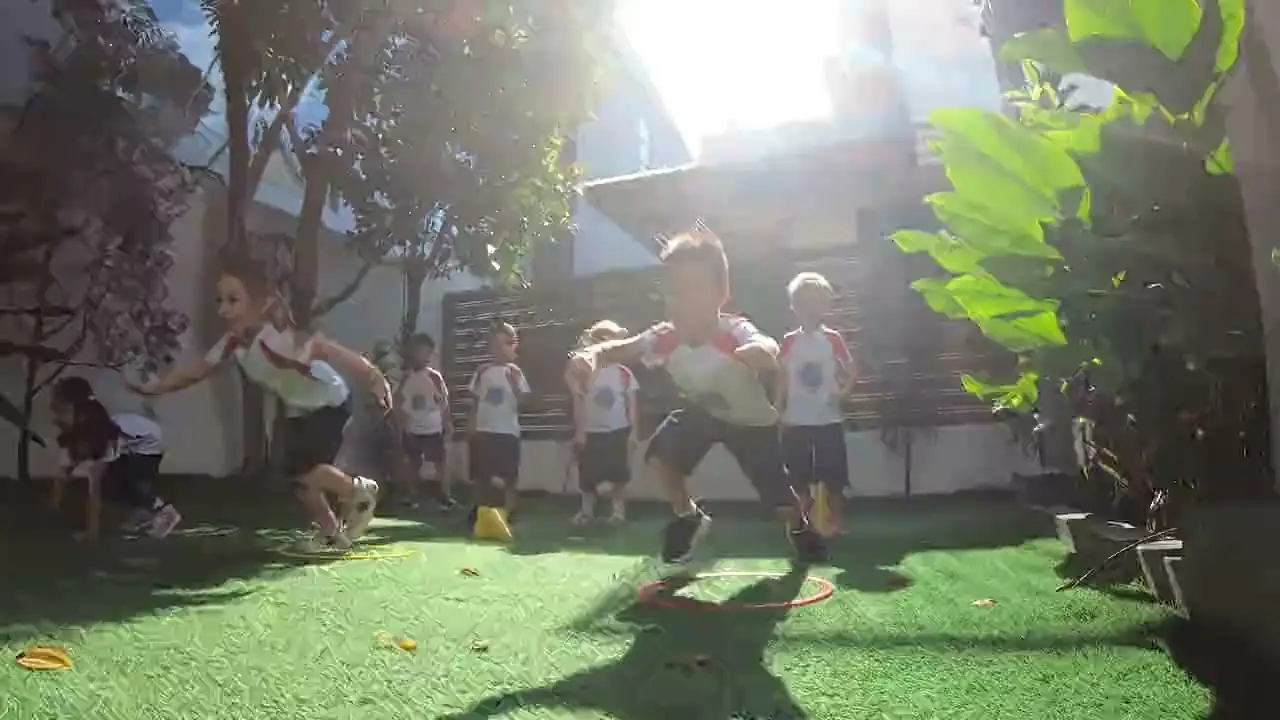
- Obstacle course. Set out cushions to jump over and a table to crawl under. Let your child design the next one.
- Balloon keepy-uppy. Keep a balloon off the floor without catching it. Good on rainy days.
- Red light, green light. Run on green, stop dead on red. Children love catching adults out.
For more indoor ideas, see our post on rainy-day games that burn real energy.
Make it a family habit
The easiest way to keep weekends active is to build a routine everyone can rely on. A regular Saturday morning walk or a Sunday swim before lunch quickly becomes part of family life. Children who grow up seeing their parents enjoy being active tend to see movement as a normal part of the week.
Try to keep at least one weekend day free of scheduled activities. Unstructured outdoor play, where a child decides what to do, builds confidence as well as fitness.
What children do during the week at Shaws
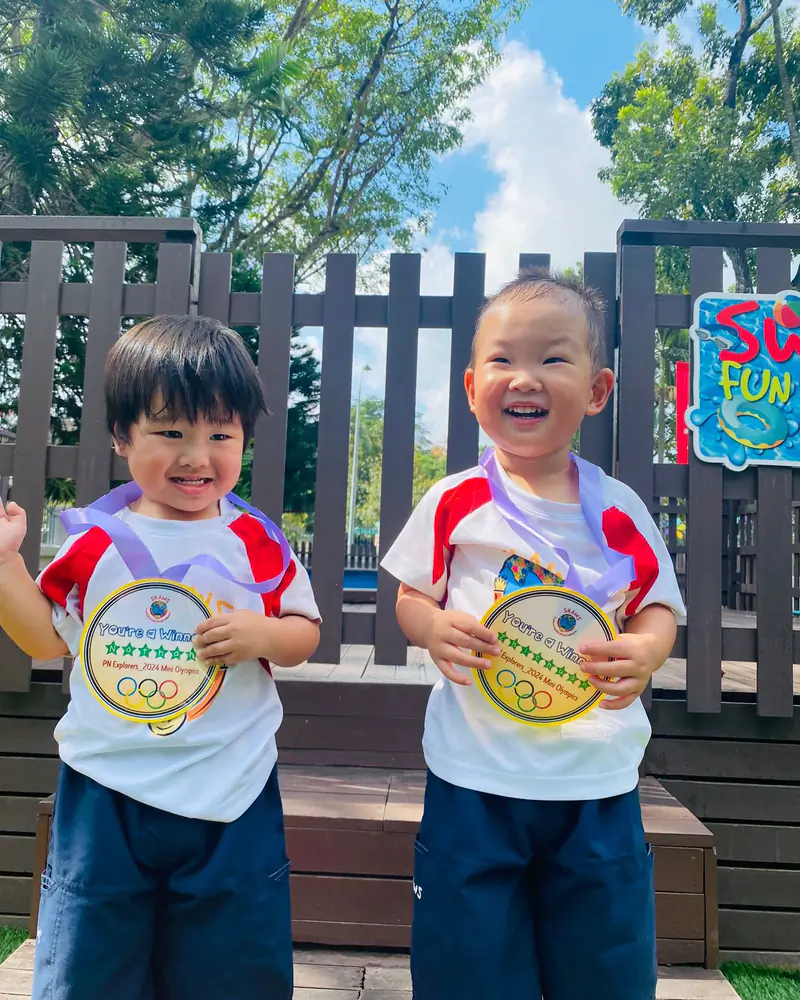
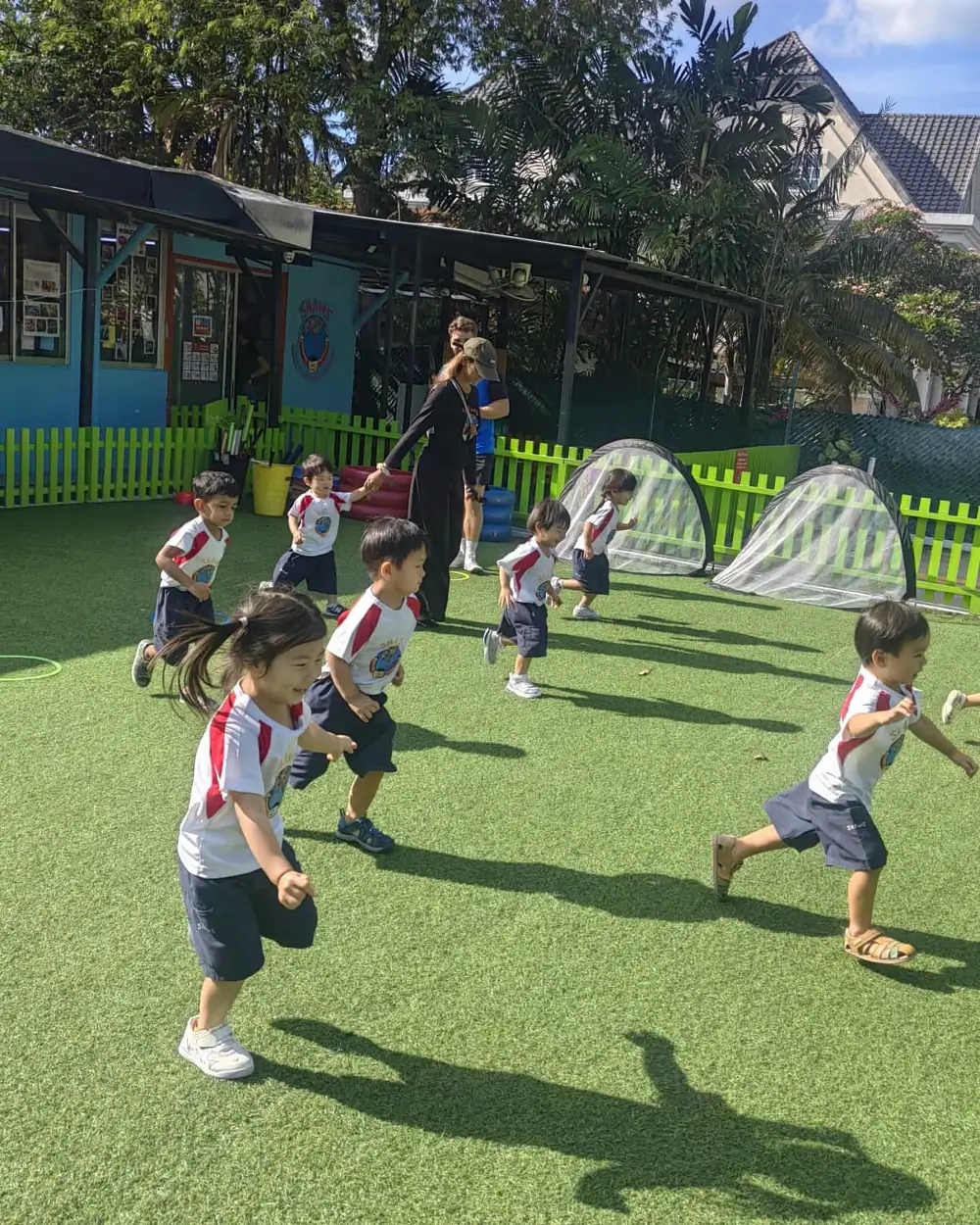
At Shaws, children head outside as soon as they arrive in the morning, and outdoor play returns several times through the day. Shaws Little League coaches run sports sessions twice a week at every campus at no extra cost. The afternoon ShawsPlay Club also includes sports-based play for children who do not nap. Our free eGuides include an everyday sports guide with ideas you can use at home.
When to seek advice
Talk to your doctor if your child seems unusually breathless, tires much faster than other children, complains of pain during play, or avoids physical activity altogether. Most children simply need more chances to move, but it is worth checking if something seems off.
Shaws Preschool has made sport and outdoor play part of every week across the East Coast and Serangoon since 1989. Come and see our gardens and Shaws Little League in action: book a tour.