Quick answer: a balance bike, with no pedals, teaches the hardest part of riding first: balance. Many children who start on one move to a pedal bike later without ever needing training wheels. Most are ready once they walk and run confidently, a helmet should be worn from the very first ride, and quiet park connectors and open paved spaces are ideal places to practise.
There is a particular photo in many family albums. A parent bent double, holding the back of a saddle, running alongside a wobbling child. It is a lovely tradition and a very tiring one.
The good news is that it has become largely unnecessary. The way young children learn to ride has changed, and the change is worth understanding before you buy anything.
Why balance comes before pedals
Riding a bike involves two separate skills: keeping balance and pedalling. Pedalling is fairly easy. Balance is the hard part.
A balance bike removes the pedals so the child can concentrate on the difficult skill. They walk it, then stride it, then lift their feet and glide. Because their feet are always close to the ground, they can put them down whenever they feel unsteady, so the whole process happens at a pace they control.
The trouble with training wheels
Training wheels solve the balance problem by removing it. The bike cannot tip, so the child learns to pedal and steer but never learns to balance.
When the wheels come off, the child is effectively starting again, and now on a bike that feels alarmingly unstable. Training wheels also teach an unhelpful habit: children lean the wrong way on corners, because a stabilised bike does not need to lean.
That does not make them dangerous or a failure. Plenty of adults learned that way. It is simply the longer route.
Is my child ready?
There is no exact age, but most children can start on a balance bike somewhere between about eighteen months and three years. Watch for:
- Confident walking and running, including on slightly uneven ground.
- Feet flat on the ground while sitting on the saddle, with a slight bend in the knee.
- Interest. Some children want to ride the moment they see one. Others need a few weeks of it leaning against the wall first.
Many balance bike riders are ready for pedals somewhere between three and five. The sign is simple: they glide for long stretches with their feet up and steer comfortably around corners.
Scooters
Scooters build a slightly different set of skills: balance on one leg, pushing with the other, and steering by leaning.
- Three-wheeled scooters suit younger preschoolers. They are stable and steer by leaning, which is a good introduction.
- Two-wheeled scooters usually suit older children who already have good balance.
Scooters are fast on smooth ground, so the same safety habits apply as for bikes.
Safety basics
Helmet, every time. Start from the first ride so it is never a negotiation. A good fit sits level, about two finger widths above the eyebrows, with the strap snug enough that only a finger or two fits underneath. Replace a helmet after any real impact.
Closed shoes. Children stop balance bikes with their feet. Sandals and bare feet come off badly.
Go at the cool end of the day. Early morning or late afternoon, with water, for the same reasons as any outdoor play here.
Keep off roads and car park driveways. Young children cannot judge traffic, and drivers cannot easily see them.
Watch for other path users. Shared paths carry cyclists, joggers and personal mobility devices. Teach your child to keep left, stop when told, and ride at walking pace near people.
Avoid wet surfaces. After rain, tiles and painted surfaces become slippery very quickly.
Where to practise in Singapore
- Park connectors. Wide, smooth and mostly flat, with shade along many stretches. Choose quieter times.
- East Coast Park. Plenty of space, though the main cycling track gets busy at weekends, so stick to quieter paths with a small child.
- Neighbourhood parks and open paved areas where riding is permitted. Empty basketball courts are excellent for early gliding.
- Gentle slopes, later. A very slight downhill on grass teaches gliding beautifully, once your child can brake with their feet.
Check any local signs, since some void decks and estate spaces do not allow riding.
How to help without holding on
Do not hold the bike. Holding it takes away the balance practice. Walk alongside instead.
Let them choose the pace. Walking the bike for a fortnight is not failure. It is setup.
Keep sessions short. Twenty minutes of enjoyment beats an hour of tears.
Describe what they did. "You lifted both feet all the way to the tree." Specific, factual and genuinely encouraging.
What we do at school
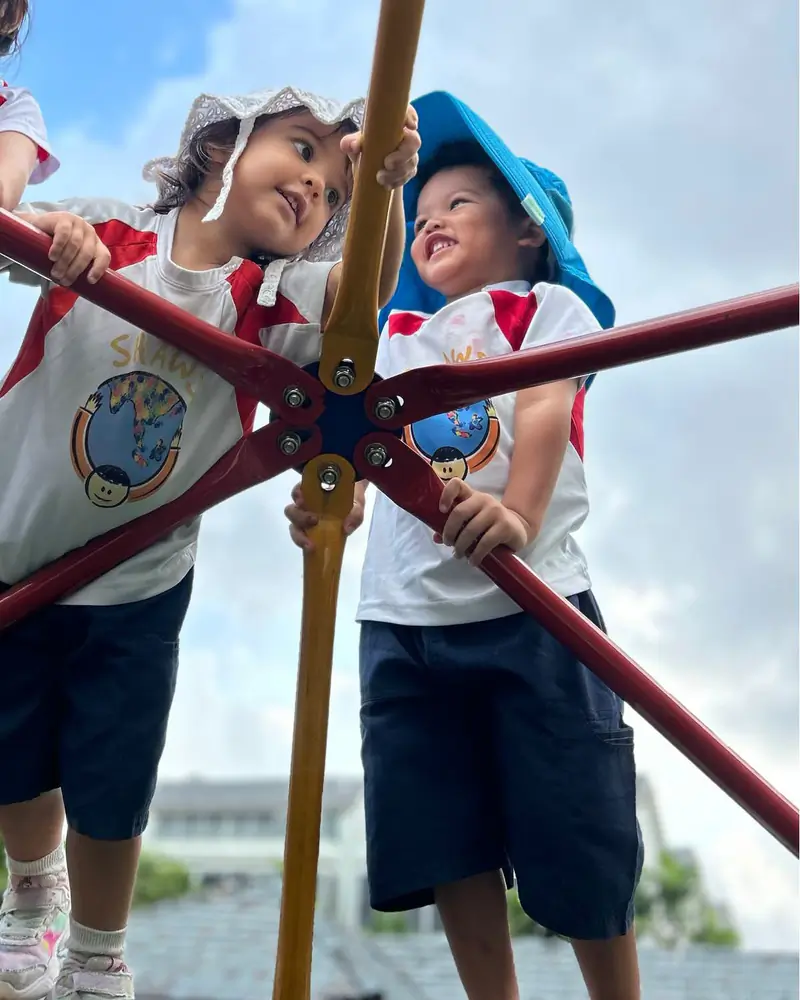
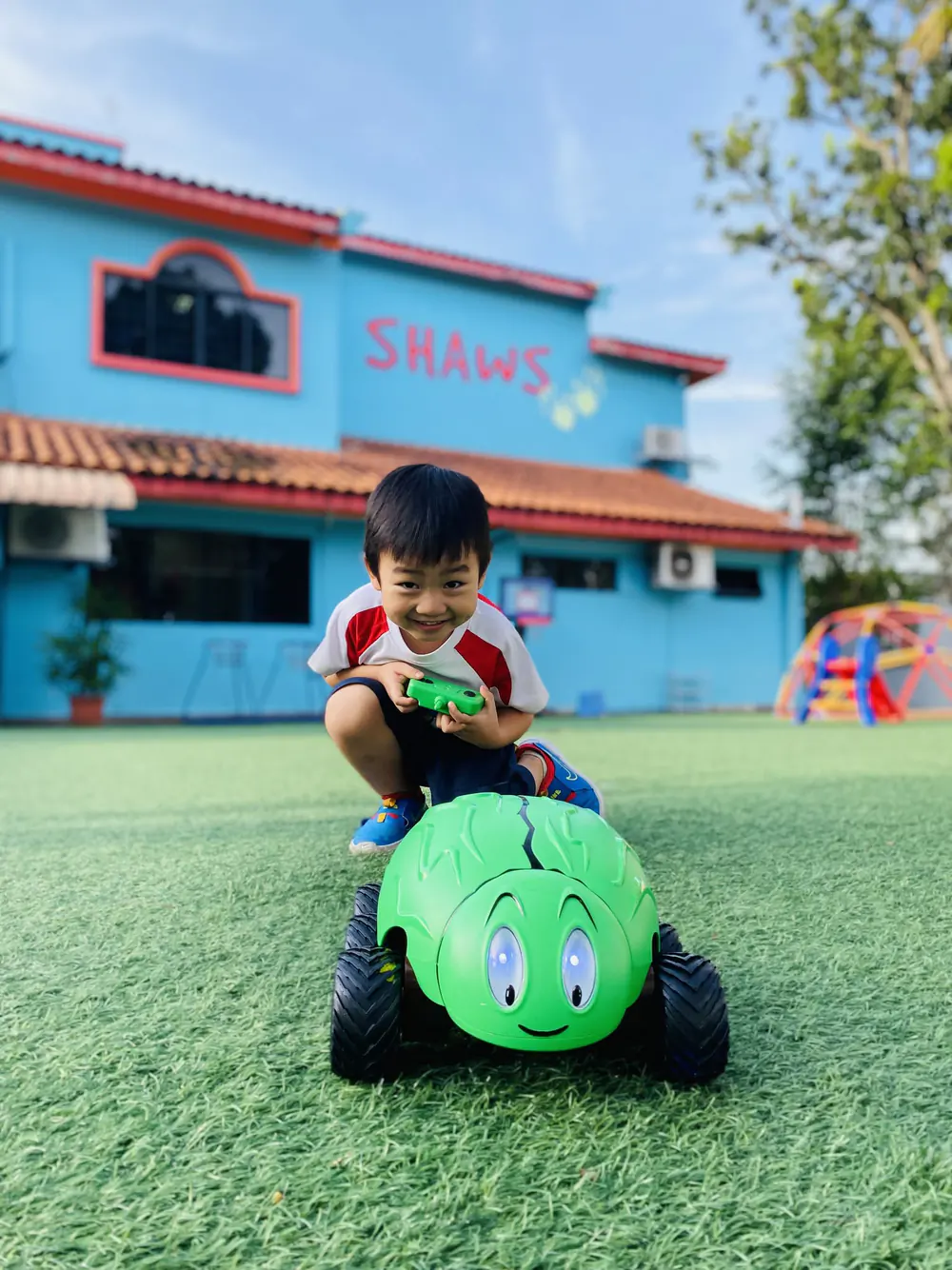
Wheeled toys, ride-ons and plenty of running space are a normal part of outdoor time, alongside sports coaching that builds the balance, coordination and body awareness riding depends on. Children who hop, climb, jump and push a trike around every day tend to take to a balance bike with surprising speed.
When to seek advice
Talk to your doctor if your child seems unusually clumsy compared with others their age, falls far more often than you would expect, struggles with balance in everyday movement, or avoids physical play altogether. Most of the time, though, a slow starter is simply a cautious one.
Shaws Preschool has combined daily sport, outdoor play and plenty of wheels across the East Coast and Serangoon since 1989. Come and watch a morning outside: book a tour.