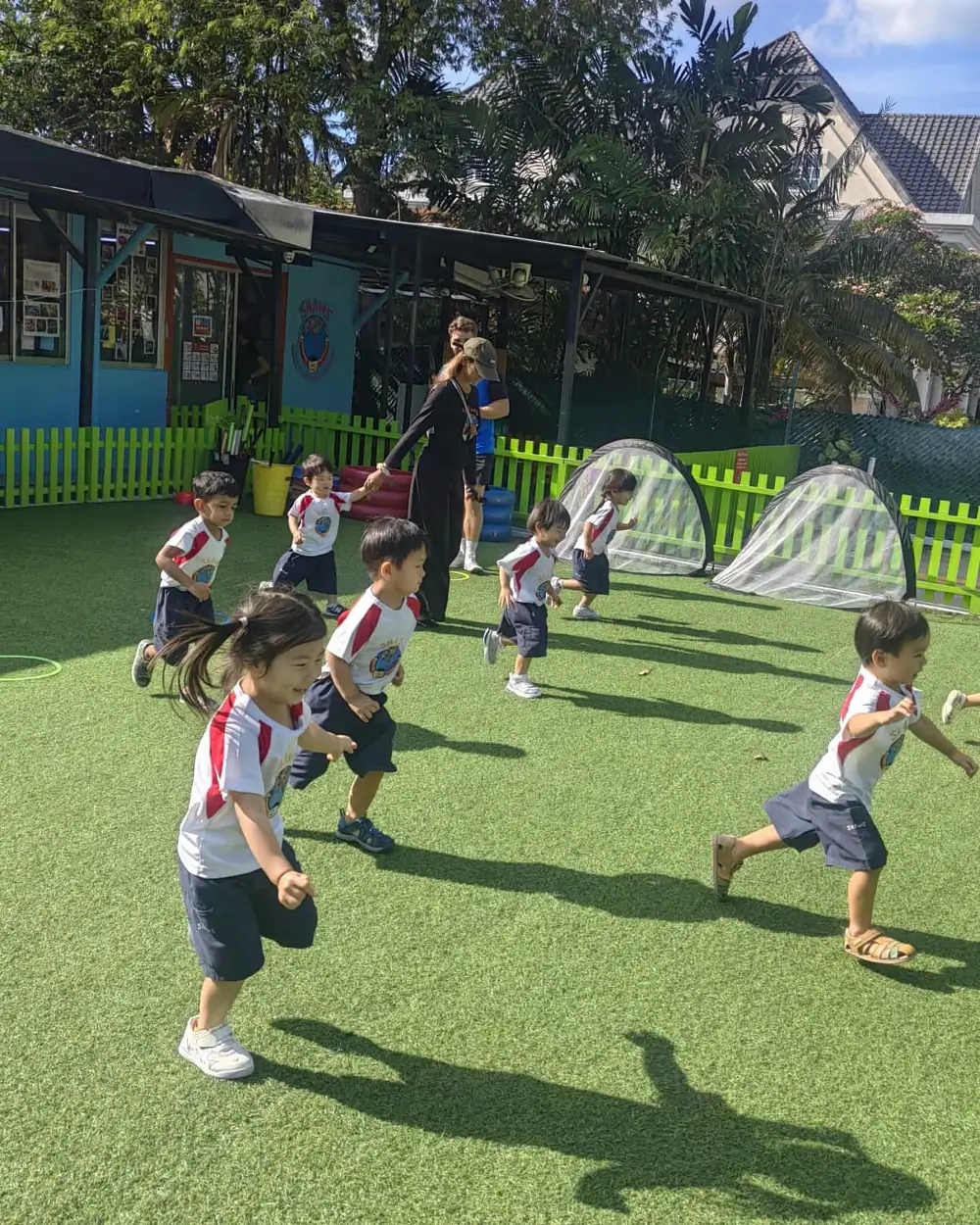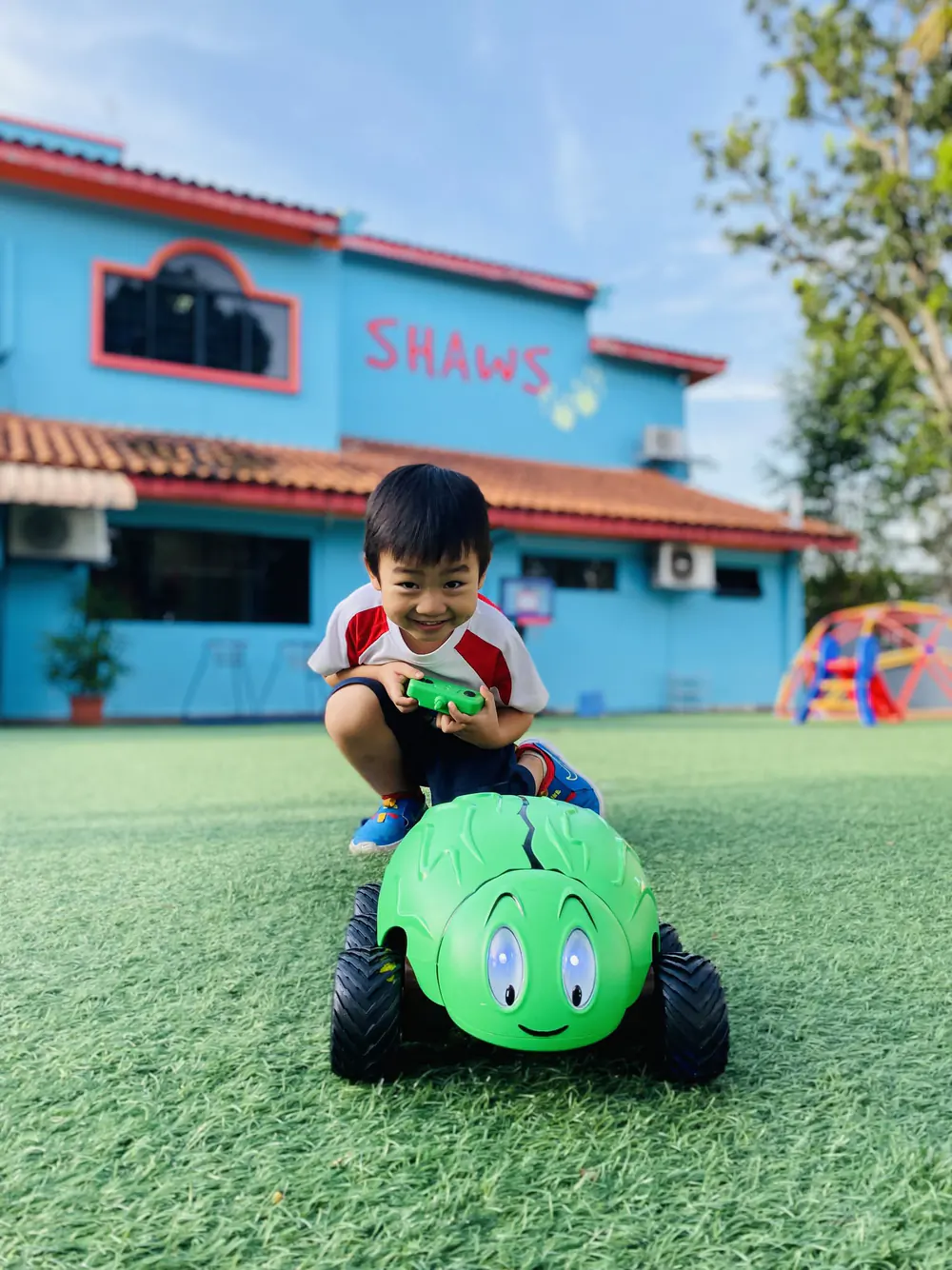
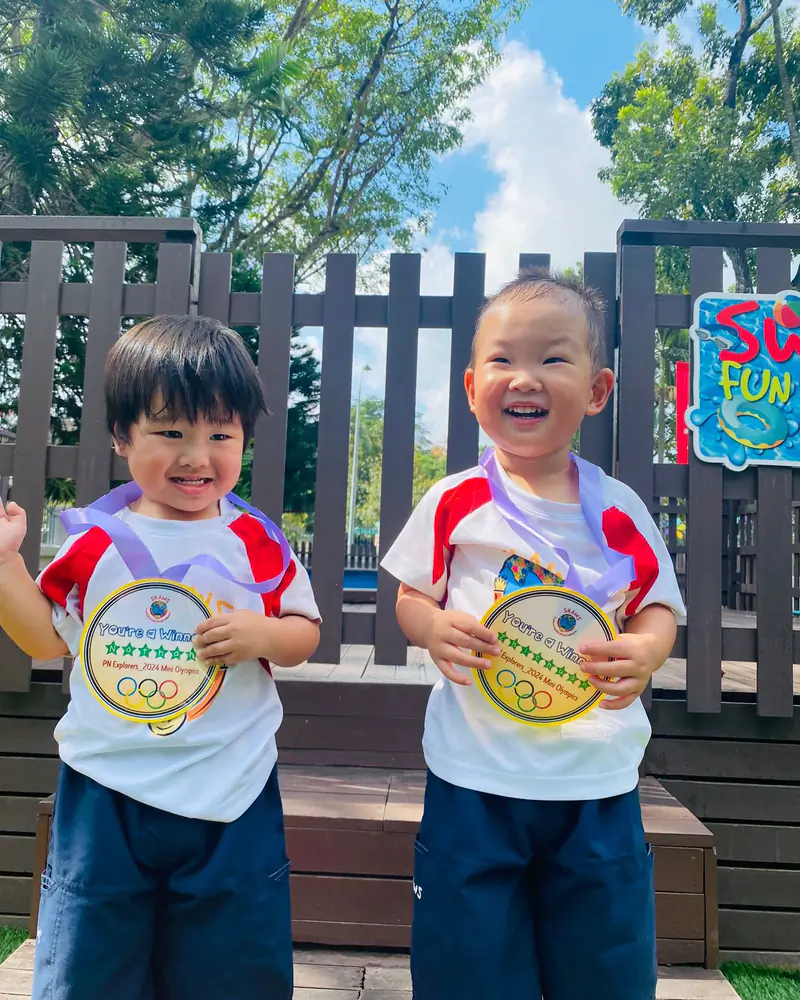
Sports Day is one of the best days of the preschool year. There is a field full of children in matching T-shirts with grandparents lining the track. Then comes the moment a medal is hung around a small neck. At Shaws, it is the event nobody forgets.
It can also be a big day emotionally. Some children run their race and wave at the crowd, delighted with themselves whatever happened. Others are undone by a stumble, a slower friend overtaking them, or simply the noise. With a little preparation, most children can enjoy the day, and learn something about winning and losing along the way.
How young children understand competition
The idea of winning develops gradually through the preschool years.
Toddlers and younger preschoolers, roughly up to about four, often do not really understand races at all. They may stop halfway to wave, run back to a parent, or wander off to look at something more interesting. For them, Sports Day is about taking part in a big event. That is exactly right.
Four-year-olds start to notice who came first, and some care a great deal. This is often the age of the first real Sports Day tears.
Five- and six-year-olds understand winning and losing clearly. Many are very competitive. They are also old enough to learn how to handle disappointment, especially with adults showing them how.
Knowing where your child is helps you set the right expectations. A three-year-old who sits down in the middle of the track has not failed at anything.
Before the day
Talk about what will happen. Describe the field and the crowd, and how noisy it might be. Children cope better with what they can picture.
Practise at home. Run a few races in the park. An egg and spoon race with a potato is fun, and so is a sack race in a pillowcase. Let them win sometimes and lose sometimes.
Talk about the feelings, too. "Sometimes people win and sometimes they don't. Everyone feels a bit sad when they don't win. What could you do if that happens?" Let your child come up with ideas.
Get the basics right. A good night's sleep and a proper breakfast matter more than any warm-up. Pack a hat and a water bottle too. Tired, hungry children have very little patience for disappointment, and Singapore heat makes this doubly true.
What to say on the day
The words you choose before a race shape how your child thinks about it. Phrases that work well include:
- "Have fun and run your fastest."
- "I can't wait to watch you."
- "I'll be cheering right here."
Phrases best left unsaid include:
- "You have to win."
- "Beat your friend."
- "Don't let me down."
During the race, cheer for everyone's effort. Children notice when their parent shouts for other children too, and it teaches them that Sports Day is a shared event rather than a personal contest.
After a race
Lead with what they did. "You ran all the way to the end without stopping." Specific comments about what they did mean far more than a general "good job".
Accept disappointment. If your child is upset about losing, do not rush to fix it or tell them it does not matter. To them, it matters. "You really wanted to win that one. It's hard when that happens." Then give them a hug and a little time.
Avoid comparisons. Comments about who was faster, or how a sibling did last year, rarely help.
Celebrate the medal. At Shaws, medals are for everyone. A child who came last in their race and still wears their medal proudly at dinner has learned something important about taking part.
Teaching children to lose well
Losing gracefully is a skill. Like other skills, it improves with practice in low-stakes moments long before Sports Day.
- Play games at home where someone loses. Board games count, and so do simple races in the park. Our article on ball skills before six has ideas for easy ball games at home.
- Do not always let them win. Children who are always allowed to win find real losses much harder. Let the result fall where it falls, at least some of the time.
- Lose out loud yourself. "Oh, I lost. I'm a bit disappointed. Good game, though. Shall we play again?" Children copy what they see.
- Shake hands or high-five after a game. A simple ritual helps children move on.
- Notice good sportsmanship. "You said well done to your sister even though you wanted to win. That was kind."
The executive function skills involved in coping with a loss are worth building. You can read more about them on our executive function page.
If your child does not want to take part
Some children find the crowd overwhelming and refuse to join in. Try not to force it. Stand close, let them watch for a while, and offer to walk part of the way with them if the school allows. Many children join in once they see their friends having fun.
If they still do not want to, that is fine. Watching is a way of taking part, and next year they may be first to the starting line.
How sport fits into the Shaws week
Sport is one of the five learning areas in the Shaws curriculum. Shaws Little League coaches are on site twice a week at every campus, at no extra cost, running coached sessions in sports such as football and rugby. Teamwork is a big part of every session, and so is learning to lose gracefully. By the time Sports Day arrives, children have had plenty of practice at following rules and cheering each other on.
Family days are another highlight. Parents and grandparents come out on the field, tug-of-war included.
When to seek advice
Most strong reactions to losing are a normal part of development. If your child has very intense or long-lasting meltdowns over losing that do not ease with age, or avoids any activity where they might not succeed, talk to their teacher. They can tell you how your child copes in everyday games, and suggest what might help.
Shaws Preschool has made sport and outdoor play part of every week across the East Coast and Serangoon since 1989. Come and watch a Shaws Little League session: book a tour.