
Quick answer: children can start enjoying water as babies, and many are ready for formal swimming lessons at around four, when they can follow instructions and coordinate arms and legs. Water confidence can be built much earlier, through relaxed play with a parent. No lesson, at any age, makes a young child safe on their own near water, so close supervision always comes first.
Singapore is a city of pools. Condo pools, public pools, hotel pools on holiday, and the sea at East Coast. For many families water is part of the week from the very beginning, which makes the question of lessons feel pressing.
It is a good question, but it is really two. When should my child become comfortable in water, and when should they learn to swim?
Water confidence comes first
Water confidence is a child who enjoys being in the water, is happy to get their face wet, can blow bubbles, kicks while held and trusts the adult with them. It is built through play, not instruction, and it can start as early as you like.
- Bath time with cups and jugs, and water poured gently over heads.
- Paddling pools and splash playgrounds.
- Short, warm, happy sessions in shallow water with a parent holding them.
- Songs and games: kicking like a frog, reaching for a floating toy, gentle bobbing.
A child who arrives at lessons already relaxed in water learns far faster than a frightened one. So this stage matters, even though nothing about it looks like swimming.
When formal lessons make sense
Parent and baby or toddler classes are mostly about confidence and familiarity. They are enjoyable, and there is some evidence that lessons from around age one may lower drowning risk. They will not produce a swimmer, and they are not a substitute for supervision.
Formal lessons, where a child learns to float, kick, glide and move through water independently, tend to work best from around four, though children vary a great deal. Before that, most do not yet have the coordination, strength or attention span for strokes, and progress is slow.
Starting at three is not wrong. It may simply take a good deal longer to reach what a five-year-old manages in a term.
Signs your child is ready
- Happy to put their face in the water and blow bubbles.
- Can follow simple instructions from an adult who is not their parent.
- Can separate from you for a short class without distress.
- Comfortable in a small group of children.
- Has the stamina for a half-hour session.
- Is keen, or at least curious, rather than terrified.
If your child is genuinely afraid, pushing them into lessons tends to make it worse. Go back to relaxed water play for a few months, then try again.
Choosing lessons
- Small groups or individual lessons for younger children.
- Warm water. Cold children stop learning and start shivering.
- Qualified, patient teachers who never dunk or force a child under.
- Water safety as well as strokes: getting to the edge, climbing out, floating on the back, what to do after falling in.
- Short sessions. Thirty minutes is plenty at this age.
Many swim schools here follow Singapore's national SwimSafer programme, which combines swimming skills with water safety. It is worth asking about.
Safety around pools and the sea
This is the part that matters most, whether or not your child has lessons.
Drowning is fast and silent. A young child in trouble does not usually splash or shout. They slip under quietly, often within seconds.
Stay within arm's reach of any child who cannot swim confidently, in or near the water. With older children who can swim, stay close and keep your eyes on them, not on your phone.
Appoint a water watcher. At a pool party or family gathering, one adult watches the children and does nothing else, then hands over clearly to the next adult. When everyone is watching, often nobody is.
Do not rely on armbands or floats. Inflatable toys and armbands are not safety devices, and they slip and deflate. On boats, kayaks and open water, use a properly fitted life jacket.
Many condo pools have no lifeguard. Treat them as unsupervised water.
The sea is different. Waves, currents, uneven sand and cloudy water make even shallow sea much harder than a pool. Stay very close, stay in the shallows, and swim only where it is permitted. Come out of the water when there is thunder or lightning.
Teach the rules early. Never go near water without a grown-up. Walk, do not run, around pools. Get out when an adult says so.
Baths and buckets count too. Toddlers can drown in very shallow water. Never leave a young child alone in the bath, even for a moment.
What we do at school
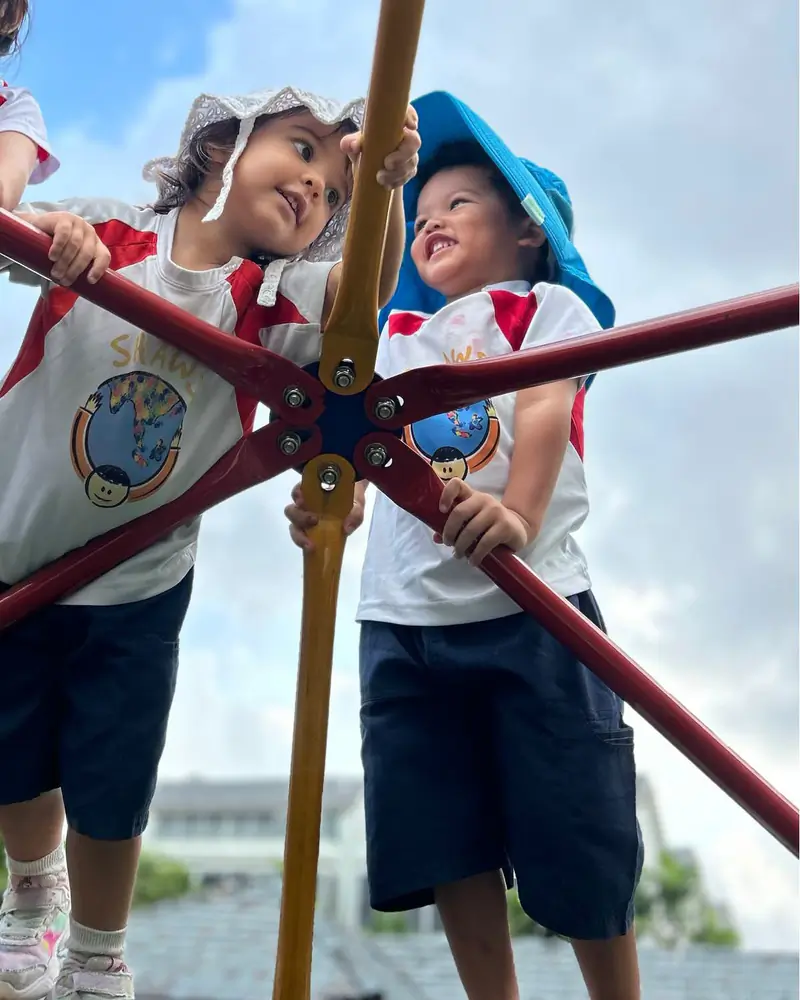
Water play is a regular and much-loved part of our week, closely supervised, because comfort in water starts with splashing, pouring and getting wet without worry. Teachers help children enjoy it, try new things at their own pace, and learn simple habits, such as waiting for a grown-up and telling an adult when a friend needs help.
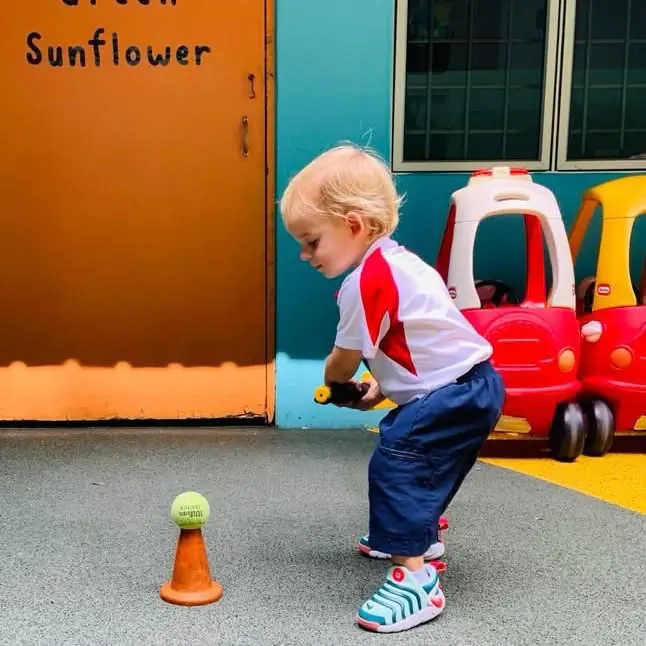
Our sports coaching builds the strength, balance and coordination that make learning to swim easier later on.
The long view
There is no prize for swimming first. A child who comes to lessons at four or five with a love of water and a healthy respect for it will be swimming happily soon enough, and will have the safety habits that matter far more than an early start.
Shaws Preschool has built confident, active children across the East Coast and Serangoon since 1989, with water play and sport part of every week. Come and see: book a tour.