Quick answer: most four-year-olds are ready for sport, but not really for team sport in the adult sense. At this age the best programmes focus on running, throwing, kicking, catching and fun, with very little formal competition. If your child can follow a simple instruction, cope with a group and wants to go, a relaxed, well-coached class is a good idea. A league table is not.
Somewhere around four, the invitations start. A friend's child is doing football on Saturdays, a flyer arrives for mini rugby, and your own child comes home asking to play. It is a lovely instinct and worth encouraging.
It helps, though, to know what a four-year-old is actually ready for, because it is quite different from what an eight-year-old is ready for.
What four-year-olds can and cannot do
Physically, four is a wonderful age. Children can run, jump, climb, kick a moving ball with some success and throw with growing accuracy. They are building the basic movement skills that every later sport relies on.
What most of them cannot yet do is think tactically. Passing to a teammate in a better position requires understanding what someone else can see, planning ahead and giving up the ball you want. That usually comes later, often around six or seven.
This is why a match between four-year-olds looks like a swarm of bees chasing one ball. Nothing has gone wrong. It is simply how four-year-olds play football.
Signs your child is ready
- They want to. The single best predictor of a good experience. Interest can be sparked, but it cannot be forced.
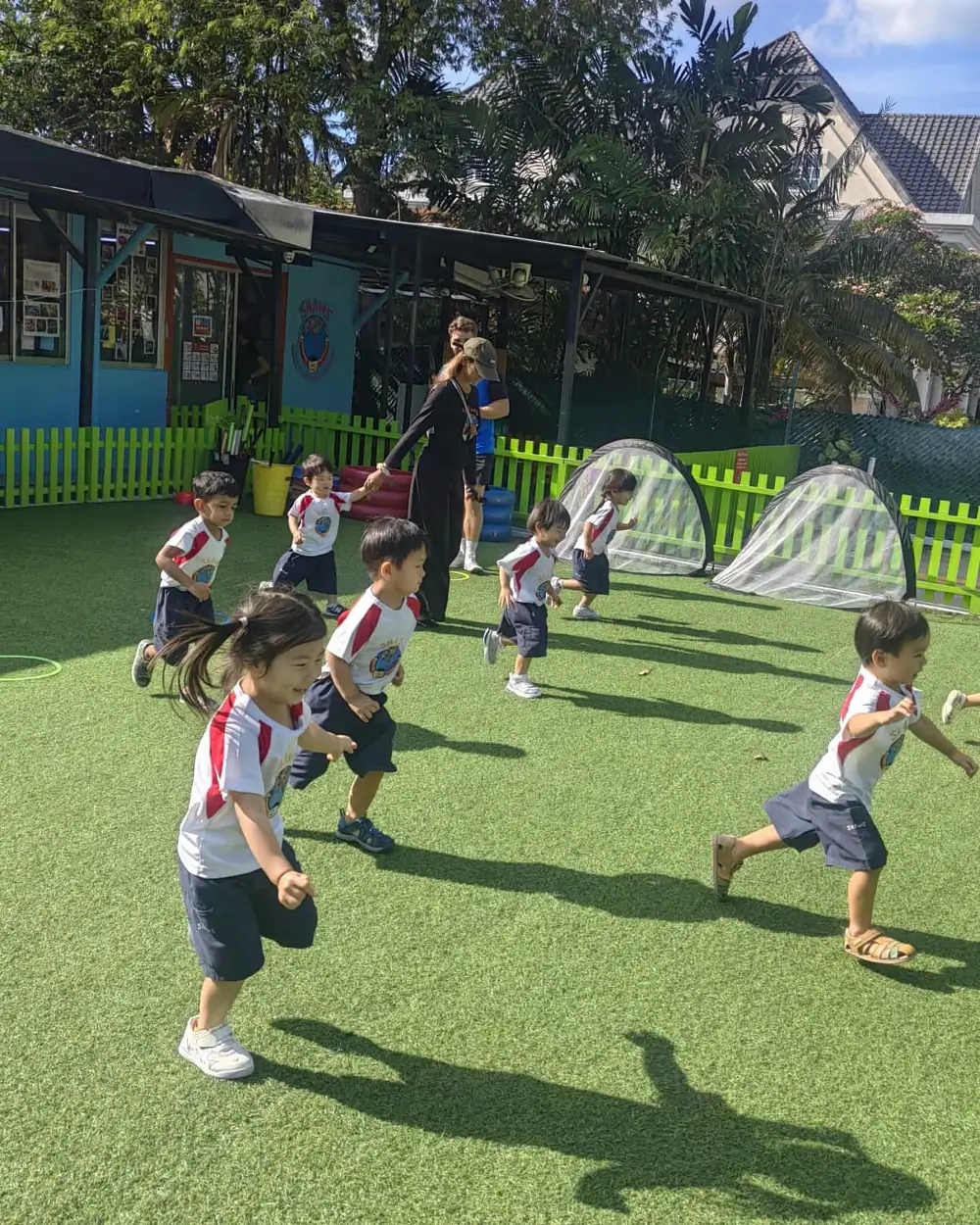
- They can follow a simple instruction in a group. "Everyone run to the cone" is a fair test.
- They cope with not being the centre of attention. Waiting for a turn, sharing a coach and hearing no now and then.
- They can manage separation for an hour. Or you can stay nearby, which many programmes welcome at this age.
- They have the energy for it. A class straight after a long day at preschool may be a stretch. Weekend mornings often work better.
If several of these are missing, it is not a failure. Wait six months, keep kicking a ball in the park and try again.
What good coaching looks like at this age
This is where the choice really matters. A good early years sports session tends to have:
Lots of movement, very little queuing. Every child should have a ball or be moving most of the time. Long lines waiting for one turn are a warning sign.
Games, not drills. Four-year-olds learn to dodge by playing tag, and to dribble by pretending the ball is a puppy that must stay close. Good coaches wrap skills inside stories and games.
Short, clear instructions. One idea at a time, shown as well as said.
Encouragement about effort. "You kept your eyes on the ball that time" is coaching. Shouting at a four-year-old from the sideline is not.
Small groups. A sensible ratio lets the coach actually notice each child.
No keeping score, or not taking it seriously. Some friendly competition is fine. Trophies for winning at four are not needed.
It is well worth watching a session before signing up. You will know within ten minutes whether the children look happy and busy.
Fun first, competition later
Children who stay in sport into their teens are mostly the ones who enjoyed it when they were small. Early pressure, too much focus on winning or specialising in one sport very young are all associated with children dropping out later.
At four, the aim is a child who loves moving, has a broad base of skills and thinks of sport as something they are good at. Trying several activities over the years builds a better athlete than drilling one.
Losing will come up anyway. When it does, keep it light. "That was a close game. What was your favourite bit?" is enough.
Watch the diary
It is easy to add a sport, then swimming, then music, then a language class, and discover that your child has no unstructured time left. Many experts now suggest no more than about two structured activities a week for children under eight.
Free play in the park counts as sport too. Chasing, climbing and kicking a ball with a parent do much of the same work, with none of the timetable.
Signs a week is too full: more tiredness and tears than usual, reluctance to go to things they used to enjoy, or no time left for simply playing at home.
What this looks like at Shaws
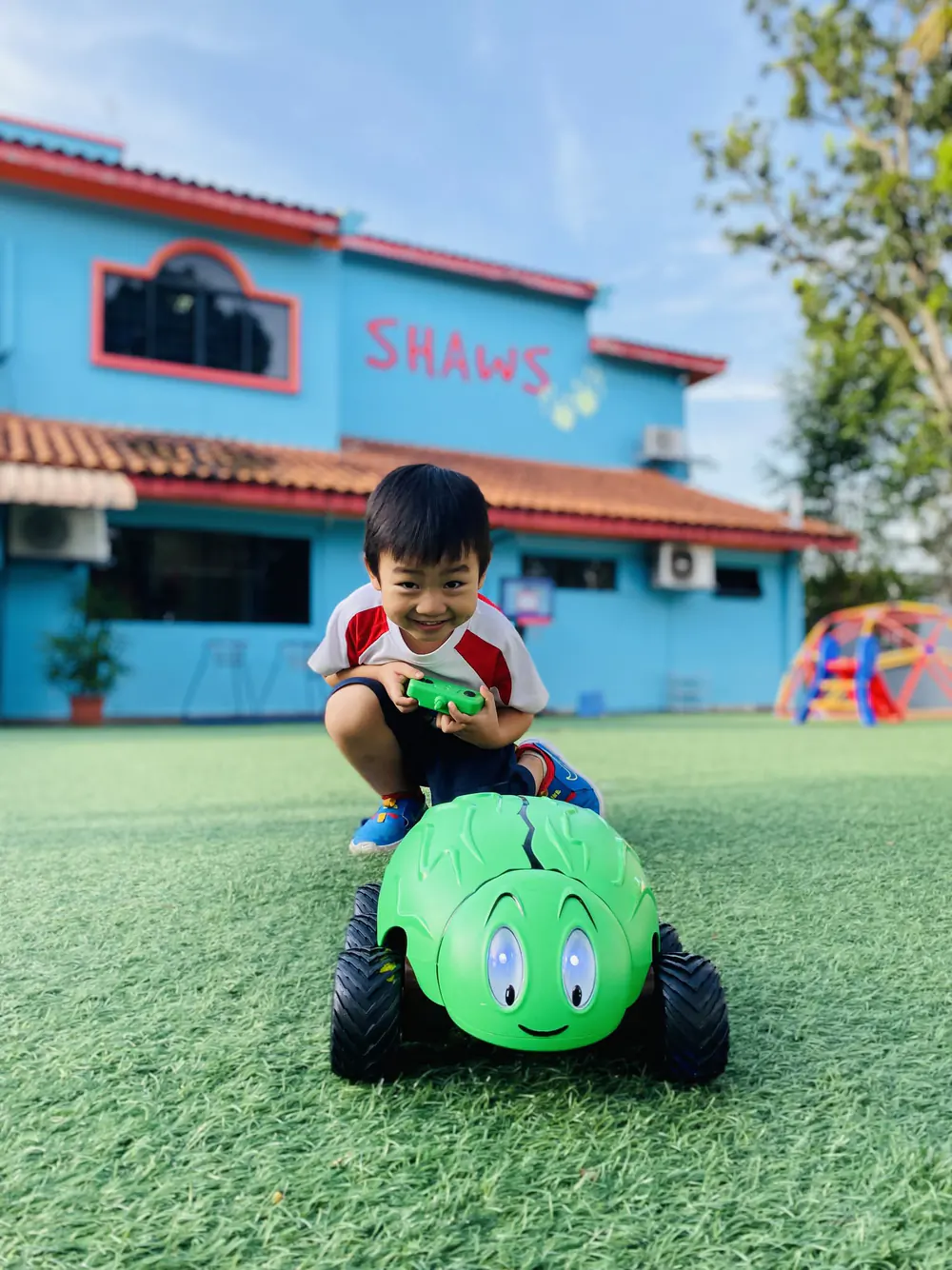
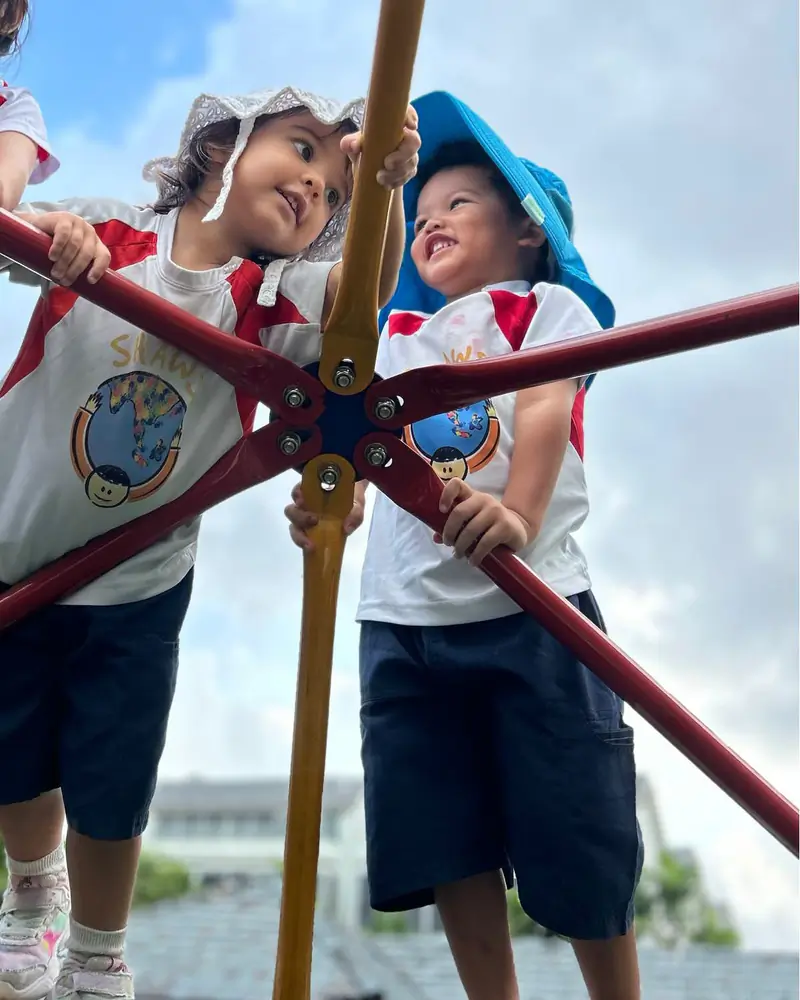
Sport is part of our ordinary school week, with coaching that focuses on the building blocks: running, balance, throwing, catching and kicking, taught through games. Children learn to take turns, listen to a coach and cheer each other on, well before anyone keeps score.
That means a child who later joins a weekend team usually arrives already comfortable in a group, already able to follow a coach and, most importantly, already enjoying it.
The real goal
The best outcome at four is not a future captain. It is a child who comes home muddy, tired and asking when they can go again. Get that right and the skills, and the teamwork, follow.
Shaws Preschool has built daily sport and outdoor play into the preschool week across the East Coast and Serangoon since 1989. Come and watch a coaching session: book a tour.