Toddlers · 2 years
First independence
- Drinking from an open cup
- Using a spoon with reasonable success
- Putting toys into a box when asked
- Washing hands with help
- Naming a feeling — happy, sad, cross
Private tours, every week — come and see a morning of play-based learning at whichever campus suits you.
Book a tourPouring their own drink. Zipping their own bag. Saying what they need without crying first. These are teachable, and preschool is exactly when to teach them.
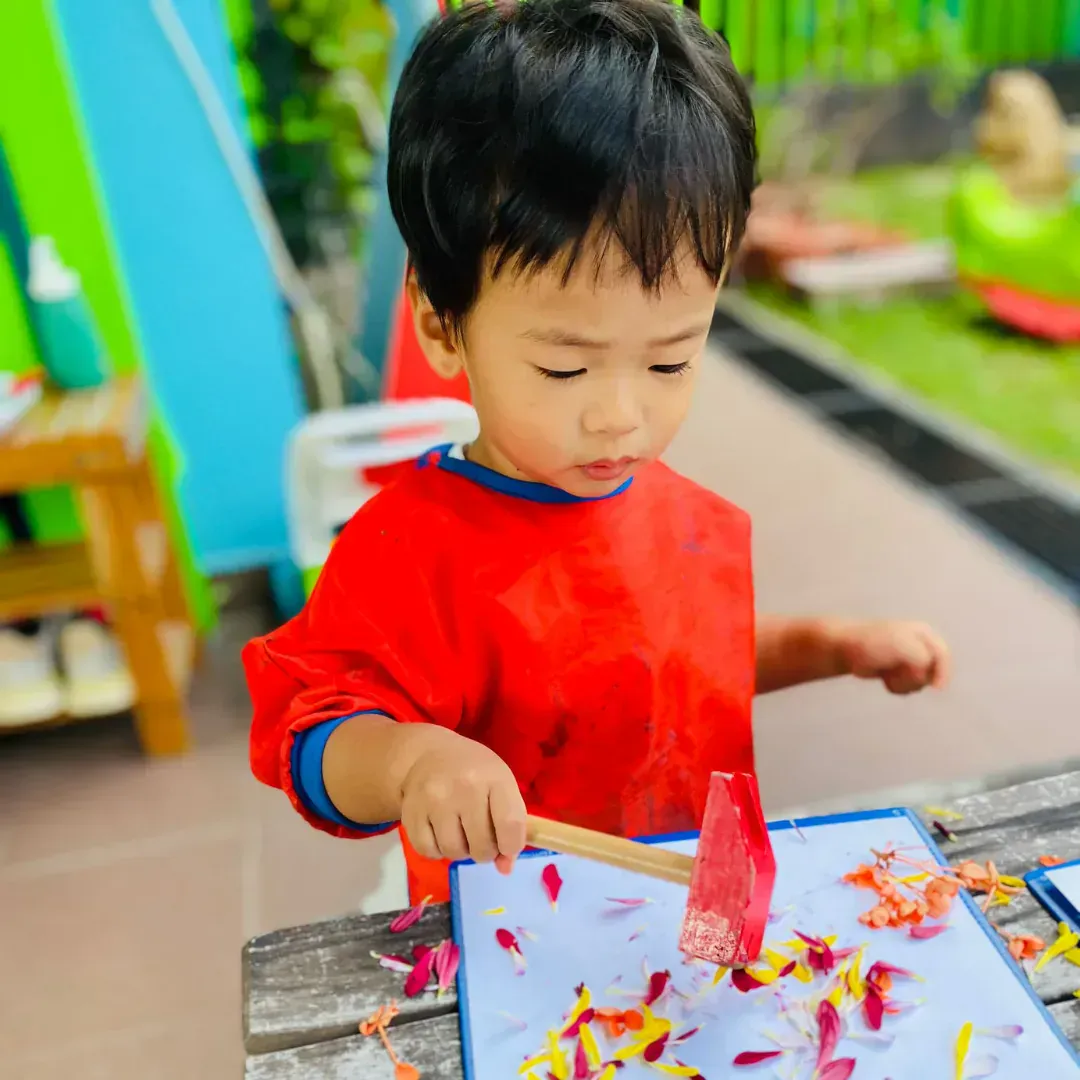
Anything a child will eventually need to do without an adult standing over them. That covers more ground than most parents expect: dressing and toileting, yes, but also asking for help, waiting, tidying up, resolving a disagreement, recognising when they are tired or hungry, and coping when the answer is no.
Because they don’t reliably develop on their own, and because they are quietly load-bearing. A child who can manage their own bag and lunchbox starts primary school with attention to spare for the actual lessons. A child who can articulate a problem gets help faster.
There is also a confidence effect that’s hard to overstate. Competence is what independence is built on — children who can do things for themselves behave like people who can do things.
It is almost always faster to zip the jacket yourself. The cost is that the child doesn’t learn to zip a jacket, and quietly learns something else: that this is a thing adults do. The fix is unglamorous — build in more time, and tolerate the mess of a job done badly for a few weeks.
Every child arrives at these at their own pace. Use it as a direction of travel, not a checklist.
Toddlers · 2 years
Nursery 1 · 3 years
Nursery 2 · 4 years
Kindergarten 1 · 5 years
Kindergarten 2 · 6 years
Life skills at Shaws don’t occupy a slot on the timetable. They are built into the routines that already exist, which is the only way they stick.
It is slower than you’d do it, messier than you’d like, and entirely the point.