Quick answer: preschoolers need to move every day, rain or not, and a small flat can host surprisingly energetic play. Obstacle courses, balloon games, animal walks, tape lines on the floor and dance games all burn real energy with almost no equipment. Clear some space, set a few simple rules, and keep a short list ready before the next storm.
Singapore's late-year weather has a routine of its own. Around October and November, bright mornings often give way to heavy afternoon thunderstorms. From around December, the northeast monsoon brings longer grey spells that can last for days.
For a four-year-old with energy to spare, that means a lot of time indoors. Without a plan it tends to become a lot of screen time, or a lot of climbing on things that were not built for climbing.
The goal is not to keep them quiet. It is to get their heart rate up, safely, inside.
First, rain is not always a reason to stay in
Warm rain without thunder is not dangerous, and many children love it. A walk in wellies, puddle jumping at the void deck or a run around a covered playground is excellent play.
Thunder is different. If you can hear it, come inside and stay in until it has passed. The myENV app can send lightning alerts for your area, which is useful on changeable afternoons.
Set up the space
- Move breakables and push back the coffee table. A clear rectangle of floor is worth ten toys.
- Bare feet on smooth tiles. Socks on a polished floor turn every game into a slipping hazard.
- Check corners and edges. Cushions or a folded blanket can soften the worst ones.
- Agree a couple of rules. No climbing on shelves. Stop means stop.
- Think about the neighbours. Jumping is best on a mat or rug, and at a reasonable hour.
Games that burn real energy
The cushion obstacle course. Sofa cushions to hop across, a blanket over two chairs to crawl under, a line to balance along, a laundry basket to throw socks into. Let your child design the next course. Time them if they like, and let them time you.
The floor is lava. Pillows, towels and cushions become islands. Children must get from one side of the room to the other without touching the floor. Move the islands further apart as they improve.
Tape roads and balance beams. Masking tape on the floor makes a straight line to walk heel to toe, a zigzag to jump along, or a hopscotch grid. It peels off cleanly from most tiles.
Balloon keepy-uppy. Keep a balloon off the ground using hands, then only heads, then only elbows. Balloons move slowly, so young children genuinely succeed, and a balloon is far kinder to lamps than a ball. Supervise closely, and tidy away burst pieces straight away.
Animal walks. Bear crawl on hands and feet, frog jumps, crab walks, snake slides, kangaroo hops, flamingo balance on one leg. Call out an animal and change it often. These build strength as well as burning energy.
Freeze dance. Music on, everyone dances wildly, music off, everyone freezes. Add a rule for the next round: freeze as a statue, freeze very low, freeze on one leg.
Sock basketball. Rolled-up socks thrown into a basket or bucket. Move the basket back a step after every successful throw.
Wheelbarrow walks. Hold your child's legs while they walk on their hands. Excellent for upper body strength and very funny for everyone.
Simon says, but active. Simon says do five star jumps. Simon says run on the spot. Simon says touch the wall and come back.
Pillow fort, then pillow mountain. Building involves lifting, dragging and stacking, which is a workout in itself. Climbing over the result is the reward.
Bubble chase. Blow bubbles high in a clear room and let them chase and pop them before they land. Choose a tiled area and wipe up afterwards.
Calm down at the end
After a burst of energy, children need help coming back down, especially before a meal or a nap. Try:
- Slow animal stretches. Sleepy cat, tall giraffe, a turtle curled in its shell.
- Balloon breathing. Breathe in to fill a pretend balloon slowly, breathe out to let it go.
- A story on the cushions they have just finished jumping on.
Keep a rainy day list
Write five or six of these on a piece of paper and stick it inside a cupboard. When the sky darkens at three o'clock, you will not have to think. Your child can also choose from the list, which reduces the arguments considerably.
A small box with tape, a few balloons, a soft ball and a bubble mixture covers almost everything above.
What we do at school
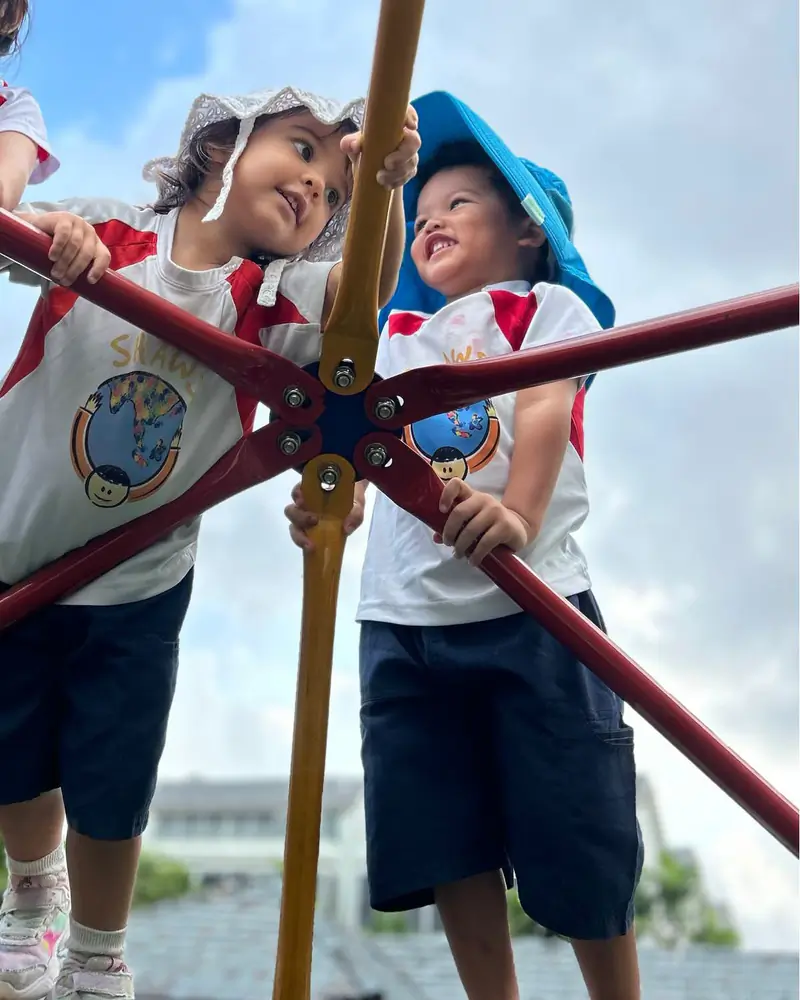
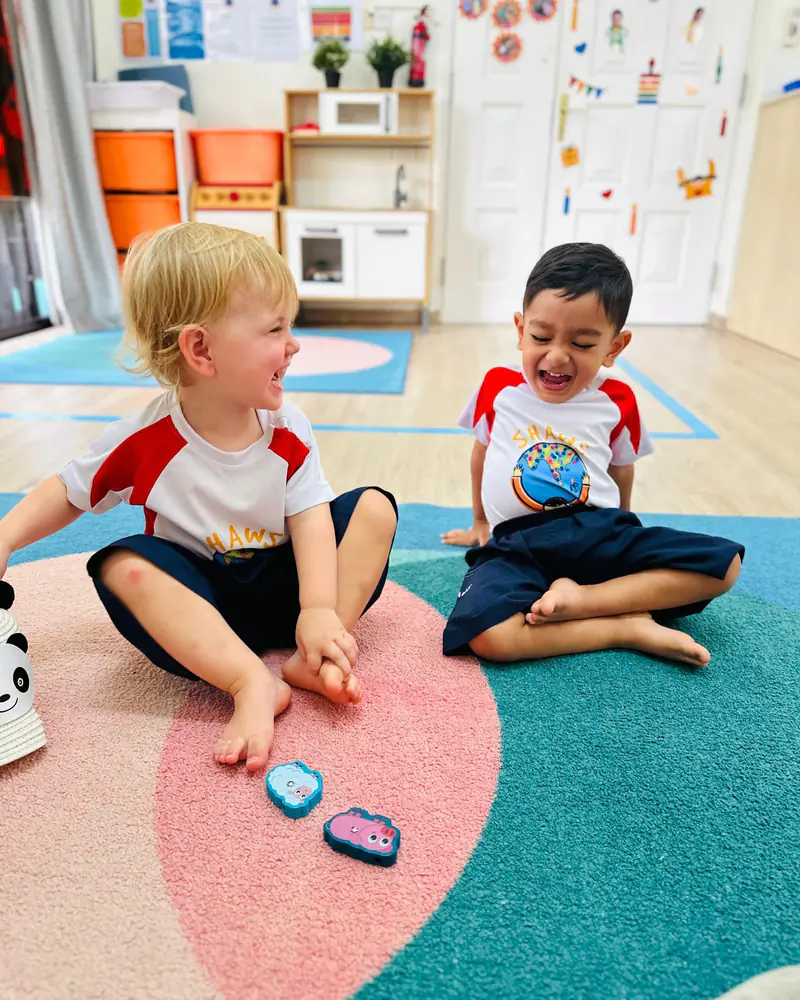
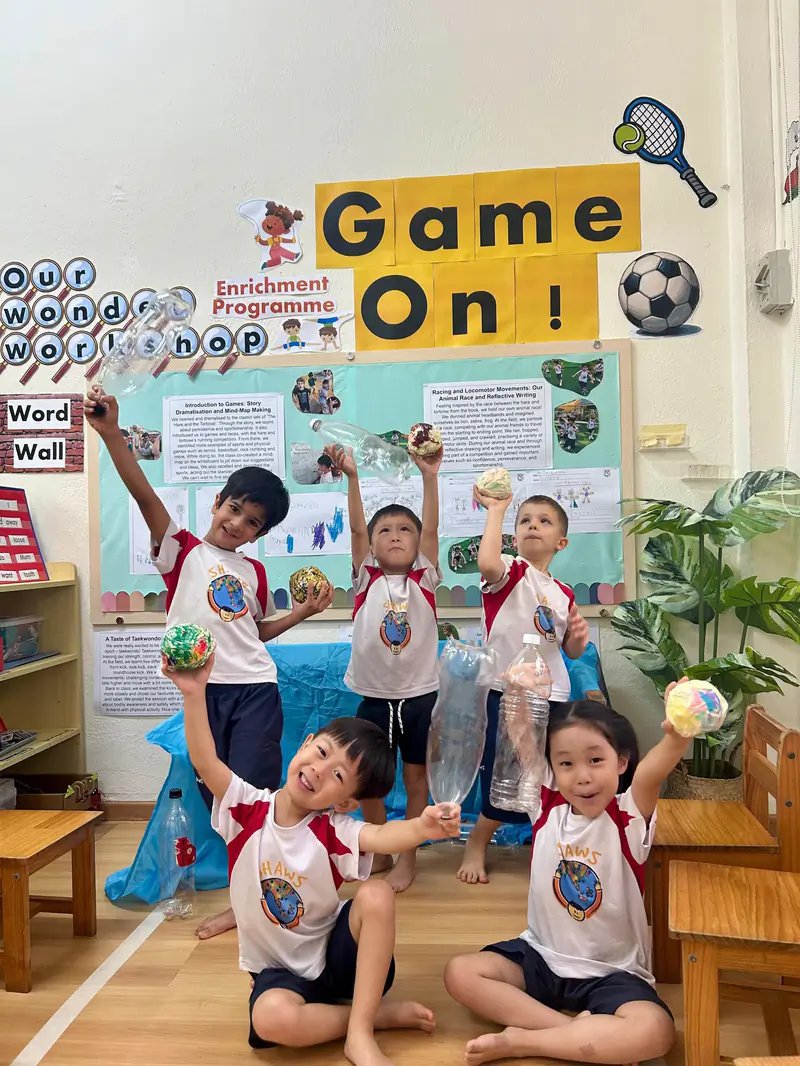
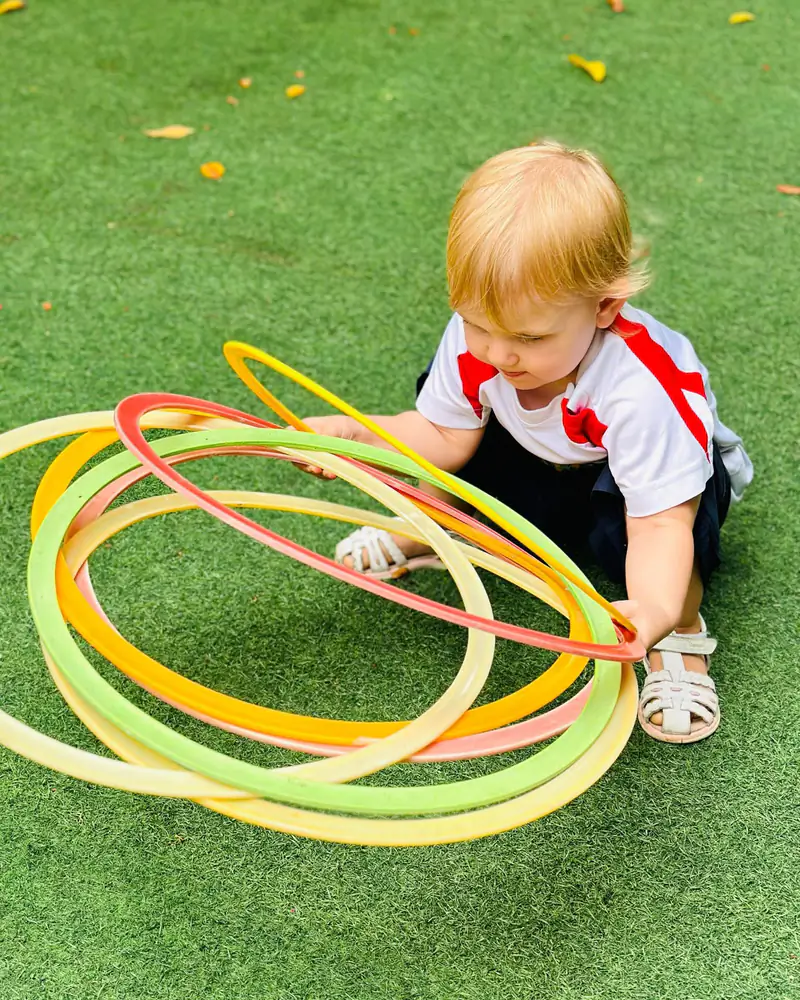
Rain does not cancel movement. Our teachers use covered spaces and classrooms for active games, music and movement, and sports coaching adapted for indoors, so that children still run, jump, throw and balance on the wettest days. Children who move plenty during the day tend to concentrate better and sleep better, whatever the weather.
The storms pass quickly more often than not. When they do, the puddles will still be there.
Shaws Preschool has kept children moving through every kind of weather across the East Coast and Serangoon since 1989, with daily sport and outdoor learning. Come and see a morning, rain or shine: book a tour.