Singapore has no shortage of sports classes for small children. Football on a Saturday morning, gymnastics after school, swimming in the condo pool. Many parents sign up without being quite sure what a good class for a four-year-old should look like, or how to tell whether their child is getting much from it.
A great session for under-sixes looks very different from training for older children or adults. Once you know what to look for, you can spot good coaching within ten minutes of standing on the sideline.
Games come before drills
Young children learn movement skills by playing. A good coach builds a session out of games that happen to practise a skill, rather than lines of children taking turns at an exercise.
Instead of six children queuing to kick a ball at a goal, you might see a game of "sharks and fishes" where every child has a ball and must dribble to safety. A lecture about throwing technique can become a game of knocking over cones. The skill is the same. The difference is that every child is moving and having fun the whole time.
Signs of a good session
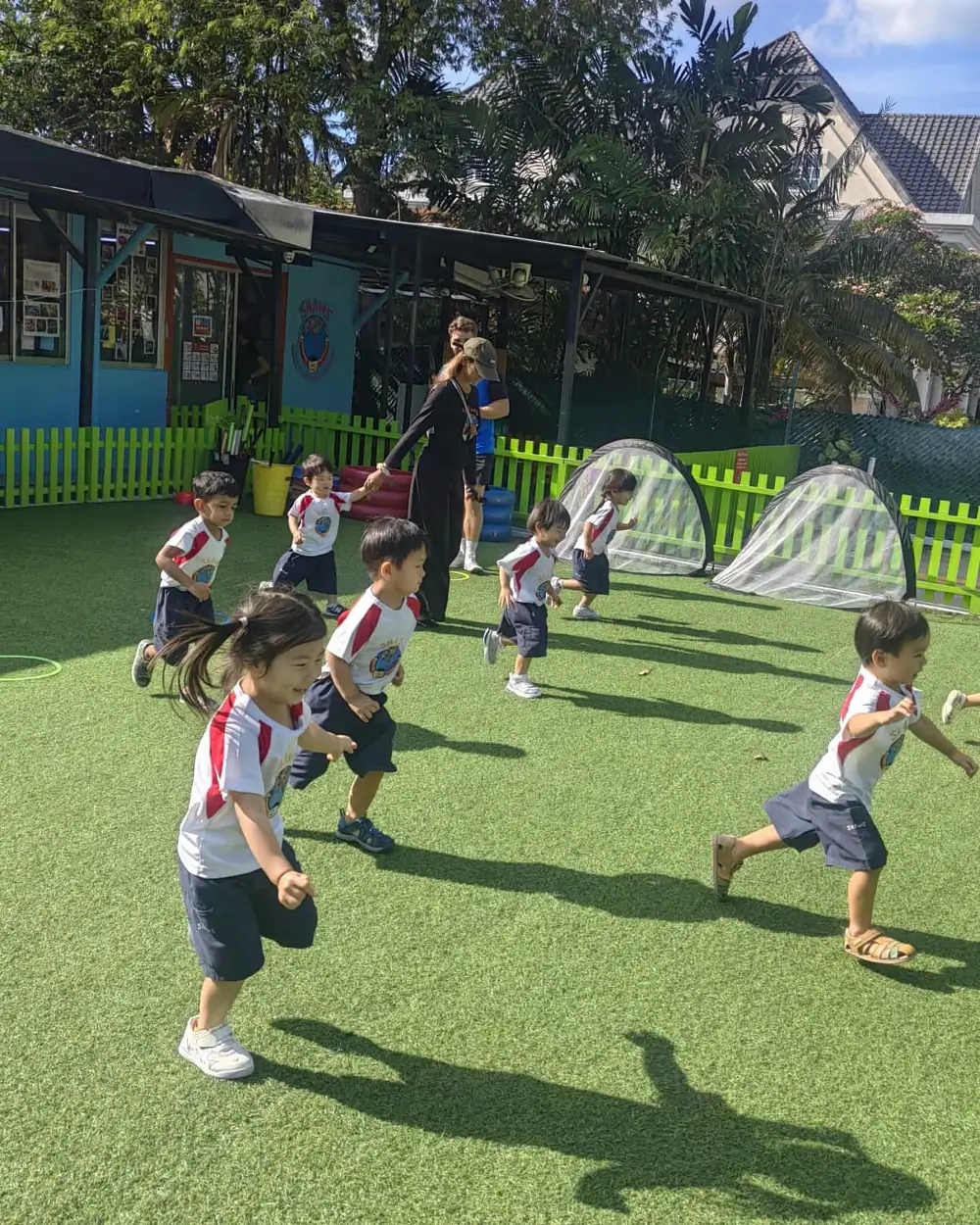
Everyone is busy. The single best sign is how much time each child spends moving. In a good session, children rarely stand still for long. Queues are short or non-existent, and there is enough equipment for everyone.
Instructions are short. Young children cannot hold long explanations in their heads. Good coaches demonstrate and say one or two things, then get the children going. They add a new idea once the first has sunk in.
The coach gets down to their level. Literally. A coach who crouches to talk to a three-year-old and uses their name is far more effective than one shouting instructions across a field.
Equipment fits small bodies. Smaller balls and shorter distances let children succeed. A full-size football is heavy and hard for a four-year-old to control.
Everyone stays in. Elimination games, where children who are tagged sit out, mean the children who most need the practice get the least. Good coaches adapt games so that being caught means a quick task, then straight back in.
Effort gets praised. Listen to the language. "Great try, you kept your eyes on the ball" teaches far more than "Well done" or "Not like that".
The session is varied. Under-sixes have short attention spans. A good session moves between several short activities, with a calm moment at the end.
Children leave smiling. It sounds obvious, but it matters. A child who enjoys sport at four is more likely to keep playing at eight and at fourteen.
Warning signs
A few things should make you look more closely:
- Long queues and lots of standing around.
- Shouting, or impatience with children who find something hard.
- A strong focus on winning and picking the best players.
- Full adult rules and full-size equipment for very young children.
- Children being pushed to continue when they are hurt or overheated.
- Little attention to water breaks and shade in our climate.
One poor session does not make a poor coach. Everyone has off days. A pattern, though, is worth acting on.
Questions to ask before you sign up
If you are choosing a weekend class, a short conversation with the coach tells you a lot. Ask how many children are in each group and how many coaches run it. Ask what a typical session looks like, and whether you can watch one or book a trial first. It is also worth asking what happens on very hot or wet days, and how the coach handles a child who does not want to join in. A coach who answers calmly and specifically, with examples, usually runs sessions the same way.
Why variety matters more than one sport
At this age, children benefit most from trying lots of different movements. Running and jumping matter, and so do throwing and catching, kicking and balancing. These fundamental movement skills are the base that every later sport is built on.
That is why many coaches for young children run multi-sport programmes rather than a single sport. A child who has tried four or five sports by the age of six has usually practised a wider range of movements than one who has done only one. There is plenty of time to specialise later, if they want to.
Singapore's Integrated 24-Hour Activity Guidelines for Early Childhood also recommend that older preschoolers, aged five to six, have a variety of vigorous play and muscle- and bone-strengthening activities several times a week. A good mix of sports covers that naturally.
How parents can help from the sideline
The adults watching shape a child's experience almost as much as the coach does.
- Cheer for everyone's effort. Children notice when you clap for their teammates as well as for them.
- Leave the coaching to the coach. Instructions from the sideline that contradict the coach are confusing.
- Stay calm about results. If you are relaxed, your child will be too.
- Ask good questions afterwards. "What was the most fun game?" or "What did you learn to do?" works better than "Did you win?"
- Let them have off days. Some sessions your child will be tired or distracted. That is normal for three- to six-year-olds.
Sport at Shaws
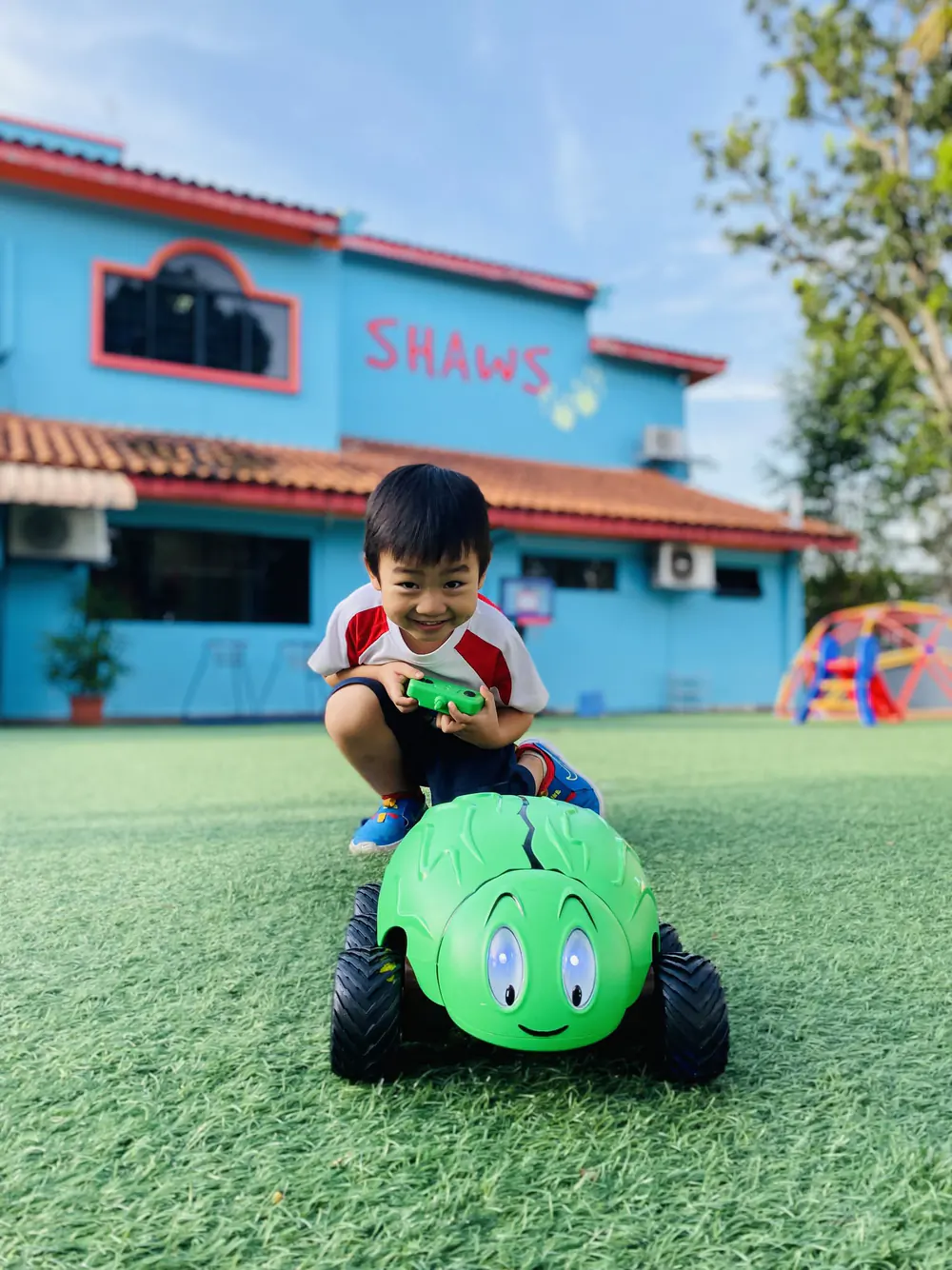
Sport is one of the five learning areas in the Shaws curriculum. We partner with Shaws Little League, whose coaches are on site twice a week at every campus, at no extra cost, for football and rugby, basketball and athletics. Sessions are designed for each age group. Teamwork is built into every one, and so is learning to lose gracefully.
For children who do not nap, the afternoon ShawsPlay Club includes sports-based play, with games drawn from a wide range of sports, from baseball to golf. Families who want more can choose optional extras from N1 and N2 upwards, including Shaws Little League sessions at the Cage and swimming at a local pool.
Our executive function page explains why coaching does more than build muscles. Following rules and keeping self-control under pressure are both practised on the field.
When to seek advice
Talk to your doctor if your child seems much less coordinated than others their age or tires very quickly. Pain during or after activity is also worth checking, as is a child who avoids any kind of physical play. Most children simply develop at their own pace, but it is always worth checking.
Shaws Preschool has made sport part of the week across the East Coast and Serangoon since 1989, with Shaws Little League coaches on site twice a week. Come and watch a session: book a tour.