Quick answer: balance and coordination are the physical foundation for sitting, listening and writing. A child who has to work hard to stay upright has less attention left for anything else. The way to build it is climbing, spinning, hanging, jumping and carrying, not extra practice at sitting.
Here is a link that surprises most parents. If a Primary 1 teacher tells you a child is fidgety and cannot stay in their seat, the answer is very often not more sitting practice. It is more climbing.
Why your body decides how well you concentrate
Sitting upright in a chair is not passive. It requires continuous small adjustments from the core, the back and the neck, and a constant stream of information about where the body is in space.
Two systems handle that. The vestibular system, in the inner ear, tells a child which way is up and how they are moving. Proprioception, from muscles and joints, tells them where their limbs are without looking.
When those systems are well developed, staying upright happens automatically and the child's attention is free for the teacher. When they are underdeveloped, the child is quietly spending effort on not falling off the chair, and that effort has to come from somewhere. It comes out of concentration.
This is why fidgeting, slumping, leaning on the table and falling off chairs cluster together, and why the fix is physical rather than disciplinary.
The same foundation carries handwriting
Writing needs a stable shoulder before it needs a good pencil grip. A shoulder is stable when the core underneath it is strong.
That is why we spend the preschool years on hanging from bars, wheelbarrow walks, crawling and carrying heavy things rather than on pencil control drills. Build the trunk and the shoulder, and the hand has something to work from. Skip that stage and you get a tired, cramped grip that no amount of practice fixes comfortably.
What builds it
The good news is that children want to do all of these things anyway. Our job is mostly to allow them.
Climbing. Playground frames, ladders, rocks, low walls, trees where you can find them. Climbing demands planning, grip strength, core control and courage all at once.
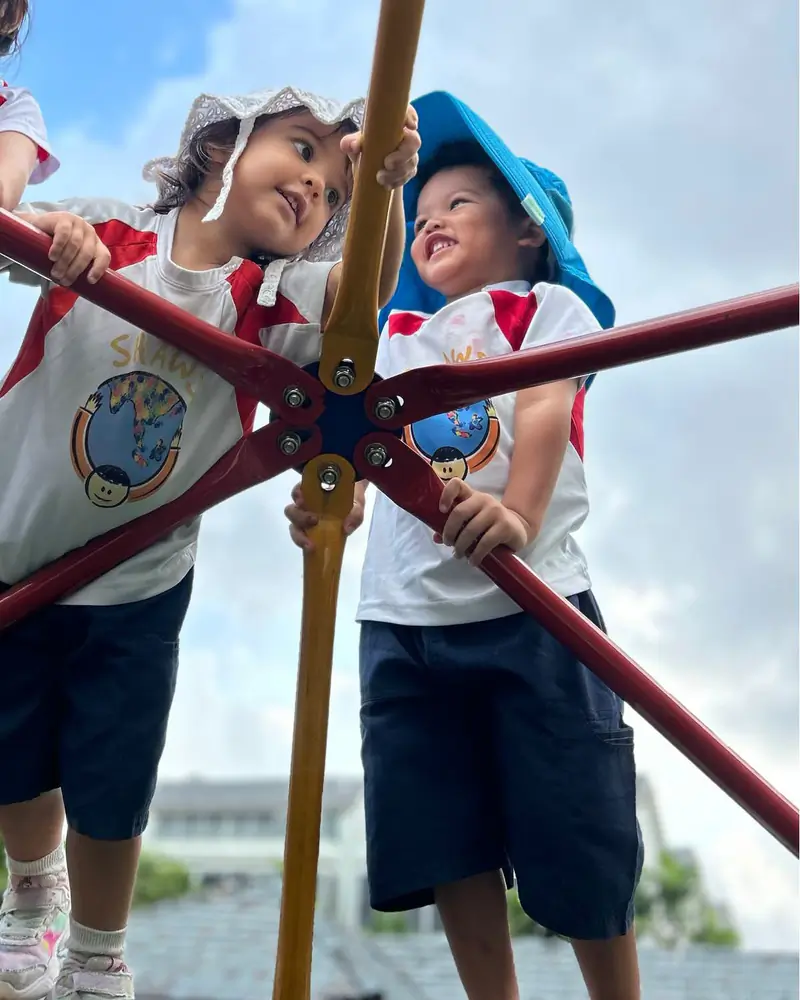
Hanging and swinging. Monkey bars are one of the most valuable pieces of equipment in any playground. Hanging builds shoulder stability and grip that go directly into handwriting.
Spinning and swinging. Roundabouts, swings, spinning until dizzy and stopping. This is direct vestibular training and children seek it instinctively.
Balancing. Walking along kerbs, lines, low walls and beams. Standing on one leg to put shoes on. Stepping stones.
Jumping and landing. Off low steps, over puddles, on and off cushions. Landing well is a skill.
Heavy work. Carrying the shopping, pushing a laden trolley, moving furniture cushions, digging. Children love being genuinely useful and their joints get strong feedback from the load.
Rough and tumble. Wrestling with a parent, piggybacks, being tipped upside down. It looks like nothing but it is rich input, and it is one of the fastest ways to settle a wound-up child.
Everyday ways to fit it in
You do not need a programme.
- Walk on every low wall and kerb you pass. Add the rule that stepping off means starting again.
- Let them carry their own bag, and the milk.
- Ten minutes at the playground on the way home rather than a straight route.
- Animal walks down the corridor: bear crawl, crab walk, frog jumps, one-legged flamingo.
- An obstacle course of cushions, a chair to crawl under and a line of tape to balance on.
- Wheelbarrow walking from the bedroom to the bathroom at bath time.
- Let them spin. Then let them stop and feel the world settle.
Two or three of these a day, mixed into ordinary life, is plenty.
Rough milestones
- 2 years: walks and runs steadily, climbs onto furniture, jumps with both feet leaving the ground.
- 3 years: stands on one foot briefly, walks up stairs with alternating feet, pedals a trike.
- 4 years: hops on one foot a few times, walks a line heel to toe, climbs confidently.
- 5 to 6 years: skips, balances on one leg for around ten seconds, rides a bike, catches and moves at the same time.
Children vary widely. What matters more than any single milestone is that a child is willing to try physical things and is improving over time.
When to ask
It is worth a conversation with your doctor if a child avoids physical play consistently, falls far more than peers of the same age, seems floppy or tires very quickly, or is clearly frightened of having their feet off the ground. Early input is straightforward and effective.
Why we build the day around movement
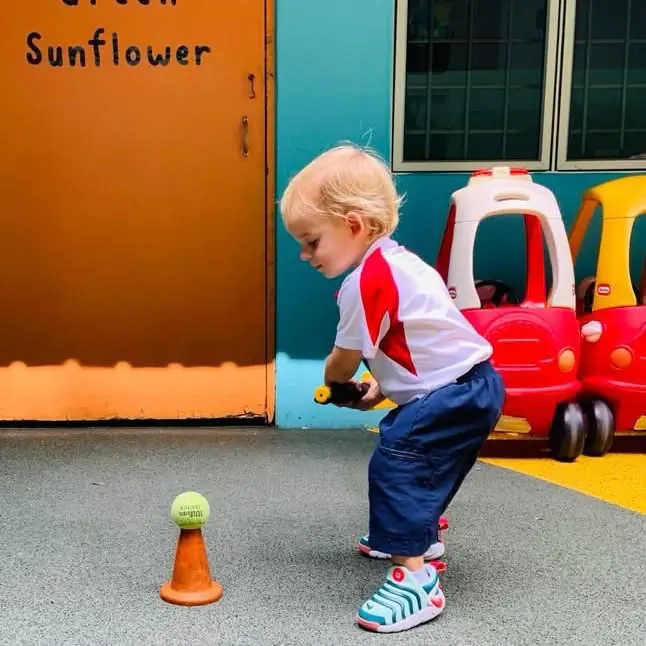
Shaws has daily sport and daily outdoor play for every age group, from the toddler rooms up. It is not an add-on for the sporty children. It is the groundwork for everything that happens at a table.
The K2 child who sits calmly through a story, holds a pencil comfortably and can follow a three-step instruction usually got there through five years of climbing, hanging, spinning and carrying. The body comes first. The classroom follows.
Shaws Preschool has combined daily sport, outdoor learning and play-based classrooms across the East Coast and Serangoon since 1989. Come and watch a morning: book a tour.