Quick answer: the best preschool playdates are short, small and a little bit planned. Invite one child, aim for an hour to ninety minutes, put away the toys that are too precious to share, have a simple activity and a snack ready, and stay close enough to help when things get tricky. End while everyone is still happy, and the next playdate will be easier.
Your child has come home talking about a friend from school. The parents have exchanged numbers, a date is set, and now there is a small person arriving at your door on Saturday morning.
It sounds simple. Then the visitor wants the one toy your child will not share, both of them want the swing, and after twenty minutes someone is crying under the table.
A little preparation prevents most of that.
Keep it short
For preschoolers, an hour to ninety minutes is usually plenty. Young children run out of social energy long before adults expect them to.
A short playdate that ends well is far more valuable than a long one that ends in tears, because children remember the ending.
Keep it small
One friend is ideal, especially for younger or quieter children. Three children often turns into two playing together and one left out.
Pick the time carefully. Avoid nap time, just before a meal and late afternoon, when everyone is at their most fragile.
Home ground or neutral ground. A first playdate at a playground or park means nobody's toys are at stake. Home playdates work well once children know each other a little.
Prepare your child
Talk about it beforehand. "Mia is coming to play. She will be here for the morning, then she will go home."
Put away special toys. Ask your child to choose a few things that are too precious to share and put them somewhere out of sight. This single step prevents a great many arguments.
Talk about being a host. "Mia is our guest. What do you think she would like to play with?" Even three-year-olds enjoy the idea of looking after someone.
Practise a few phrases. "Do you want to play with this?" "Can I have a turn when you are done?"
Prepare the space
- Toys that work for two. Blocks, dress-up clothes, play dough, balls, cars and a train track all invite playing together.
- Duplicates help. Two buckets, two spades, two sets of crayons remove a whole category of disputes.
- A simple activity ready. A box of loose parts, painting, a cardboard box den or a water tray gives children somewhere to start when they are feeling awkward.
- Space to move. A corridor race, a den under a table or a trip downstairs to the playground burns off energy.
- A snack. Check allergies with the other parent first. Food often resets a flagging playdate.
The first ten minutes
Playdates often start slowly. Children may hover, cling to their parent or ignore each other completely.
That is normal. Offer the prepared activity, sit nearby and start playing with it yourself. Once the children are absorbed, you can gradually step back.
Handling sharing and conflict
Some conflict is almost guaranteed. It is also where much of the learning happens.
Stay nearby. Close enough to step in before a disagreement turns physical, but not hovering over every exchange.
Use turns, not forced sharing. "You can have it when Leo is finished" works better than making a child hand something over the moment someone else wants it.
A timer can help. Many children accept "when the timer rings, it is Mia's turn" more easily than a parent's decision.
Describe the problem, then let them try. "Two children and one truck. What could we do?" Preschoolers often come up with surprisingly sensible solutions.
Offer a swap. "Here is another car you could use while you wait."
Treat both children fairly. It is tempting to be extra strict with your own child to be polite. Aim for the same approach with both.
Step in firmly if anyone is hurt. Separate them calmly, check everyone is okay and give a short break before trying again.
When it goes wrong
If a playdate is really falling apart, change the scene. Head outdoors, bring out the snack or start a new activity. Most meltdowns are about tiredness or overstimulation, not friendship.
And if it cannot be rescued, end it early and kindly. There is no shame in a short playdate. It is simply information about what to try next time.
Ending well
Give warnings. "Ten more minutes, then Mia's mummy will come." Then five minutes.
Plan a closing ritual. Tidy up together, wave goodbye at the door or walk the guest to the lift.
Keep goodbyes short. Lingering tends to bring tears.
Talk afterwards. "What did you enjoy playing with Mia?" Notice kind moments: "I saw you give her a turn on the scooter."
A word on working with the other parent
Agree on the practical things beforehand: timings, allergies, whether the parent will stay and who is picking up. First playdates often go more smoothly when the other parent stays for a coffee, especially with younger children.
What this looks like at Shaws
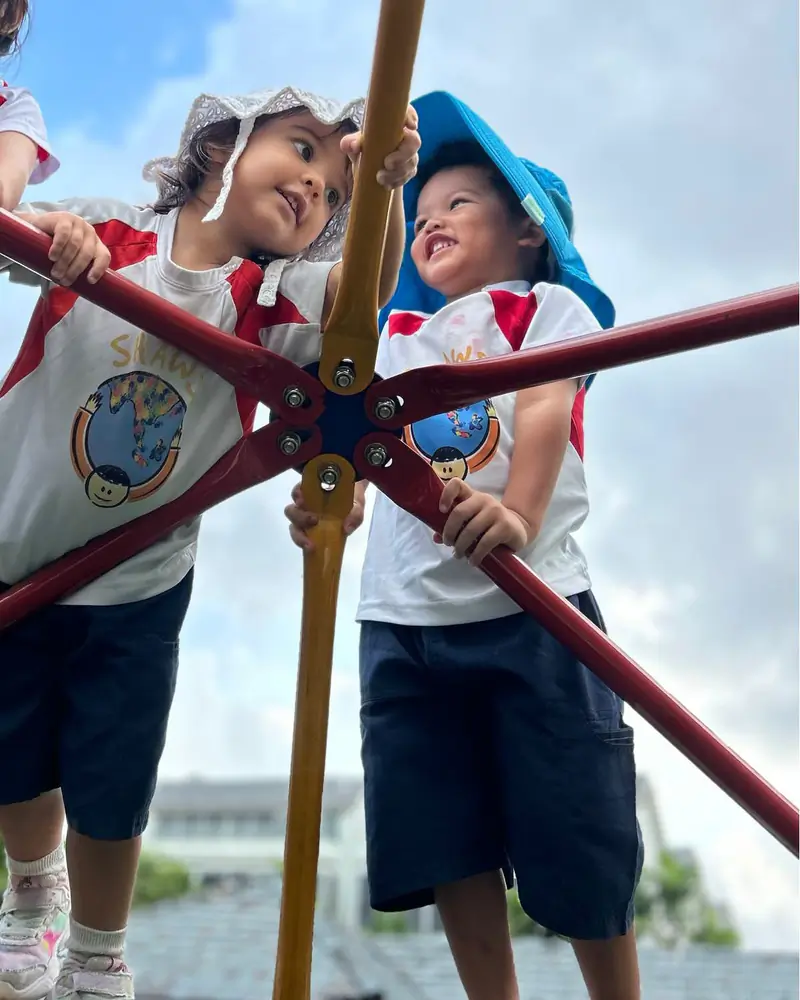
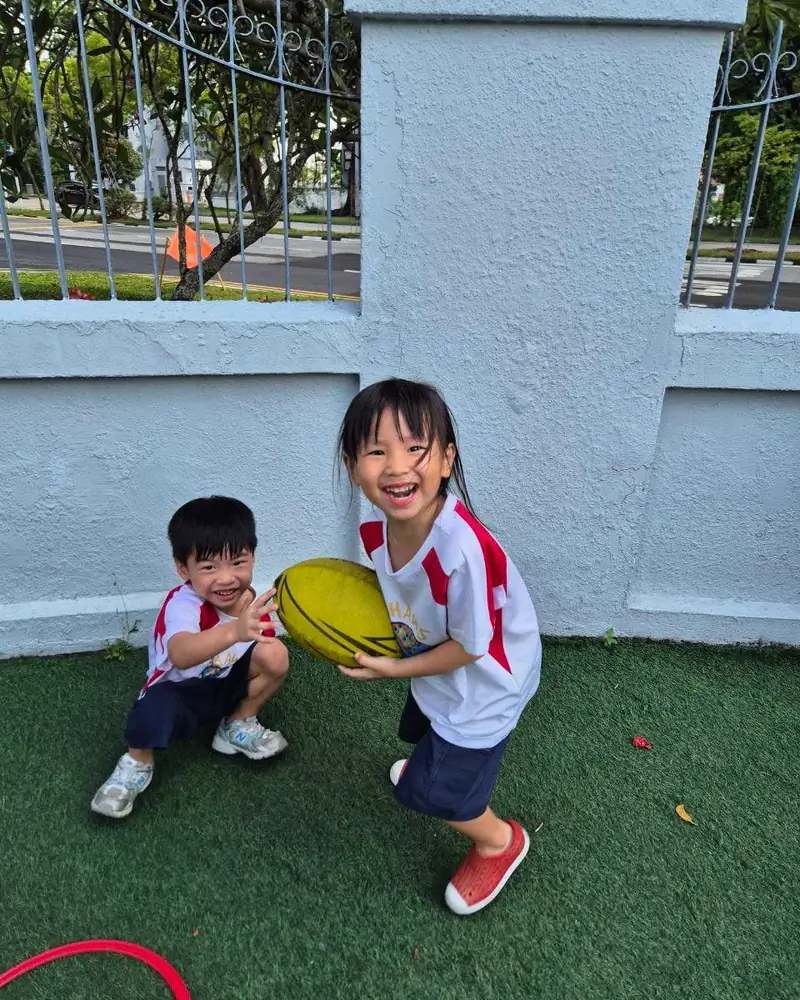
Our rooms are full of children learning to play together: negotiating roles, taking turns, sorting out who gets the red spade. Teachers stay close, give words to what is happening and let children solve as much as they can themselves. That practice makes home playdates much easier, and friendships that begin at school often grow best over a quiet Saturday morning with one friend and a box of blocks.
Shaws Preschool has been nurturing first friendships across the East Coast and Serangoon since 1989. Come and see children playing together: book a tour.