
Quick answer: if your child starts preschool in January 2027, the next three months are plenty to prepare calmly. Use October for the practical decisions and paperwork, November to shift routines gently and build a little independence, and December to talk about school, practise the morning and keep the holidays restful. Most of what works is small, ordinary and done at home.
January feels a long way off in October. Then the year-end gets busy, the holidays arrive, and suddenly it is the week before and nobody has tried on the uniform.
A little structure spread over three months takes the pressure off, for you and for your child. None of it needs to be intense. In fact, the calmer it is, the better it works.
October: decisions and practicalities
Confirm the details. Start date, hours, what the first weeks look like, whether there is a settling-in period, and what parents are expected to do during it. Approaches vary between preschools, so ask.
Plan for settling in. Many preschools bring new children in gradually, with a parent or carer staying for part of the time at first. Look at your leave now, not in late December.
Sort the paperwork. Forms, medical details, allergies, emergency contacts and immunisation records. Do it while you have the headspace.
Visit if you can. If your child can see the rooms or the playground before January, even briefly, school becomes a real place rather than an idea.
Think through the logistics. Who does drop-off, who does pick-up, and what happens when your child is unwell, which in the first term of preschool tends to be more often than anyone would like.
November: routines and independence
This is the month to shift things gradually, rather than all at once in the first week of January.
Move the sleep schedule. If preschool means earlier mornings, bring wake-up and bedtime forward by ten or fifteen minutes every few days. A rested child copes with almost everything better.
Watch the holiday drift. MOE school holidays run from 21 November to 31 December 2026. If older siblings are at home, routines slide easily, so be deliberate about keeping your younger child's day steady.
Match the daily rhythm. Ask the school for a rough outline of the day, and try meals and a rest at roughly those times.
Practise small independence skills:
- Taking shoes on and off.
- Opening a lunch box and a water bottle.
- Washing and drying hands.
- Telling an adult "I need the toilet."
- Putting their things into a bag.
Practise with the actual bottle and bag you will send. This is not a readiness test. It just makes the first weeks less frustrating.
Toileting. If your child is in the middle of toilet training, talk to the school about how they support it. Do not rush it to meet a deadline, which usually backfires.
Short separations. If your child has rarely been apart from you, build in some short, positive ones: an hour with a grandparent, a morning at a friend's home. Always say goodbye, and always come back when you said you would.
December: talking and practising
Talk about school in concrete terms. Who will be there, what they will do, where the toilet is, when you will come back. "After lunch, I will come and get you" means more to a small child than a clock time.
Read books about starting school. A story lets a child explore the idea from a safe distance and ask questions.
Play school. Toys going to school, having snack, saying goodbye to their parents and being collected. Children work through a great deal in this kind of play.
Practise the morning. Once or twice, do a full run-through: up, dressed, breakfast, bag, out of the door. Walk or drive the route.
Name the feelings. "Some children feel excited, some feel a bit worried, and some feel both." Let them have any of those, without rushing to talk them out of it.
Keep the holidays restful. Resist packing late December with travel and late nights. A child who starts school exhausted has nothing in reserve.
The first week
- Keep goodbyes short and warm. One clear routine, one hug, then go. Lingering makes it harder.
- Never sneak away. It damages trust just when your child needs it most.
- Expect tears. Most children settle soon after the parent leaves. Ask the teacher, who will tell you honestly.
- Expect tiredness at home. Early bedtimes, quiet afternoons and a lot of cuddles.
- Look after your own nerves. Children read your face at the gate. Save the worrying for the car.
What this looks like at Shaws
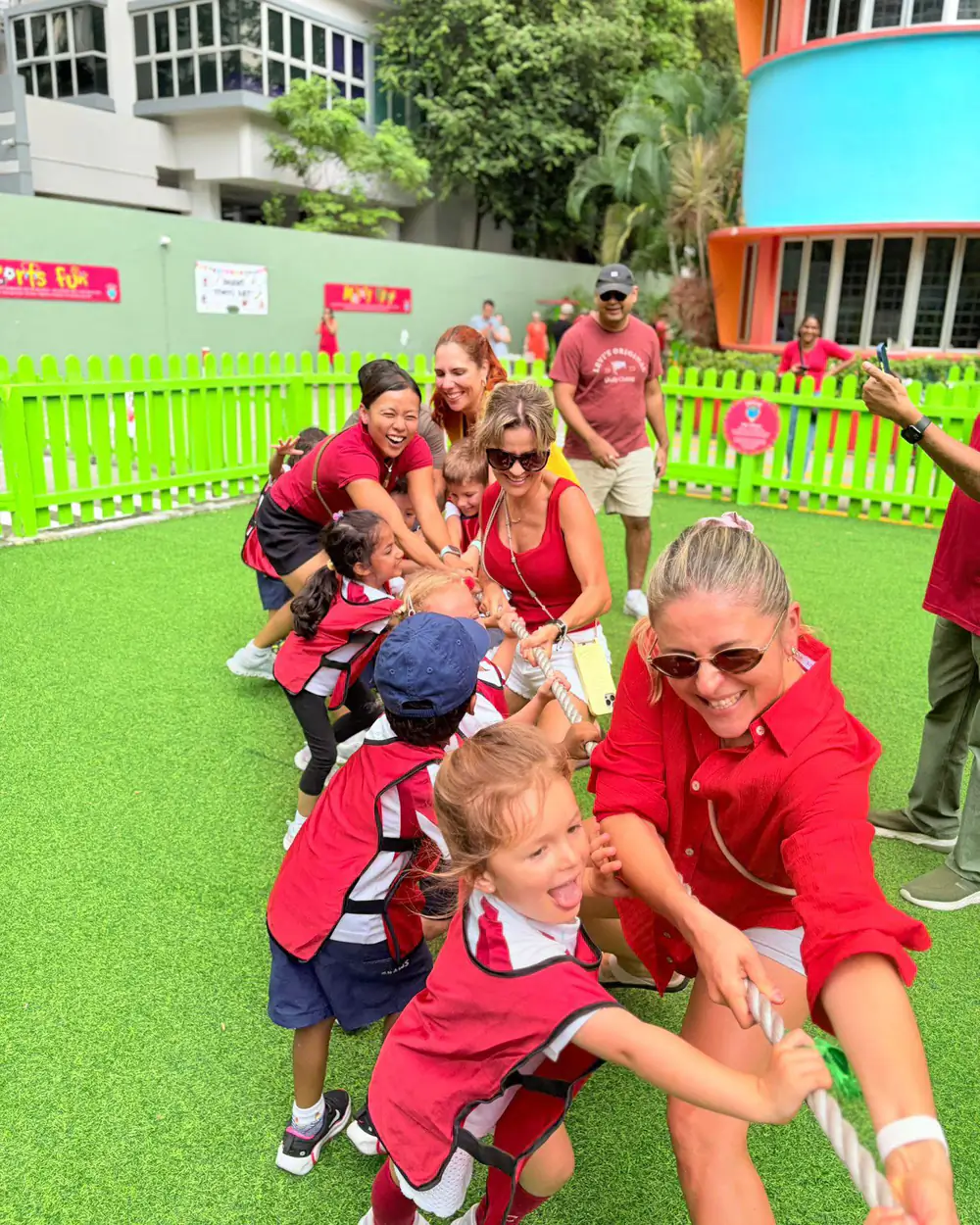
Our teachers expect the first weeks to be a transition rather than an instant switch. New children are welcomed into steady routines, given time to watch before they join in, and helped to build a bond with one or two familiar adults. We keep in close touch with parents in those early weeks, because a settled parent helps make a settled child.
When to seek advice
If your child is still very distressed after several weeks, or you notice changes in sleep, eating or toileting that do not settle, talk to their teacher first, and to your doctor if you are still concerned. Most children do settle, and many do it faster than their parents.
The long view
Three months is plenty. Not for making your child ready, which they very largely already are, but for making the change feel familiar and expected. By February, the gate will be just another part of the morning.
Shaws Preschool has welcomed new children into January classrooms across the East Coast and Serangoon since 1989. Come and see where your child would start: book a tour.