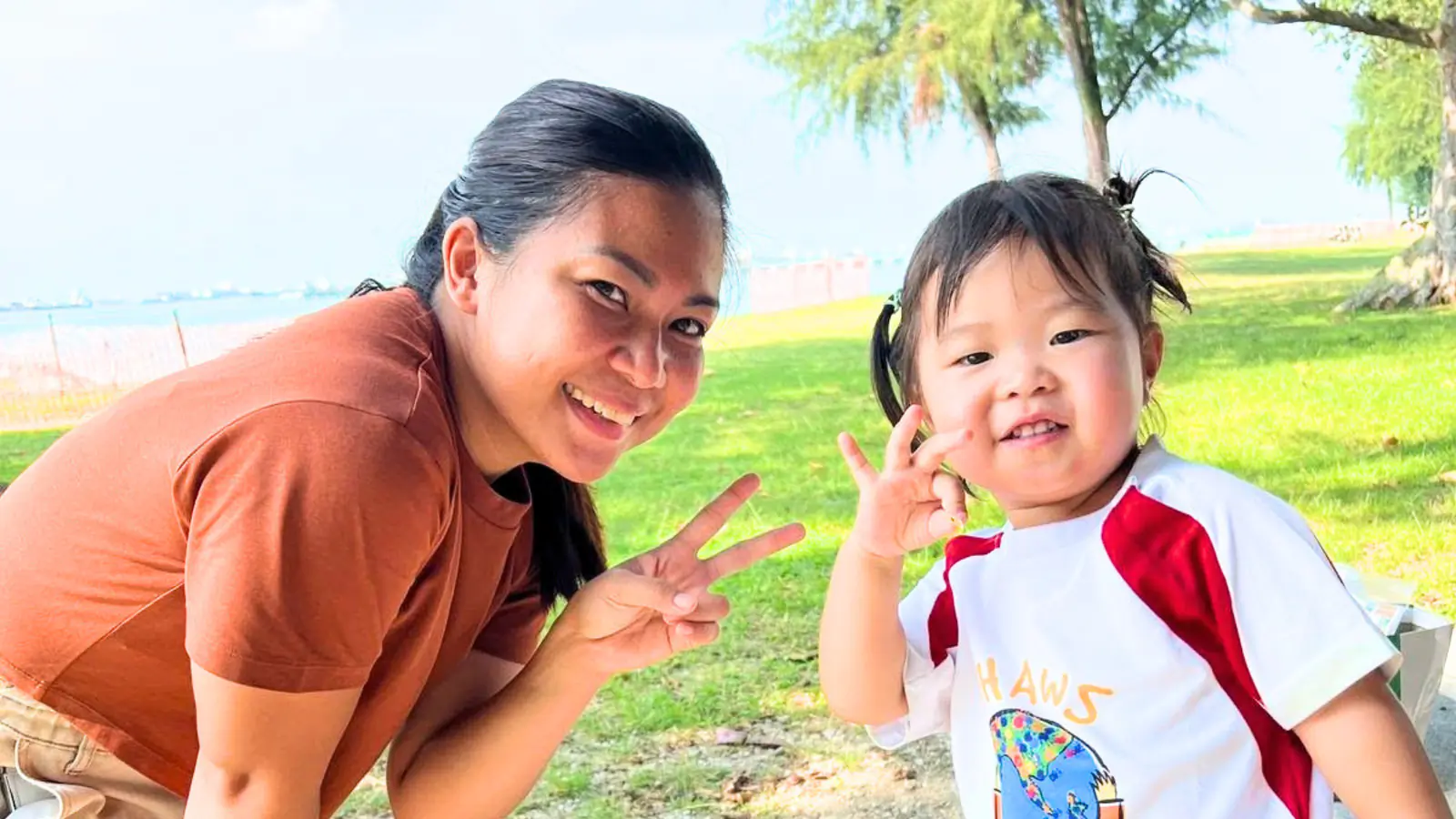
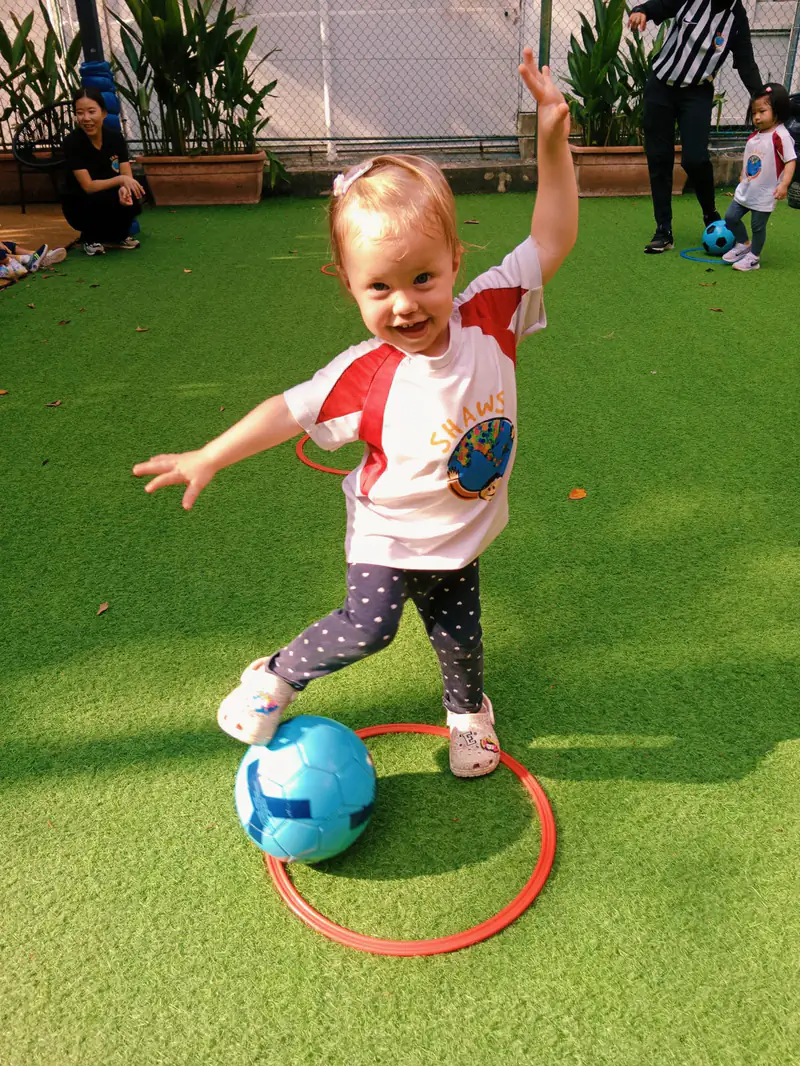
Plenty of Singapore families start preschool well before the K1 year. Sometimes it is about work. Sometimes a parent simply sees that their toddler is ready for more company and more space than a flat can offer. Whatever the reason, starting at 18 months is a different experience from starting at four, and it helps to know what to expect.
At this age your child will not be able to tell you much about their day. They will not understand a calendar or a promise about next week. What they need from their first classroom is simpler and more physical, and it is worth looking for carefully.
What an 18-month-old needs
Toddlers are not small preschoolers. Their needs are closer to those of a baby in some ways and a big kid in others, and a good toddler room is set up for exactly that mix.
Familiar adults. Young toddlers settle through relationships. They need to see the same teachers most days and learn that these adults will look after them when they are upset or hungry. A room with constantly rotating staff is much harder for them.
Predictable routines. Toddlers cannot read a clock, but they quickly learn the order of the day. Outdoor play comes before snack, and songs come after it. When the sequence is steady, they feel safe enough to explore.
Room to move. An 18-month-old is learning to walk steadily and climb. Most of them love carrying and pushing things around. They need floor space and low equipment, with plenty of time outdoors. Sitting at a table for long stretches is not a reasonable expectation at this age.
Sensory experiences. Messy materials such as sand and paint are how toddlers learn about the world. Expect your child to come home messy.
Language everywhere. Toddlers learn words when adults talk with them through everything they do. Songs and rhymes matter more than formal lessons.
How many adults per child?
Ratios matter more for toddlers than for any other age group. According to the Early Childhood Development Agency, the minimum ratio for playgroup children (18 months to under three years) is one educator to eight children, or two adults to twelve children when there is an assistant educator. Many centres staff above the minimum, so ask what the ratio looks like in practice, especially at nap time.
Half day or full day?
Most preschools offer a choice. At Shaws, families can choose Full Day, Half Day (morning or afternoon) or Extended Day. Half-day children finish at 1pm, and full-day children nap or join the afternoon Play Club.
For many 18-month-olds, a half day is a gentle way to begin. They get the busiest, most social part of the day and are home for an afternoon nap in their own bed. If your work needs a full day, that is fine too. Toddlers adapt well to full days once they have settled, provided the nap is well handled. Ask how the school manages sleep for the youngest children, and how they adjust when a child is still taking two naps.
What to pack
Label absolutely everything, then label it again. A typical toddler bag includes:
- Two or three complete changes of clothes, since water play is part of the day.
- Nappies and wipes, if your child is still in them.
- A water bottle your child can open by themselves.
- A comfort item for rest time, if they have one.
- A sun hat.
- Bedding for full-day children, as your campus advises.
Dress them in clothes that are easy to change and that you do not mind getting paint on. Elastic waists beat buttons, and velcro shoes beat laces.
Do they need to be toilet trained?
No. Most 18-month-olds are still in nappies, and a good toddler room expects that. Teachers will change your child through the day and, when the time comes, work with you on toilet training so home and school do the same thing.
The same goes for talking. Many toddlers start with only a handful of words, and a teacher who knows your child will learn their signals quickly.
How settling in works
This is where toddlers need the most patience. At Shaws, settling follows a few clear principles:
- One adult settles your child, ideally the same adult throughout. More than one can be confusing.
- You are welcome to stay for a few hours or a whole morning during the first days.
- We ask you to complete an 'All About Me' form before your child starts. It covers things like comfort items and how your child behaves when tired. Teachers use it to comfort and distract your child in ways that work for them.
- Three weeks or more is normal for a child to settle fully.
- A WhatsApp chat is set up once you start leaving your child, so you can see how they are getting on.
- At one month, we email you our observations on how settling is going.
Expect tears at drop-off. For most toddlers they stop within minutes of the parent leaving, and teachers are happy to confirm that by message. Keep goodbyes short and warm, and always say goodbye rather than slipping away.
What the first months look like
Your toddler will probably catch more colds in the first few months than they ever did at home. This is very common in a child's first year in a group setting. Our guide to the preschool bug season covers when to keep them home.
You may also see some changes in behaviour at home, such as more clinginess in the evenings or more tantrums before dinner. Toddlers hold it together at school and let go with you. It usually settles as the routine becomes familiar.
On the positive side, many parents notice a burst of new words and songs in the first term. Toddlers learn enormously from watching slightly older children, and the classroom gives them plenty to copy.
What learning looks like at this age
Learning for our youngest children starts with sounds and rhymes and the first marks on paper. Letters and their sounds come through Letterland games. Early problem-solving and plenty of play sit alongside them. Mandarin is woven through the day in songs and everyday routines. Life skills start small, with drinking from an open cup and putting toys back into a box when asked. You can see how this grows year by year on our curriculum page.
When to seek advice
If your child is still very distressed after six to eight weeks, or if you have any concerns about their development, talk to their teacher first and then your doctor if needed. A conversation early on is always better than a long wait.
Shaws Preschool welcomes children from 18 months to six years across five campuses in the East Coast and Serangoon. The best way to judge a toddler room is to see one: book a tour and bring your little one along.