
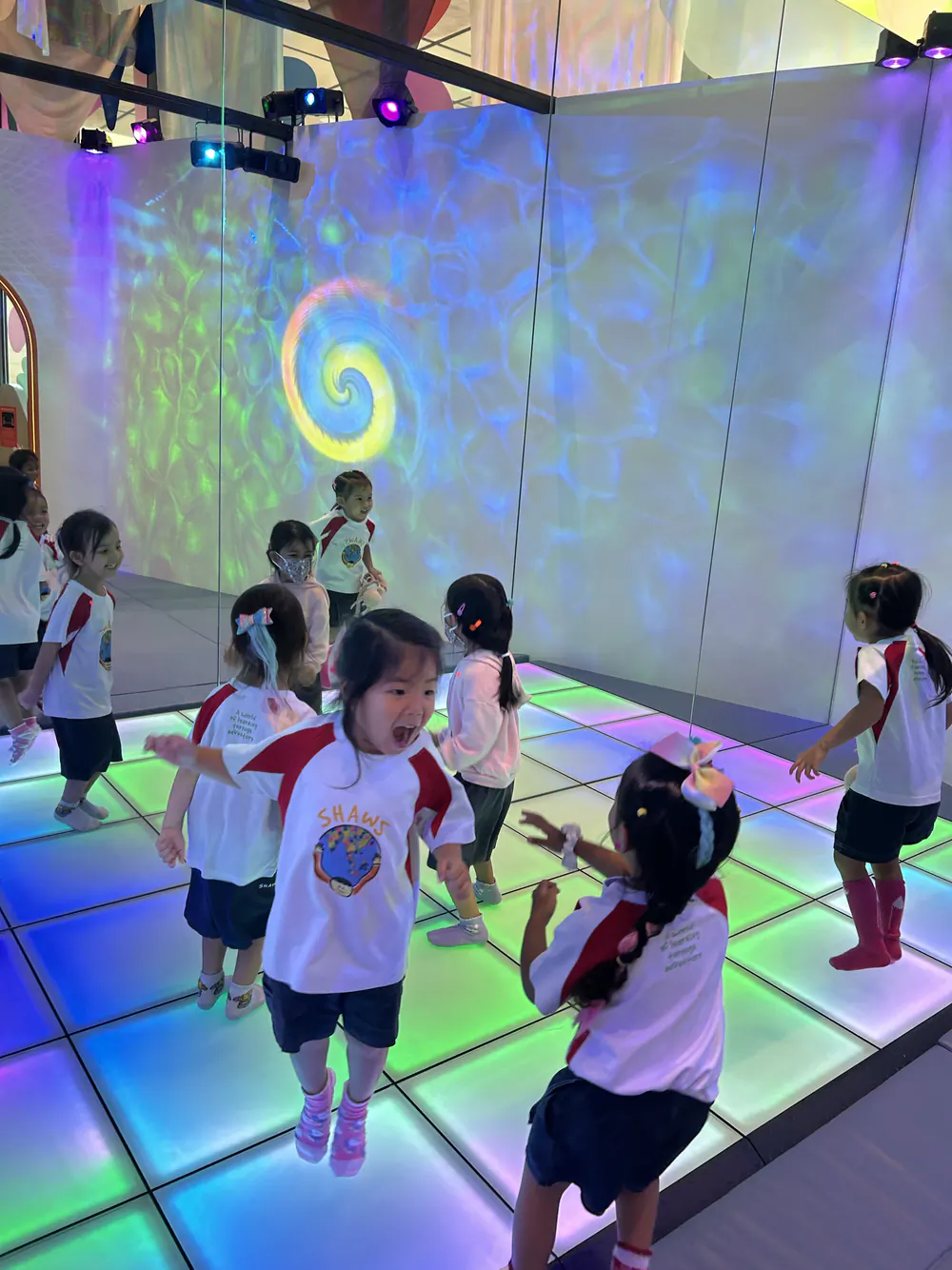
Quick answer: overstimulation happens when a young child takes in more noise, light, people and activity than their nervous system can process. It often looks like bad behaviour: meltdowns, wild silliness, clinginess or refusing to sleep despite being exhausted. The fix is less input, not more discipline, and the prevention is a calmer, emptier week.
It is a familiar sequence. A busy Saturday with a party in the morning, lunch at a crowded mall and a playdate in the afternoon. Everyone had a wonderful time. Then, at six o'clock, your child falls apart completely because their cup is the wrong colour.
The cup was never the problem. The day was simply too full.
Why everyone is talking about it
Overstimulation has become one of the most discussed ideas in parenting this year, alongside a wider move away from overscheduled childhoods. That is not because children have changed. It is because family life has become louder, faster and more crowded, and parents are noticing the cost.
Weekends of back-to-back activities, bright and noisy indoor venues, background screens and very little empty time can add up to more than a small brain can comfortably handle.
What is actually happening
Young children are still learning to filter what comes in. An adult in a busy food court can tune out the clatter and focus on their meal. A three-year-old hears every tray, every voice and every scraping chair at roughly the same volume.
The brain keeps processing all of it until, eventually, the system is full. What spills out is not a choice. It is overload.
The signs
Every child has their own version, and many are easy to mistake for something else.
- Meltdowns out of proportion to the trigger, usually at the end of a big day.
- Wild, silly, hyper behaviour. Running in circles, shrieking, crashing into things, unable to settle.
- Clinginess or withdrawal. Hiding behind your legs, going quiet, refusing to talk.
- Covering ears or eyes, or complaining that things are too loud.
- Refusing to sleep despite obvious exhaustion. An overstimulated child often cannot switch off.
- Aggression. Pushing, hitting or throwing, especially in crowded spaces.
- Physical complaints. A sore tummy or a headache, particularly in children who cannot name the feeling.
Helping in the moment
Reduce the input. Move somewhere quieter and dimmer. A car, a corridor, a bedroom with the lights low. Turn off the television and put the phone away.
Talk less. An overloaded child cannot process a lot of language. Short, calm sentences: "Too much. Let's go somewhere quiet."
Offer your body, not a lecture. Many children settle with a firm hug, being carried, or sitting in a lap. Some prefer space. Follow their lead.
Deal with basics. Water, a simple snack and something familiar, such as a favourite soft toy.
Do not add anything new. This is not the moment for a new game, a treat or a trip to another shop.
The next day
A child who has had a very big day often needs a small one afterwards. Plan a slow morning at home, unstructured play, time outdoors somewhere calm and an early night.
It can feel like a wasted day. It is actually a recovery day, and skipping it is how one difficult evening turns into a difficult week.
Planning quieter weeks
- Limit structured activities. Many experts suggest no more than about two structured activities a week for young children, with plenty of free time in between.
- One big thing per day. A party or an outing, not both. Weekends are the most common culprit.
- Build in empty time. Unstructured play and a little boredom are where children process everything they have taken in.
- Get outside. Parks and open green spaces are far less stimulating than malls and indoor play centres.
- Watch the screens. Fast-moving, bright, loud content adds to the load, especially before bed.
- Protect sleep. A tired child reaches overload much faster.
- Leave early. Go before the meltdown, not after it.
Some children feel it more
Some children are naturally more sensitive to noise, light and crowds. They are not fragile. They simply need more recovery time than their siblings or friends. Knowing this about your child lets you plan around it rather than being ambushed by it.
What we do at school
A good preschool day has a rhythm: busy, then calm, then busy again. Energetic outdoor play and sport are balanced by quiet moments, stories and time to play without instruction. Our teachers learn each child's signals and help them move to a calmer activity before the storm rather than during it.
We also notice patterns. A child who is consistently undone on Monday mornings is often telling us something about the weekend, and a quiet word with parents can help.
When to seek advice
Talk to your doctor if your child is overwhelmed by everyday sounds, textures or crowds most of the time, if the reactions are severe or getting worse, if they are stopping your child doing ordinary things, or if you are concerned about their development in other ways. Most children, though, simply need a little less going on.
Shaws Preschool has balanced busy mornings with calm ones across the East Coast and Serangoon since 1989, with daily sport, outdoor learning and time to simply play. Come and see the rhythm of our day: book a tour.