Quick answer: for many young children, drinks are the largest and least noticed source of sugar in the day. The best everyday drinks for under-sixes are plain water and plain milk. Juice, cultured milk drinks, flavoured milks and bubble tea are treats rather than hydration, and swapping them out is one of the simplest things a family can do for a child's teeth and appetite.
A bowl of cereal gets scrutinised. A packet drink handed over at the playground usually does not.
That is the trouble with drinks. They do not look like sugar, they do not fill a child up, and they come in small, friendly packaging. Across a day, they can quietly add up to more sugar than any dessert.
Why drinks are different
They go down fast. A child can drink the juice of several oranges in a minute, without any of the fibre that makes whole fruit filling.
They add rather than replace. Liquid calories do not satisfy hunger the way food does, so they tend to arrive on top of meals.
They still spoil appetites. A sweet drink before dinner can blunt a small child's interest in what is on the plate.
They bathe the teeth. Sipping a sweet drink over a long time, from a bottle, a sippy cup or a straw, keeps sugar on the teeth for hours. This is one of the main drivers of tooth decay in young children.
They set the palate. Children used to sweet drinks often start refusing plain water, which makes every hot day harder.
What the guidance says, in general terms
The World Health Organization recommends keeping free sugars below 10 per cent of daily energy, and ideally below 5 per cent. Free sugars include sugar added to food and drink, and also the sugar naturally present in honey, syrups and fruit juice.
Paediatric guidance generally advises no juice for babies under one, and small amounts at most for young children. For everyday drinking, the consistent advice for young children is water and plain milk.
The usual suspects
Fruit juice. Even juice labelled "no added sugar" counts as free sugar, because the fruit's sugar has been separated from its fibre. Whole fruit is a far better choice. If you do give juice, keep it small, dilute it, serve it with a meal in an open cup, and keep it occasional.
Cultured milk drinks. Small bottles such as Yakult are marketed for their live bacteria and are popular with children. They are also sweetened. They are not harmful as an occasional drink, but they are a sweet drink rather than something a child needs, and a daily bottle is a daily dose of sugar.
Flavoured milks. Chocolate, strawberry and malted milks, including the packet drinks many children have after school, usually contain added sugar. Plain milk is the better everyday choice.
Bubble tea. Rarely meant for small children, and often shared with them anyway. Between the sweetened tea, the syrup and the pearls, it is best thought of as a dessert. If a child does have some, go for a small size at the lowest sugar level, and keep it for special occasions.
Teh, kopi and bottled teas. These contain caffeine as well as sugar, and are not suitable for young children.
Isotonic and soft drinks. Sports drinks are designed for adults exercising hard, and fizzy drinks have no place in an under-six's day. Children playing in the heat need water.
Reading the labels
In Singapore, many drinks, including freshly prepared ones, carry a Nutri-Grade mark from A to D, with D the highest in sugar and saturated fat. Look for A or B where you can.
On packets, check the ingredient list as well. Sugar has many names, including syrups, honey and fruit juice concentrate.
Practical swaps
- Water first, always. Make it the default at meals and in the bag. A bottle your child chose helps more than it should.
- Plain milk as the other everyday drink.
- Whole fruit instead of juice, cut up and within reach.
- Flavour water naturally with a slice of orange or cucumber.
- Dilute gradually. If your child is used to juice, water it down a little more each week.
- Keep sweet drinks out of the house, so the decision is made once, at the shop.
- Nothing sweet at bedtime, or after teeth are brushed.
- Model it. Children want what you are drinking. That includes your kopi.
Treats without drama
Banning something completely can make it more desirable. A bubble tea at a birthday or a juice at a wedding is not a problem. The aim is for sweet drinks to be occasional and noticed, not daily and automatic.
Keep the language neutral. "That is a party drink" works much better than "that is bad for you".
What we do at school
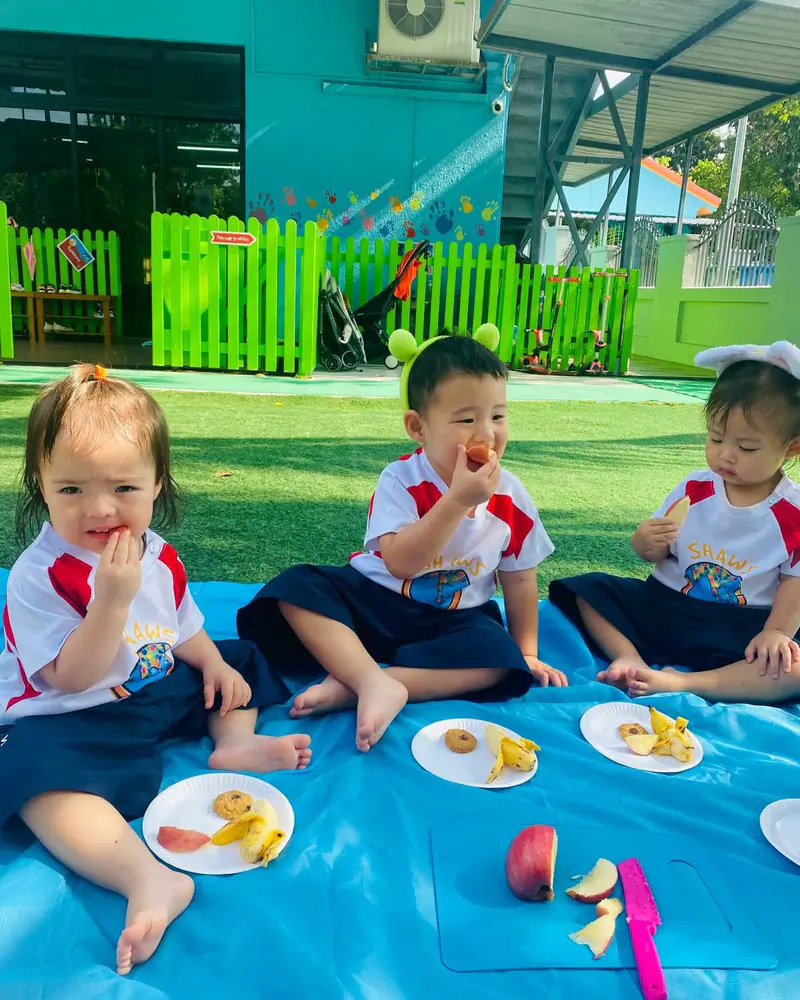
Water is the everyday drink at school, and drinking it is built into the routine rather than left to chance, especially after outdoor play. Children learn to look after their own bottles, which quietly builds the habit of reaching for water when they are thirsty.
When to seek advice
See a dentist if you notice white or brown patches on your child's teeth, or if they complain of tooth pain. Regular dental check-ups from early childhood are recommended. Talk to your doctor if your child seems constantly thirsty or is drinking far more than usual, as that is worth checking.
The long view
A child who grows up expecting water when they are thirsty has a habit that will protect their teeth and health for decades. It is one of the easiest good habits to build early, and one of the hardest to build later.
Shaws Preschool has built healthy everyday habits into the day across the East Coast and Serangoon since 1989. Come and see our snack and lunch routines: book a tour.