Quick answer: boredom is not something you need to fix for your child. It is the uncomfortable gap just before a child invents something to do, and children who are allowed to sit in it get better at starting their own play, sticking with it and enjoying their own company. The skill, for parents, is not rushing to fill the gap.
"I'm bored." Two words that can send a capable adult reaching for a tablet, an activity book or the car keys within about ninety seconds.
It is an understandable reflex. Many of us feel that a bored child is evidence we are not doing enough. But a growing number of parents and experts are coming round to the opposite view: that some boredom is one of the most useful things a young child can have, and that plenty of children now get almost none.
What boredom actually does
Boredom is uncomfortable on purpose. It is the feeling that pushes a person to go and find something to do.
When an adult fills that gap immediately, the child learns that entertainment arrives from outside. When the adult does not, the child goes looking, and the looking is where the good part happens. A spoon becomes a microphone. The laundry basket becomes a boat. A game appears with elaborate rules nobody asked for.
That process of noticing, imagining and starting something on your own is the root of creativity. It is also the self-direction that schools value so highly later on.
Why children get so little of it now
Full diaries. Classes, enrichment, playdates and outings can leave very little unstructured time in a week. Many experts suggest no more than about two structured activities a week for under-eights, which is fewer than many families have.
Screens. A device removes boredom instantly and completely, which is exactly why it is so tempting, and why a child used to one finds an empty afternoon so hard.
Guilt. Parents who work long hours often want the time they do have to be productive or special. An hour of a child pottering about can feel like wasted time. It is not.
What happens when you stop filling the gap
Expect a rough start. A child used to being entertained will not immediately begin composing operas. The first few times, there may be complaining, following you from room to room and some dramatic lying on the floor.
This usually passes within ten or twenty minutes, and it gets shorter each time. Children with regular unstructured time become noticeably quicker at settling into their own play. It is a skill, and like any skill it improves with practice.
How to handle "I'm bored"
Stay calm and slightly dull. "Hmm, that happens. I am sure you will think of something." Said kindly, and then carry on with what you were doing.
Do not offer a menu. Listing ten suggestions turns you into the entertainment committee, and each suggestion will be rejected in turn.
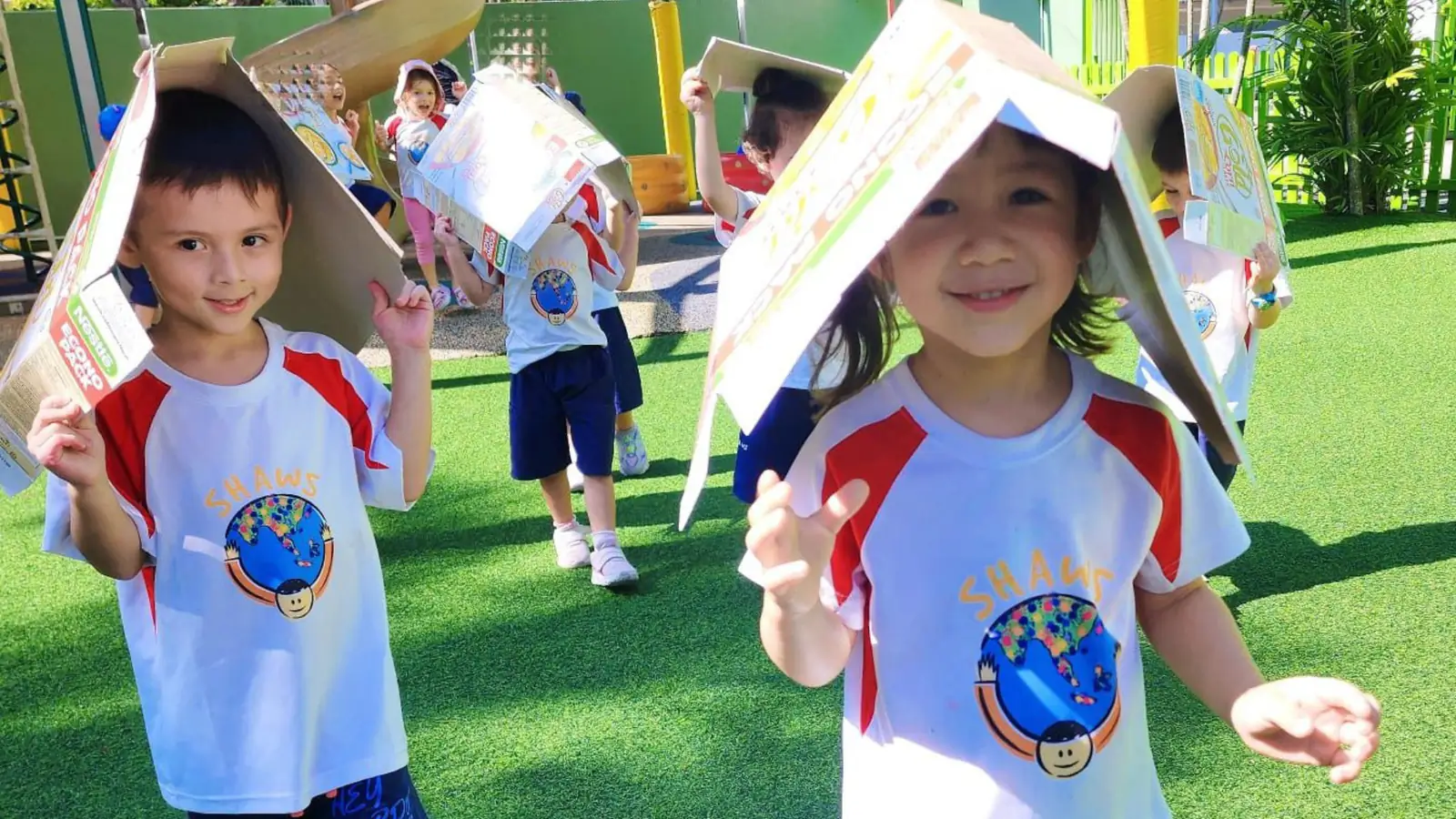
Make materials easy to reach. Paper, pens, tape, blocks, dress-up clothes, cardboard and a few books in low, open containers. Boredom is productive when there is something to work with.
Point, do not direct. If they are truly stuck, "there is a big box in the hall" is plenty. Leave the rest to them.
Let them be near you. Some children want company while they work it out. Playing on the kitchen floor while you cook is not the same as you entertaining them.
Accept daydreaming. A child staring out of the window or lying on the sofa humming is not doing nothing. A wandering mind is part of how ideas form.
Do not rescue with a screen. If boredom always ends with a device, the lesson learned is that complaining works.
Where to start
- Protect one or two afternoons a week with nothing planned at all.
- Leave gaps in the weekend rather than filling every hour.
- Keep paper and pencils in the bag for waiting times, instead of reaching for a phone.
- Say no to one more class if the week already feels crowded.
- Leave half-finished projects out. A den still standing invites the next idea.
When it is not really boredom
Sometimes "I'm bored" means something else. A child might be tired, hungry, lonely or simply wanting you. If the complaint comes with clinginess or tears, try a snack, a cuddle or ten minutes of your full attention first. Then step back.
And if your child seems unable to settle to anything at all for long stretches, or seems persistently flat and unhappy, it is worth talking to your doctor. That is a different thing from ordinary boredom.
What we do at school
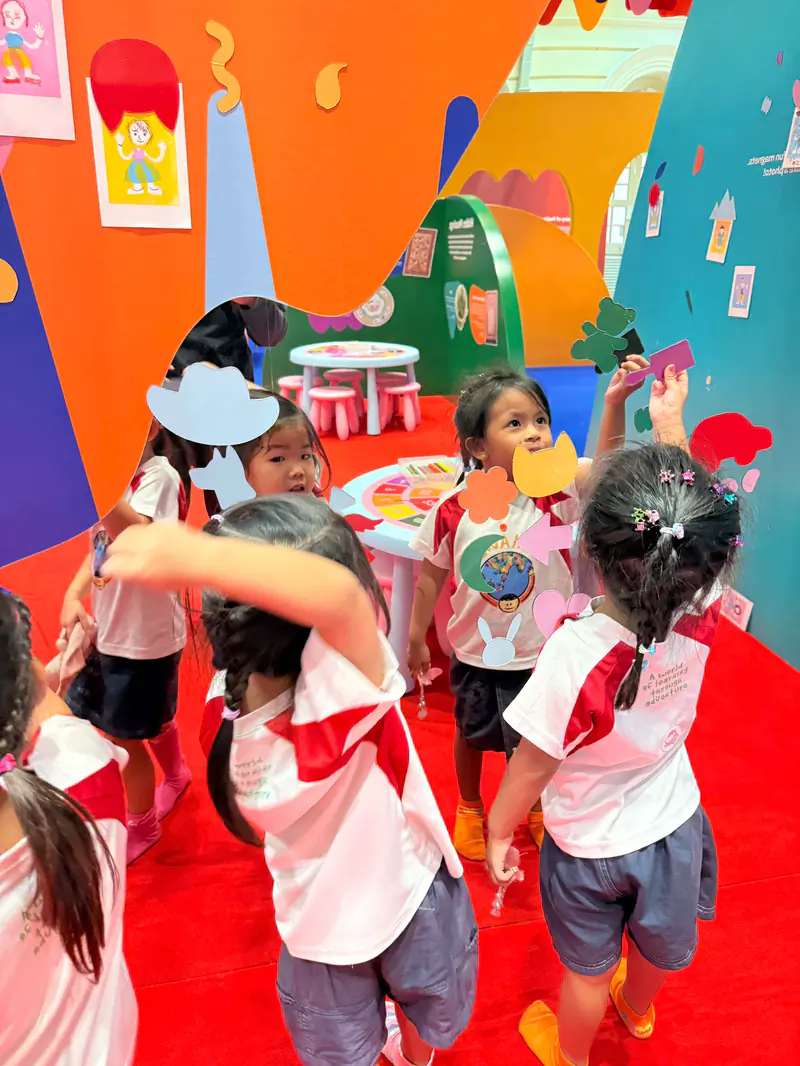
Our days have a steady structure, but they also have long stretches of free play in which children choose what to do and how to do it. Teachers set up the room with open-ended materials and then step back. A child who wanders for a few minutes is allowed to wander.
Much of the richest play we see starts in exactly that moment: a child with nothing in particular to do, noticing something, and deciding to make something of it.
The long view
A child who can entertain themselves has a quiet superpower. They can wait without a device, start a project without a prompt and be comfortable in their own company, which will serve them well in a classroom, on a long flight and, eventually, in adult life.
It starts with an adult who hears "I'm bored" and, lovingly, does not fix it.
Shaws Preschool has given children the time and space to invent their own play across the East Coast and Serangoon since 1989. Come and see a morning of free play: book a tour.