The fridge door in a house with a preschooler tells a story. First come the scribbles, circling endlessly in a single colour. Then there is a circle with lines sticking out of it, which you are told is Daddy. A year or so later Daddy has a body and far too many fingers, and there is a house beside him with smoke curling from the chimney.
Children's drawing develops in a fairly predictable order, and watching it unfold is one of the small pleasures of the preschool years. Knowing what to expect also helps you respond in ways that keep your child drawing happily, instead of worrying about whether their dog looks enough like a dog.
The stages of early drawing
The art educator Viktor Lowenfeld described a series of stages that children's drawings tend to pass through. Later researchers have questioned how universal and tidy those stages are, and children move through them at very different speeds. The broad pattern is still a helpful guide for parents.
Scribbling, roughly 18 months to 4
The first marks are about movement more than pictures. A toddler grips a crayon in a fist and enjoys the feeling of making a mark. Over time the scribbles become more controlled. Lines go back and forth. Circles start to appear, and the child begins to repeat shapes on purpose.
Towards the end of this stage something important happens. A child finishes a scribble and announces what it is. "That's a dog." It may look nothing like a dog, and it might have turned into an aeroplane by the time you ask again. What matters is the new idea that marks on paper can stand for something real.
First pictures, roughly 4 to 7
Next, children begin to draw shapes that stand for things on purpose. Very often the first is a person, drawn as a circle for a head with two lines for legs coming straight out of it. These are often called tadpole people, and arms sometimes sprout from the head as well.
People gain bodies and hands over the following year or two. Objects float around the page with no ground beneath them. Sizes reflect importance more than reality, so Mummy may be taller than the house. Colours are chosen for fun, and a purple dog under a green sun is perfectly normal.
Towards set patterns, from around 7
Lowenfeld placed the next stage, which he called schematic, at roughly seven to nine, though some children show signs of it before they leave preschool. Children settle on their own set ways of drawing familiar things. A house gets a triangle roof with a sun in the corner, and a strip of grass runs along the bottom of the page. Drawings start to tell stories, and children add the details that matter most to them.
What drawing builds
Drawing is far more than a pleasant way to fill a wet afternoon. When children draw, they practise several skills at once:
- Hand control. Gripping and steering a crayon strengthens the small muscles that will later control a pencil.
- Planning. Deciding what to draw and where it should go on the page.
- Symbolic thinking. Understanding that a mark can stand for something real, which is the same idea that sits behind letters and numbers.
- Language. Talking about a drawing often brings out stories and words that would not come up otherwise.
- Feelings. Some children express things through drawing that they cannot yet put into words.
How to talk about your child's drawing
What you say about a drawing can shape how your child feels about drawing at all. A few approaches work better than others.
Ask instead of guessing. "Tell me about your picture" works better than "Is that a horse?" A wrong guess can deflate a child, and it suggests that drawings are supposed to look like something.
Describe what you see. "You used lots of red here." "These lines are so long and wavy." Specific comments show you are paying attention.
Notice the effort. "You spent a long time on that" recognises persistence, which matters more at this age than the finished result.
Hold back on corrections. Pointing out that trees are not blue can make children self-conscious. Accuracy comes with time and practice.
Write their words down. If your child tells you a story about their picture, write it along the bottom. Children love seeing their own words written down, and it links drawing to writing in a very natural way.
Setting up for drawing at home
- Keep materials within reach. Thick crayons and chunky pencils in a box on a low shelf invite drawing far more than supplies kept in a cupboard.
- Go big sometimes. Large sheets taped to the floor let toddlers make big arm movements, which suits their stage.
- Try other surfaces. Chalk on a pavement works, as does a stick in the sand or a wet paintbrush on a hot wall.
- Draw alongside them. Doodling next to your child, without directing what they draw, makes it a shared activity. Some children like you to draw what they ask for, while others prefer to work alone.
- Go easy on colouring books. They are fine in small doses, but blank paper leaves far more room to invent.
Common worries
"My child only scribbles." Scribbling is an important stage, and children move out of it at their own pace. Keep offering materials and avoid pressure.
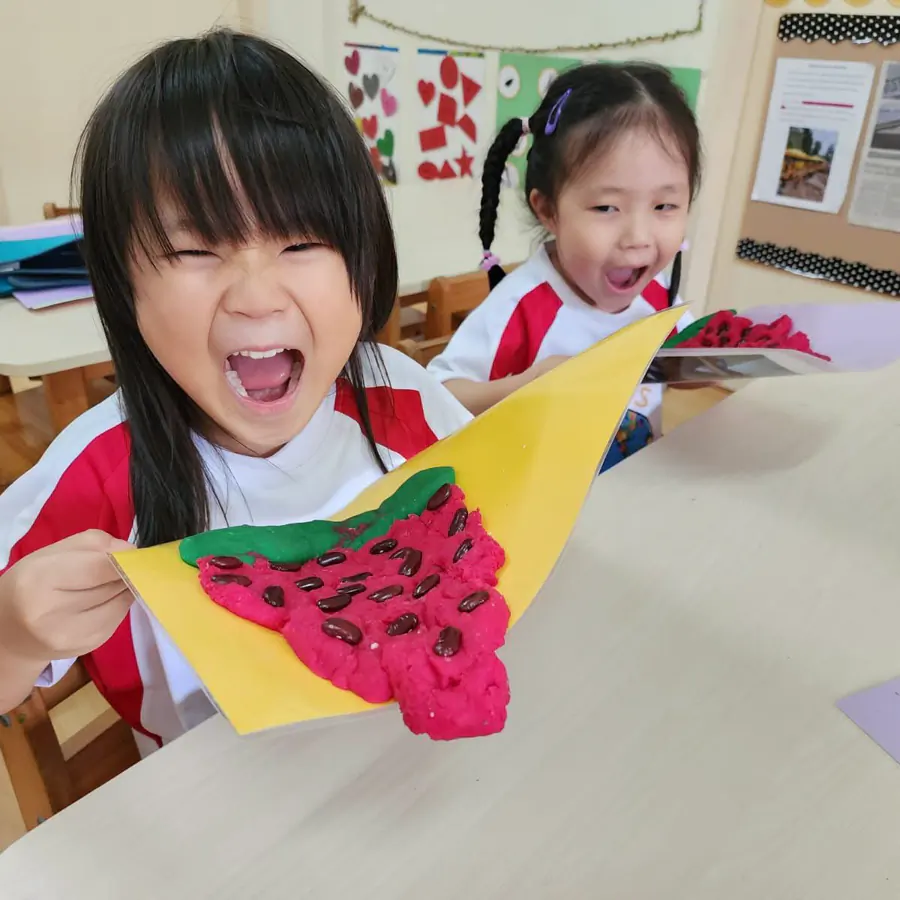
"My child doesn't like drawing." Some children would much rather build or climb. Painting and play dough also strengthen little hands, and so does sticker art. Fine motor skills can be built in many ways.
"My child draws the same thing every day." Repetition is how children master a skill. Ten pages of dinosaurs is ten rounds of practice.
"Should I worry about dark colours?" Colour choices in young children usually reflect what is within reach or what they happen to like. A single drawing tells you very little. If you have wider concerns about your child's mood or behaviour, talk to your paediatrician. Your child's teacher can also help you look at the bigger picture.
"My child is left-handed." Let your child use whichever hand feels natural, and avoid trying to change it.
Art at Shaws
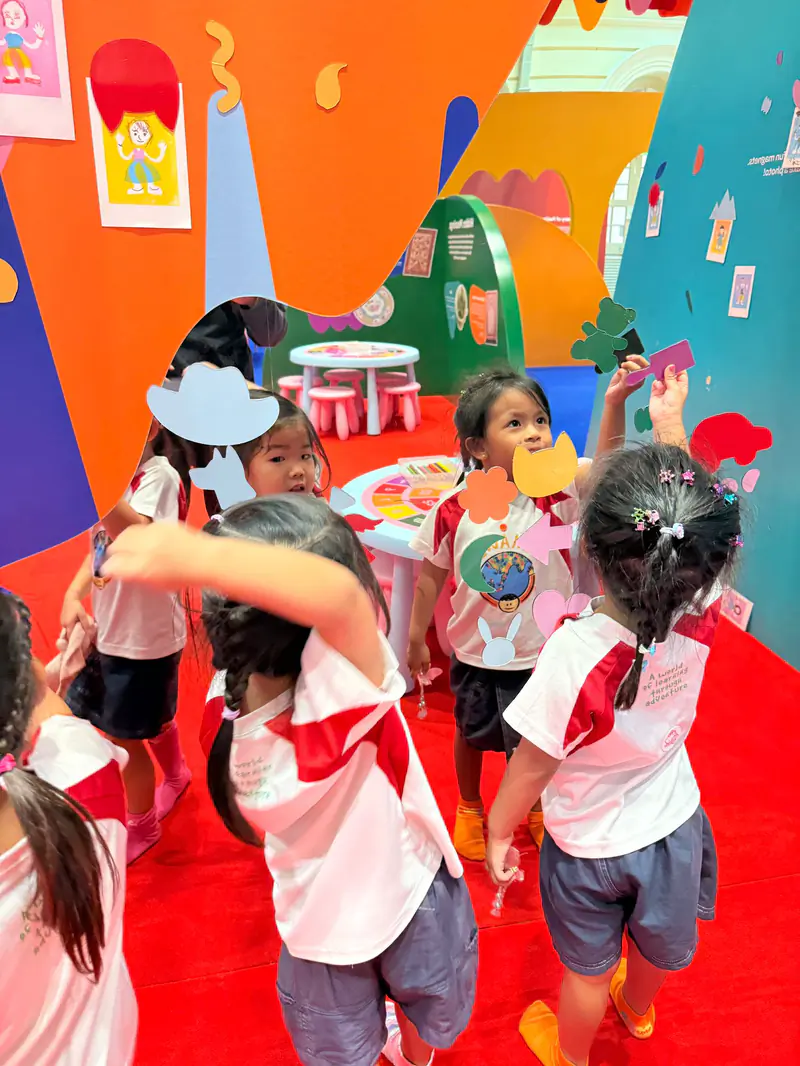
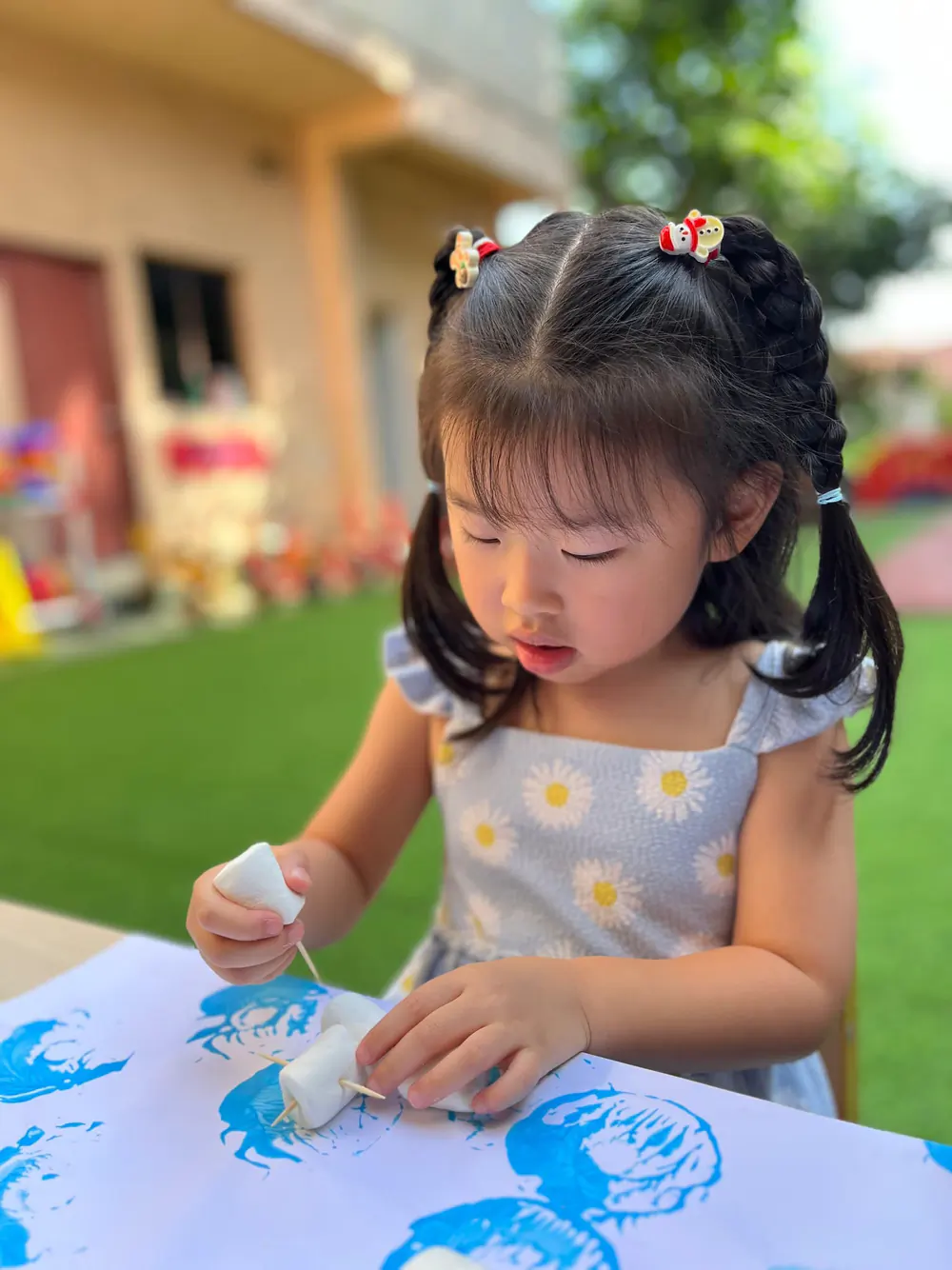
Arts and creativity is one of the five learning areas in the ShawsPlay curriculum. We offer many materials and few instructions, so children can experiment across different art forms. Along the way they build fine motor control and the confidence to make something nobody asked for. Messy play with paint and water is part of the week, and from N1 and N2 upwards children can also choose art as an optional activity. You can read more on our curriculum page.
If you would like to see our classrooms and the work on the walls, book a tour at the campus nearest you. Weekday visits run in the morning and the afternoon, and you are welcome to bring your child along.