You don't need a lab coat or an expensive science kit to teach a preschooler science. A bowl of water and a few things from the kitchen cupboard will do, along with a willingness to tolerate some mess. Young children are natural experimenters. They pour and drop things to see what happens, and they are delighted when something surprises them.
Science at this age is less about facts and more about a habit of mind. Children learn to notice and wonder. Then they learn to make a guess and check it. Kitchen experiments are an easy way to practise that habit at home, and most of them take less than ten minutes to set up.
A simple method to repeat every time
Every experiment below follows the same pattern. Use it often enough and your child will start running it without you.
- Wonder. Ask a question. "What will happen if we put this in water?"
- Guess. Ask your child to predict. "Will it float or sink?" Any answer is a good answer.
- Try. Do the experiment together, with your child doing as much of the hands-on work as possible.
- Look. Talk about what you see. "What happened? Was it what you guessed?"
- Wonder again. "What if we tried a bigger one? What if the water was warm?"
The guess is the most important step. Making a prediction and finding out whether it was right is the heart of scientific thinking, and a wrong guess is often more interesting than a right one.
Safety first
Supervise kitchen science closely. Use only food-safe ingredients, and keep small items away from toddlers who still put things in their mouths. Do the messy experiments on a tray or in the bathroom. Avoid anything hot or sharp, and check every ingredient if your child has allergies.
Eight experiments to try
1. Sink or float
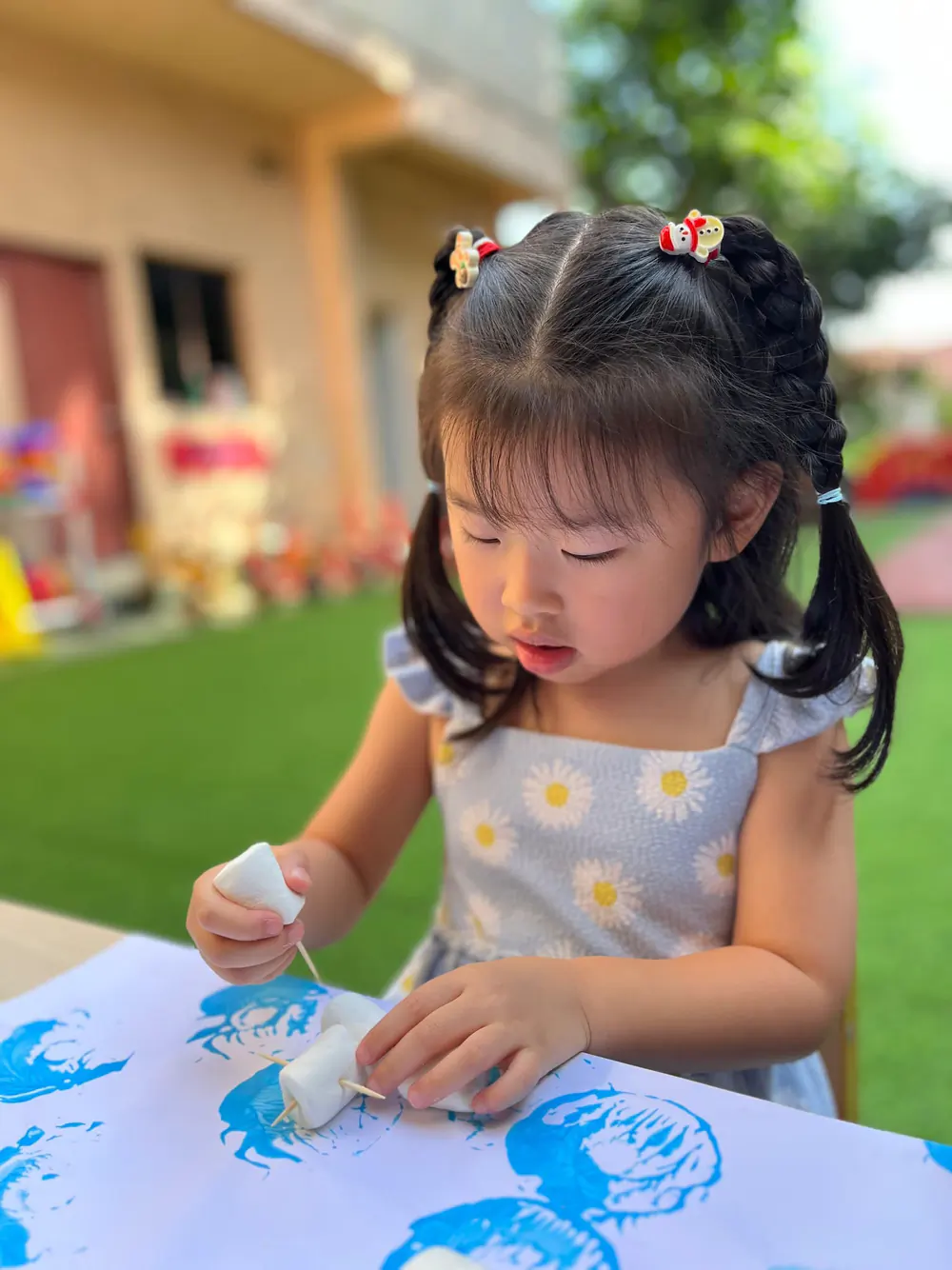
Fill a basin with water and gather a collection of small objects from around the house. Start with a spoon and a cork. A coin is good too. So is a sponge. Before each object goes in, ask your child to predict what it will do, then sort the results into two groups.
Finish with a surprise. An orange will usually float with its peel on, and often sinks once it has been peeled. Ask your child why that might be. The peel is full of tiny pockets of air, which is a lovely idea for a four-year-old to chew on.
2. Rainbow milk
Pour full-cream milk into a shallow plate and add a few drops of food colouring in the middle. Dip a cotton bud in washing-up liquid and touch it to the surface. The colours swirl away from the soap in a rush. Children love repeating this one, and older preschoolers can test what happens if they touch the milk in a different place.
3. Fizzing volcano
Put two spoonfuls of bicarbonate of soda in a cup on a tray and add a drop of colouring. Let your child pour in some vinegar and watch it fizz over. Then start changing things. What happens with more vinegar? With less soda? Keep faces back, since vinegar stings if it splashes in eyes.
4. Melting race
Put an ice cube in each of several small bowls. Sprinkle salt on one and sugar on another, and leave a third plain. Which melts fastest? In Singapore you can also race ice cubes in different places, such as a sunny window ledge against an air-conditioned room.
Frozen toys make a good follow-up. Freeze small plastic animals in a tub of water overnight, then give your child spoons and warm water to rescue them.
5. What disappears?
Set out clear cups of water and give your child a spoonful of something different for each. Sugar and salt work well. Sand makes a good contrast. Stir each one in. Which ones vanish? Which sink to the bottom? Introduce the word "dissolve", and ask where the sugar went. A small taste of the sugar water proves that it is still in there.
6. Growing beans
Line a clear jar with damp kitchen paper and push a few dried mung beans between the paper and the glass, where you can see them. Keep the paper damp and check every day. Within a few days roots appear, followed by shoots. Your child can draw what they see each morning, or measure the shoot against a row of building bricks.
7. Bubble shapes
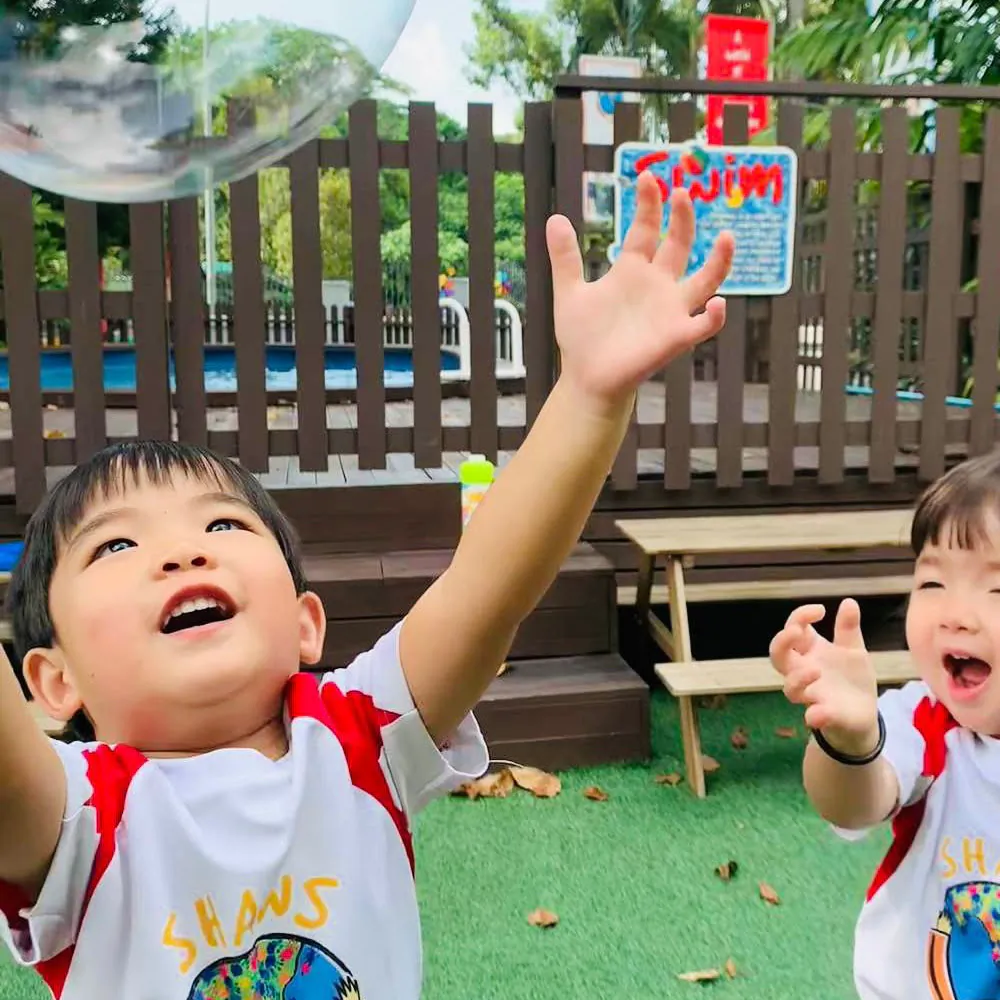
Mix water with a little washing-up liquid in a tray and make wands from pipe cleaners in different shapes. Ask the big question first. Will a square wand make a square bubble? It won't, and children are usually amazed. Try blowing slowly and then quickly, and look for the colours that swirl on the surface.
8. Shadow play
Shine a torch on a toy and watch its shadow on the wall. What happens when you move the torch closer? Further away? Outside, compare your shadows in the early morning with your shadows at lunchtime. Singapore is close to the equator, so midday shadows are very short, which children find fascinating once they notice it.
Talking like a scientist
The conversation around an experiment matters as much as the experiment itself. A few phrases that help:
- "I wonder what will happen if..."
- "What do you notice?"
- "Why do you think that happened?"
- "How could we find out?"
- "Was that what you expected?"
Try not to explain everything straight away. Let your child come up with their own ideas first, even if they are wrong. "Maybe the orange sank because it missed its jacket" is a wonderful theory, and you can explore it together.
It is also fine to say "I don't know, let's find out." Children learn a lot from seeing that adults are curious too, and that not knowing is the starting point for finding out.
Keep it short and repeatable
Preschoolers have short attention spans, so one experiment for ten or fifteen minutes is plenty. Repetition is a good sign. Children often want to do the same experiment over and over, and each time they notice something new. If your child loses interest, put it away for another day.
Science at Shaws
Science is one of the five learning areas in the ShawsPlay curriculum. Hands-on experiments and games teach children to observe and predict. They get things wrong and then adjust their thinking. That is the scientific method in miniature, practised by three-year-olds. Our afternoon S.T.E.A.M. sessions and Little Chefs cooking in ShawsPlay Club put real materials in children's hands, and four of our five campuses have a tinkering corner for taking things apart.
To see a Shaws classroom in the middle of an experiment, book a tour at the campus nearest you. For more ideas at home, our free 20-Day Activity Guide has a play-based activity for each day using things you already own.