Quick answer: far fewer than most homes contain. When children have too many toys available at once, play gets shorter and shallower. Keep a small set out, store the rest, rotate every few weeks, and choose open-ended things over toys that only do one job.
Walk into most family homes in Singapore and you will find a well-loved corner containing more playthings than a small shop. None of it arrived through bad decisions. It arrived through birthdays, grandparents, goodie bags, a hard week and a helpful sale.
And then a strange thing happens. The child stands in front of all of it and says they are bored.
Why too many toys makes play worse
Children play deeply when they can commit. Deep play looks like a child building the same tower for twenty minutes, or running one pretend scenario until it has a plot.
A crowded room interrupts that. Every object in view is a small invitation to switch, so play becomes a sequence of two-minute samples. The child never gets to the good part, which is the part where they get absorbed, solve something, and build the concentration that will matter for the rest of their life.
Reduce the options and the opposite happens. With a handful of things available, a child stops surveying and starts inventing. Boredom, which we tend to treat as a problem to solve, is usually the ten minutes right before something interesting.
What to keep
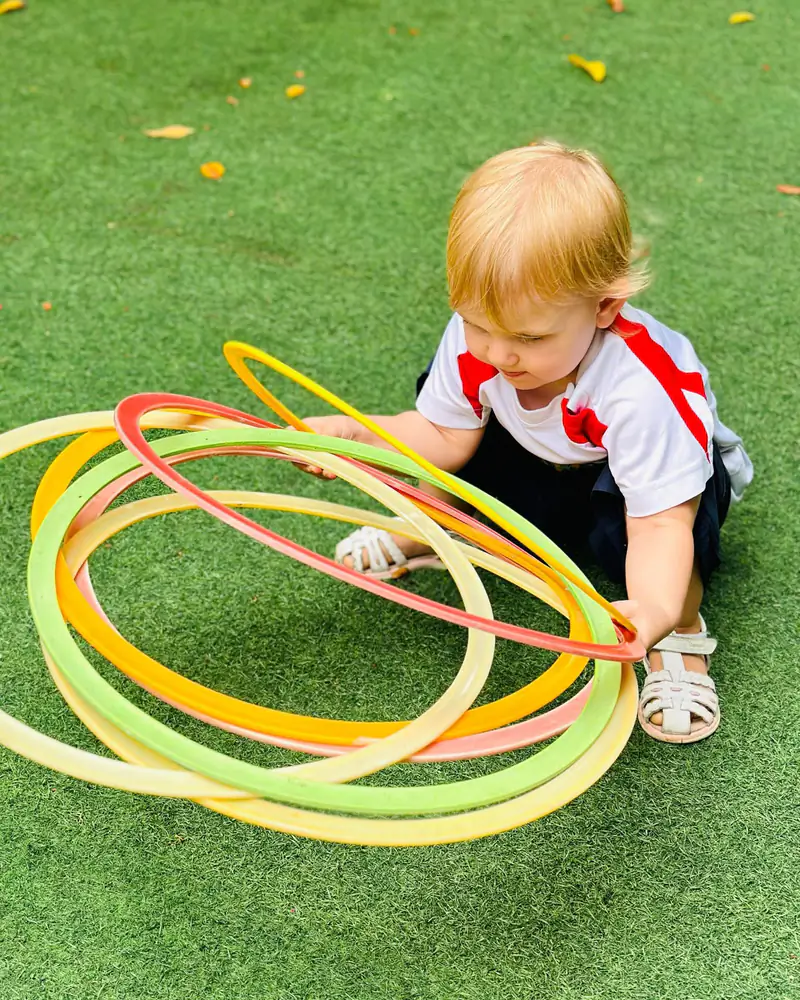
The most valuable toys are the ones that do not decide what the play is. A good test: can this become five different things?
Worth keeping:
- Blocks. The highest-return object in any home, at any age from one to eight.
- Dolls, animals and small figures. The whole machinery of pretend play, which is where children rehearse social life.
- Dress-ups. A few pieces of cloth beat a licensed costume, because a cape can be anything.
- Art materials. Paper, crayons, glue, tape, scissors. Tape especially. Children will spend an entire afternoon on tape.
- Dough and sand and water. Sensory materials build hands as well as calm.
- Balls and physical things. Anything that makes them throw, catch, balance or climb.
- Books. Always.
- The genuinely beloved one. Every child has one that is exempt from all rules. Leave it alone.
What to be sceptical about
Toys that do the play for the child. The battery-powered thing that lights up, talks and performs a routine has a fixed script, and the child's role is to press the button and watch. Interest usually dies within days.
There is a rough rule that has held up for decades: the more the toy does, the less the child does. A wooden block does nothing at all, which is exactly why it survives thirty years of children.
How to do a rotation, without a fight
You do not need to throw anything away.
- Gather everything into one place. All of it, including the pieces from under the sofa.
- Sort into three piles. Out now, stored, gone. Gone means broken, missing critical parts, or genuinely outgrown.
- Put out a small selection. Aim for something in the range of eight to twelve things, spread across categories: something to build, something to pretend with, something to make, something physical, books.
- Box the rest and put it away. Out of sight genuinely matters.
- Swap every two or three weeks. A boxed toy comes back with the excitement of a new one, which is a rare free win in parenting.
Involve your child in the sorting if they are four or older, and do it when they are fresh rather than at the end of a long day. Younger than that, it is usually easier to do it while they are out.
The best toys are not toys
Take a moment to notice what your child actually gravitates to. It is very often the cardboard box, the laundry basket, the wooden spoons, the cushions off the sofa, the stack of takeaway containers, a length of string.
These things are called loose parts, and they are the gold standard of open-ended play because they carry no instructions. A box is a boat, then a cave, then a shop. Keep a small stash of safe household items available and you have added far more play value than another purchase would.
What to say to the relatives
Grandparents love to give things, and asking them to stop rarely goes well. Redirecting works better than refusing.
Suggest experiences: a trip to the zoo, a swimming lesson, a morning at the beach. Suggest consumables: paper, paint, dough, seeds. Suggest books, which are the one category almost nobody minds accumulating. If a large toy is coming anyway, mention what would get used, because most people would genuinely rather give something that works.
What we see in our rooms
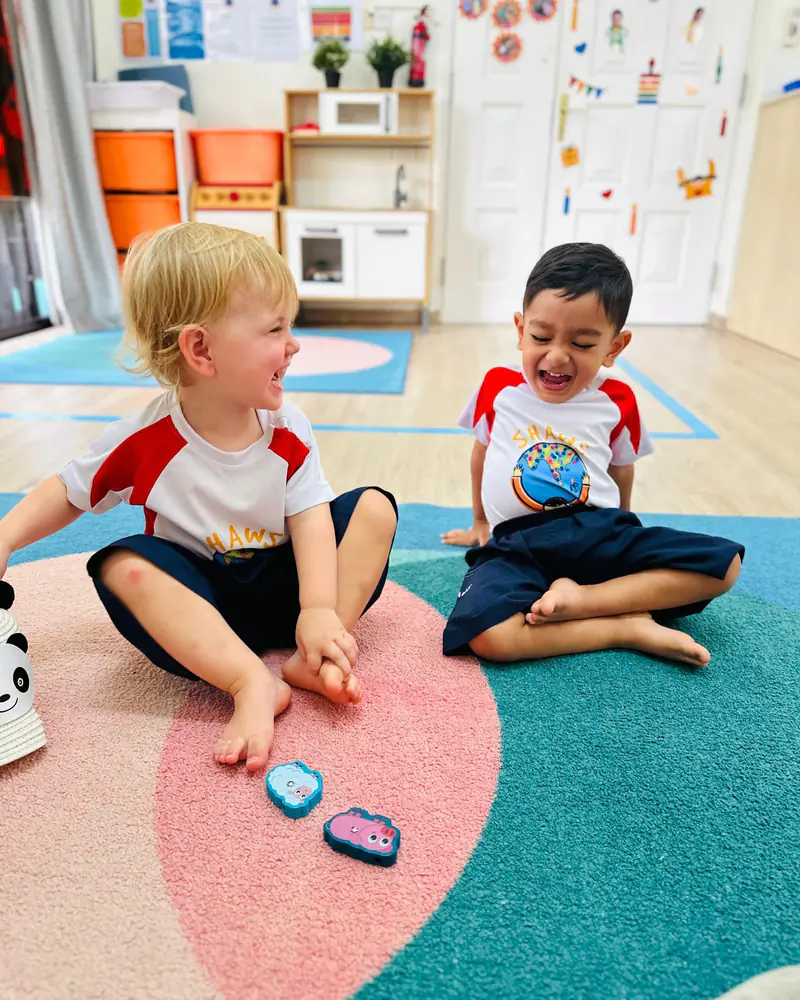
Our classrooms are not full. Every material is chosen, and there is space around things. Children walk in, choose, and settle within a minute or two, and the room goes quiet in the way a room does when everyone is busy.
That is not a trick of the professional environment. It is a direct result of there being less to choose from. It works at home too, and it costs nothing.
Shaws Preschool has built its play-based rooms around open-ended materials across the East Coast and Serangoon since 1989. Come and see what children do with them: book a tour.