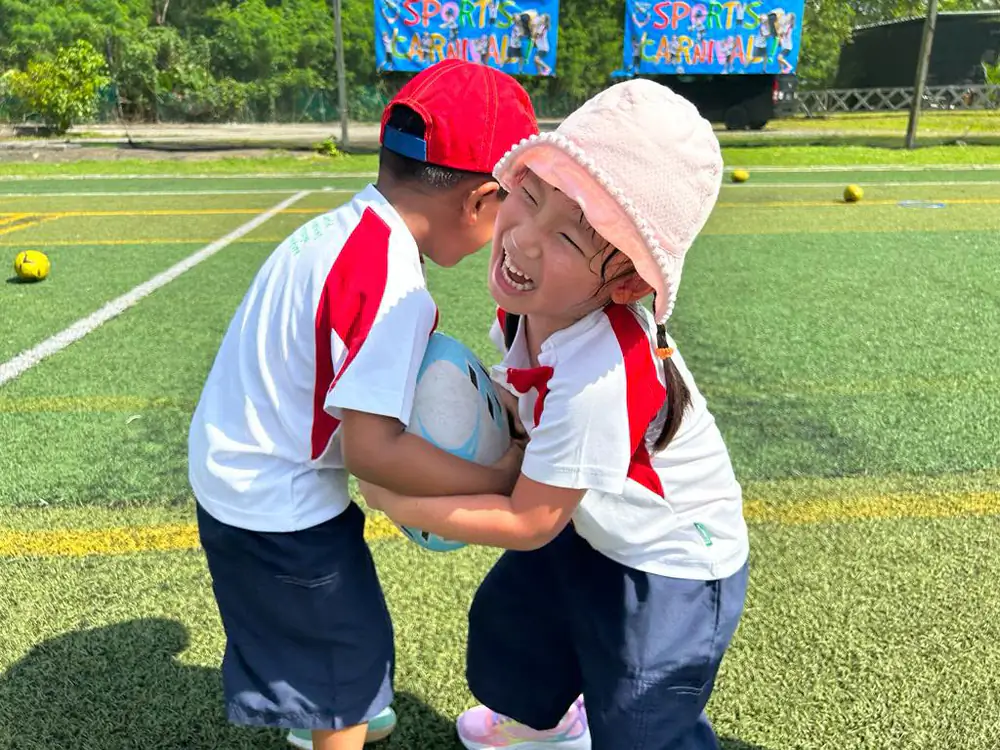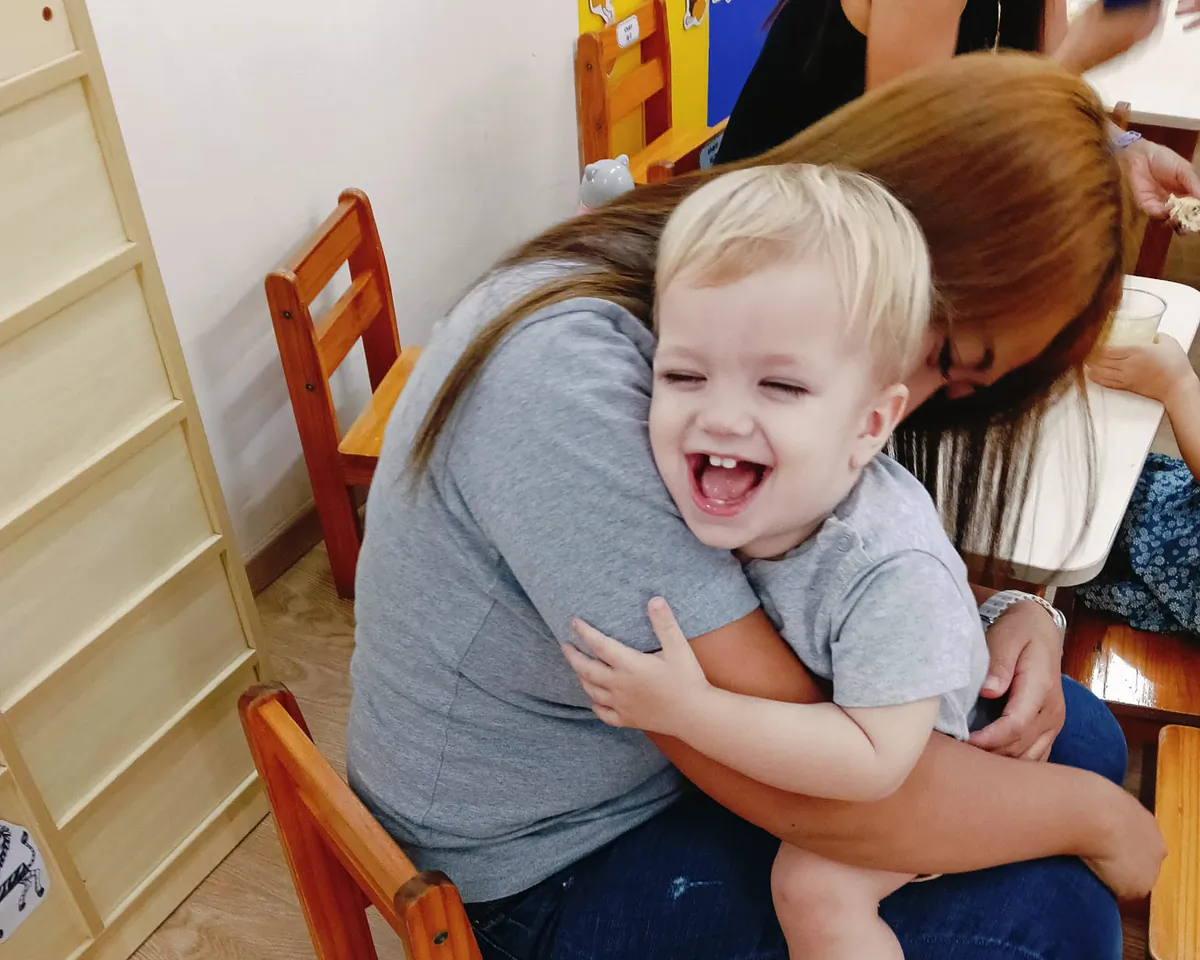

Quick answer: genuine sharing requires understanding that another person has feelings different from your own, and that ability is still under construction until around four. Before then, turn-taking works and instruction does not. Forced sharing tends to make children more possessive, not less.
Two children, one truck, and a parent saying "share nicely" for the fourth time. Nothing happens, except that everyone gets crosser.
It is worth knowing why the instruction fails, because the alternative is straightforward and it works.
What sharing actually requires
To share willingly, a child has to hold several things in mind at once:
- That the other person wants it too, which requires understanding that other people have their own desires. This develops gradually through the preschool years.
- That giving it up is temporary. Two-year-olds often experience handing something over as losing it permanently, which explains the intensity of the reaction.
- That the other child's happiness is worth their own discomfort. That is a genuinely sophisticated trade.
- Enough impulse control to override wanting the thing right now.
None of that is fully available at two or three. Expecting it is a bit like asking a child to read before they know the letters.
Why forced sharing backfires
The usual adult move is to take the item and hand it to the other child after a set time, or simply because the other child asked.
From inside the child's experience, what has just happened is: at any moment, an adult can take my thing and give it to somebody else. That does not produce generosity. It produces vigilance, grabbing and a much tighter grip on the next toy.
It also teaches the asking child something unhelpful, which is that whining to an adult is the fastest route to getting what you want.
Turn-taking instead
The alternative used in most good preschools is turn-taking, and the rule is simple: the child who has it keeps it until they are finished.
That sounds unbearable to adults. In practice it does the opposite of what people expect.
When a child knows their turn will not be cut short, they relax. Play gets deeper, and, crucially, most children hand things over far sooner than they would if they were being pressed. The urgency drops away.
Meanwhile the waiting child is learning something valuable and hard: how to wait, how to ask, and how to trust that their turn will come. Those are the actual skills.
How to run it
Narrate rather than adjudicate. "You want the truck. Aleena is using it. She will pass it to you when she is finished." Calm, factual, and you have not taken sides.
Help the waiting child wait. This is where the adult work is. Sit with them, name the feeling, and offer something to do in the meantime. "Waiting is hard. Shall we build a garage for when it is your turn?"
Ask, do not command, the child who has it. "Can you tell her when you have finished?" Most three-year-olds take this responsibility surprisingly seriously.
Use a timer only when you must. It is a fair tool for a single hugely popular item. It should not be how sharing normally works.
Notice the moment it happens. "You gave him a turn when you were finished. He was really pleased." Specific, factual, no gushing.
Model it out loud. "I would like a turn with the blue pen when you have finished." Children copy the phrasing.
Protect some things from sharing entirely
Every child should have items nobody can ask for: the special blanket, the birthday present, the one bear. Sharing everything is not a reasonable expectation of anyone, adult or child.
If a playdate is coming, put those things away first. A child who has been allowed to protect what matters most is far more relaxed about everything else.
What is realistic, by age
- Under 2: parallel play, side by side. Sharing is not on the agenda, and that is fine.
- 2 to 3: turn-taking with heavy adult support. Expect grabbing and expect to be repeating yourself.
- 3 to 4: starting to take turns with less help, though not when tired. Beginning to notice how other children feel.
- 4 to 5: genuine sharing appears, along with negotiating, rule-making and the fierce interest in fairness that defines this age.
- 5 to 6: able to share and take turns reliably in most situations, and quick to tell you when someone else has not.
The bit that reassures parents
A child who will not share is not selfish, and it is not a comment on your parenting. It is a developmental stage with a fairly reliable timetable.
Meanwhile the possessiveness that looks so unattractive at two is also the beginning of something worth having. A child who can say mine is a child who understands ownership, and understanding ownership is what makes giving something away meaningful later.
Why the preschool room is the best place to learn it
Sharing is learned by doing it, many times a day, with support. In a good preschool a child gets dozens of these moments a week: waiting for the swing, asking for the red one, being asked, deciding to hand it over, seeing the other child's face when they do.
Our teachers are not standing over children enforcing turns. They are close by, putting words to what is happening, helping the waiting child hold on, and letting the children do as much of the work as they can. That is how it becomes theirs rather than a rule they follow when an adult is looking.
Shaws Preschool has been teaching children to wait, negotiate and take turns across the East Coast and Serangoon since 1989. Come and see it in action: book a tour.