Quick answer: a good preschool lunch has some protein, some slow carbohydrate, a vegetable or fruit, and a size that matches a small stomach. Local food does this beautifully. What matters most is not the perfect nutrition chart but that the food gets eaten, which is largely about familiarity and how relaxed mealtimes are.
Lunch for a four-year-old has a specific job. It has to carry them through an afternoon that includes running, building, negotiating with other children, holding a pencil and managing their own feelings. That is a demanding afternoon, and a lunch of biscuits will not fund it.
The simple structure
Four components, no arithmetic required:
- Protein. Egg, chicken, fish, tofu, beancurd, dhal, minced pork, cheese, yoghurt. This is what stops the two thirty slump.
- A carbohydrate that lasts. Rice, noodles, bee hoon, wholemeal bread, chapati, potato, porridge.
- Something from a plant. Any vegetable or fruit that will actually be eaten. Cucumber sticks count. So does a banana.
- Water. Not juice, not cordial. Water.
If three of the four are there, that is a good lunch.
Local food is already well designed
There is no need to build a European-style lunchbox to be healthy. Singapore's everyday food does this well.
Steamed rice with a little chicken and a green vegetable. Bee hoon with egg and beansprouts. Congee with fish and spring onion. Chapati with dhal. Tofu with rice. Steamed fish. Yong tau foo. Cut fruit: papaya, watermelon, banana, mandarin.
Where local food needs a small adjustment for young children, it is usually about salt, sugar and heat. Go lighter on soy and oyster sauce, ask for less sugar in drinks and desserts, and keep chilli separate until they ask for it.
What to leave out
Not from moralism, just because they do not do the job.
- Sweet drinks. Juice, cordial, sweetened soy and packet drinks displace water and blunt appetite.
- A lunch that is mostly beige. Nuggets, crackers and white bread with nothing alongside will run out of energy by three.
- Big portions. A preschooler's stomach is roughly the size of their own fist. An adult-sized portion is discouraging before they start.
- Anything that needs an adult to unwrap it. If they cannot open it, they will not eat it. Test the containers at home.
- Choking risks for the under-fours. Whole grapes, whole cherry tomatoes, hard sweets, large chunks of raw carrot, whole nuts. Halve grapes and tomatoes lengthways and grate or steam hard vegetables.
Portions, realistically
Rough guide: about a tablespoon of each food per year of age, as a starting serve. So a four-year-old might get four tablespoons of rice, four of vegetables, and a palm-sized piece of protein.
Appetite swings enormously day to day, and that is normal. Children regulate over about a week, not a meal. A day where they eat almost nothing followed by a day where they eat everything in the house is standard.
The fussy stage
Almost every child goes through a phase of eating four foods and refusing everything else, usually between two and five. It is developmentally normal and it is not a sign that anything has gone wrong.
What helps:
- Keep offering, without pressure. It can take ten or more exposures before a child accepts a new food. Put it on the plate, say nothing, remove it without comment.
- Split the jobs. You decide what is offered and when. They decide whether and how much. Holding that line removes almost all mealtime conflict.
- Serve the new thing next to a safe favourite. A lone unfamiliar food on a plate is a threat. Beside something they trust, it is an option.
- Let them serve themselves. Control is a huge part of this. A child who scoops their own rice eats more of it.
- Get them involved. Children who help wash, stir, choose at the market or grow something are much more likely to eat it.
- Do not bribe with dessert. Trading pudding for broccoli teaches that broccoli is the price of pudding, which is exactly the wrong lesson.
- Stay unbothered. Easy to say and hard to do, but a calm table changes eating faster than anything else. Attention, even negative attention, keeps a refusal going.
Snacks matter more than parents think
A preschooler needs two or three small snacks a day, because small stomachs cannot hold enough at meals. Keep them useful rather than sweet: fruit, yoghurt, wholemeal bread, cheese, boiled egg, edamame, plain steamed sweet potato.
The other rule is timing. A snack too close to lunch is the most common reason a child does not eat lunch.
Meals at Shaws
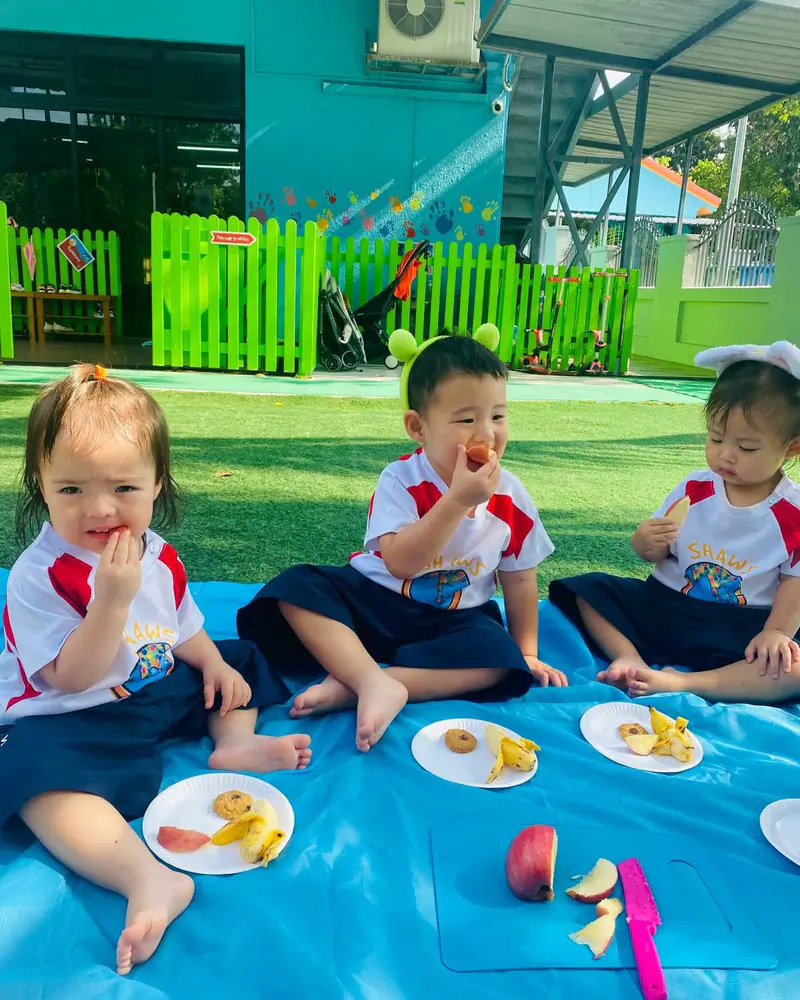
Our children eat together, and eating together is a large part of the point. There is conversation, there is passing things, there is trying what a friend is having, and there is no pressure on anyone to clear a plate.
We keep it varied, we keep it recognisable, we keep the salt and the sugar low, and we let children serve themselves where they can. Independence at the table is one of the quietly important preschool skills, and it goes straight into Primary 1 with them.
Mostly, though, we try to keep lunch relaxed. A child who associates food with pressure is a harder problem than a child who does not like broccoli.
Shaws Preschool has been feeding, teaching and running around with children across the East Coast and Serangoon since 1989. Come and see a lunchtime: book a tour.