Quick answer: sensory play is how a toddler gathers information about the world, and it builds hands, language, concentration and calm at the same time. You do not need a kit. Rice, water, dough, ice and a few containers will cover almost everything, and the mess is containable with a tray and a towel.
Watch a two-year-old meet a bowl of dry rice for the first time. They will plunge both hands in, lift, drop, listen, and then do it again about ninety times. It looks like nothing. It is a small brain running experiments at speed.
What sensory play is actually doing
A toddler has no filing system yet. Everything they know about heavy, cold, rough, sticky, wet and crumbly has to be built from direct experience, and the fastest route is through the hands.
Along the way it builds:
- Fine motor strength. Squeezing, pinching, pouring and scooping build the hand muscles that will later hold a pencil. This is why we are relaxed about pencil grip at three and busy with dough instead.
- Language. Sensory materials pull adjectives out of adults. Slippery, freezing, gritty, squishy. Descriptive vocabulary is hard to teach any other way.
- Concentration. Sensory play produces some of the longest uninterrupted attention you will see in a toddler, and long attention is a trainable skill.
- Calm. Repetitive, predictable tactile activity settles the nervous system. A wound-up child at the water tray is often a different child ten minutes later.
- Early maths. Full, empty, more, less, heavy, light, and the beginnings of volume. All of it through pouring.
Fifteen activities from your kitchen
Water play
- Pouring station. A basin, a few cups and jugs of different sizes. That is the whole activity, and it will run for half an hour.
- Washing up. Warm soapy water, plastic dishes, a cloth. Toddlers adore genuine jobs.
- Ice. Ice cubes in a bowl of warm water, or small toys frozen inside cubes to be rescued. Excellent on a hot afternoon.
- Baby doll bath. Water, a flannel, a towel, and a lot of careful, gentle work.
Dry materials
- Rice or dried beans. Scooping and pouring with spoons, funnels and containers. Supervise closely with under-threes.
- Treasure hunt. Bury a few small objects and let them dig.
- Pasta threading. Dry penne on a shoelace, for the older end of toddlerhood.
Squishy materials
- Play dough. Home-made is cheap and better. Add cutters, a rolling pin, and later some dry spaghetti to poke in.
- Cornflour and water. The classic that is liquid when poured and solid when pressed. Nothing else behaves like it.
- Bread dough. Real kneading, real bread, real pride.
Messy art
- Painting in a tray. Paint straight onto a metal tray with fingers, then press a paper on top to print it.
- Bath crayons or shaving foam on tiles. The whole thing washes away, which removes the anxiety for everyone.
- Mud kitchen. Soil, water, old pots, a spoon. Still the best free toy there is.
Smell and taste
- Herb pots. Rub mint and basil leaves between fingers and smell them.
- Snack sorting. Sorting fruit by colour, then eating the evidence.
Keeping the mess survivable
Mess is the main reason families avoid this, which is fair. A few things make it manageable in a flat:
- Contain it. Everything happens on a tray, in a basin or inside a shower stall. A boundary makes the whole thing calmer for you and clearer for them.
- Take it to the bathroom or the corridor. Tiled floors and drains solve most problems.
- Old clothes, or fewer clothes. A nappy and a tiled floor is a legitimate outfit for messy play.
- Set up for the clean-up. Have the towel and the wet cloth ready before you start, not after.
- Make tidying part of the play. A dustpan and brush is itself a good toddler activity. Two-year-olds enjoy sweeping far more than they will at fifteen.
- Keep it short. Twenty good minutes beats an hour that ends in tears.
Safety notes
Under-threes still put things in their mouths, so stay in the room for anything involving small items and use taste-safe materials where you can. Never leave a toddler alone near water, even a shallow basin. Rice, beans and pasta are choking risks for the youngest, so save those for after the mouthing stage and keep close.
If your child hates mess
Some children genuinely dislike sticky or gritty textures, and forcing it does not help. Work around it instead. Offer tools so they need not touch directly: tongs, spoons, a brush. Start with dry materials, which are usually easier than wet. Let them watch first, for as long as they need. Keep a cloth right there so they know they can clean up instantly. Most children come round when they are in control of the pace.
Why we do so much of this
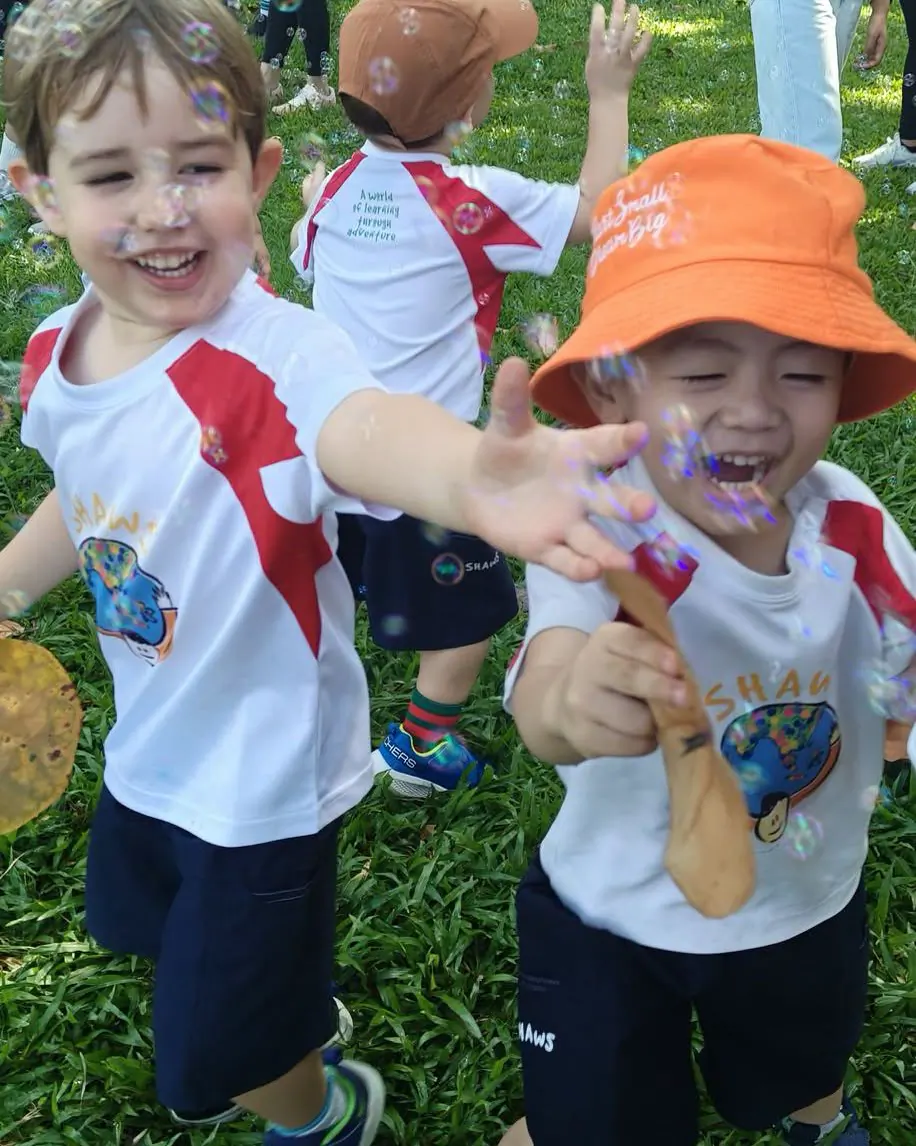
Our youngest rooms are full of water, dough, sand, foam and paint, and children come home with the evidence on their clothes. That is not a failure of supervision. It is the curriculum. The hands that spend two years squeezing and pouring are the hands that will manage a pencil easily at five, and the child who has learned to get absorbed in a tray of rice has learned something about their own attention that will outlast every material we put in front of them.
Shaws Preschool has run hands-on, play-based rooms across the East Coast and Serangoon since 1989. Come and see the mess in progress: book a tour.