Quick answer: time outdoors in daylight is one of the best protections we have against short-sightedness in children. The Ministry of Health estimates that more outdoor time may reduce the prevalence of myopia in children by around 13 per cent. Build daylight into most days and give your child's eyes regular breaks from close-up work. If you notice squinting or sitting very close to the TV, get their eyes checked.
Ask a room of Singapore parents whether they wore glasses as children and plenty of hands go up. Myopia, or short-sightedness, has been a national health concern here for decades. In 2001 the Health Promotion Board launched the National Myopia Prevention Programme with the Ministry of Education and the Singapore National Eye Centre, and it has since added vision screening for K1 and K2 children.
The preschool years matter because eye-friendly habits are easiest to set before primary school. After that, homework starts to compete for a child's afternoon.
What myopia is
A short-sighted eye focuses light slightly in front of the retina instead of on it, so distant things look blurry while close things stay sharp. In most children it happens because the eyeball grows a little too long.
Once a child becomes myopic, it tends to get worse as they grow and usually settles only in the teenage years. That is why eye doctors care so much about delaying the start. A child who becomes short-sighted at eight has fewer years of progression ahead than one who becomes short-sighted at five.
Why outdoor time helps
Researchers are still working out the full mechanism, but daylight appears to be a big part of it. Outdoor light is many times brighter than indoor lighting, even on an overcast day, and bright light seems to slow the eye's tendency to grow too long. Being outside also means looking into the distance, at the far end of a field or the top of a tree, rather than at a page or a screen held close.
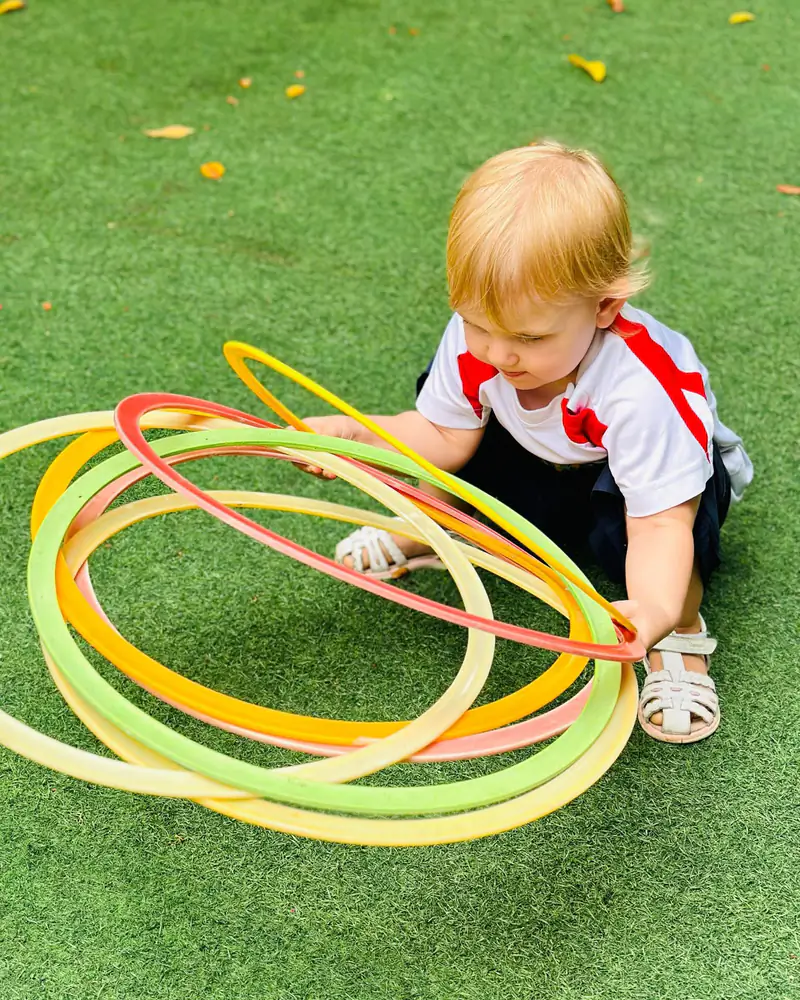
The effect does not depend on what a child is doing out there. A child digging in the sandpit gets the same daylight as one racing around a field, and so does a child eating a snack under a tree. The important thing is time spent in natural light.
This is one reason Singapore's preschool rules include outdoor time. According to the Ministry of Health, the Early Childhood Development Agency requires full-day preschools to provide 60 minutes of physical activity a day, with at least 30 minutes of it outdoors, or an equivalent amount spread across the week.
Making daylight part of the week
Between air-conditioned malls and covered walkways, it is very easy for a whole Saturday to pass without a child seeing much sky. A few changes make a real difference:
- Walk part of the trip. Getting off the bus a stop early, or walking from the car park instead of the basement lift, adds daylight without adding an outing.
- Use the cooler ends of the day. Early morning and late afternoon are kinder in our heat and still bright enough to count.
- Shade still works. A shaded playground or a tree-lined park connector gives far more light than the brightest indoor play centre.
- Make one weekend slot an outdoor habit. A regular Sunday morning at the beach or the park is easier to keep than good intentions.
- Eat outside sometimes. An open-sided hawker centre counts, and so does breakfast on the balcony.
The odd rainy or hazy day indoors makes very little difference. What matters is the overall pattern across weeks and months.
Close-up work and screens
Children under six spend a lot of time looking at things up close, from jigsaw pieces to picture books. That is good for them. The problem comes from long, unbroken stretches of it, especially on handheld screens held close to the face.
The Early Childhood Development Agency's advice to parents includes a break after 30 to 40 minutes of near-vision activity such as reading or drawing, cutting down on unnecessary close-up activity like handheld games, and sitting at least two metres from the television.
Screens also take time away from the outdoors. The Singapore Integrated 24-Hour Activity Guidelines for Early Childhood recommend no screen time for children under 18 months and less than one hour a day of recreational screen time for older toddlers and preschoolers. We have written more about what the screen time guidelines say.
Some easy habits:
- Keep books and drawing at a comfortable distance, roughly the length from elbow to fist.
- Build natural pauses into close work. Look out of the window, fetch a drink, find something far away to name.
- Use the television across the room rather than a tablet on the lap when screen time does happen.
- Keep screens out of the car and the restaurant where you can, so they do not eat into time outside.
Signs your child may not be seeing well
Young children rarely complain about blurry vision, because they assume everyone sees the way they do. The signs tend to show up in behaviour instead. Look out for:
- Squinting or screwing up their eyes to see something far away.
- Tilting the head or covering one eye to look at things.
- Sitting very close to the television, or holding books unusually near.
- Saying things far away look fuzzy, or not recognising people across a room.
- Rubbing their eyes a lot, or headaches after close work.
- Losing interest in activities that need distance vision, such as ball games.
If you notice any of these, do not wait for a school screening. Book an eye check with your family doctor or paediatrician, who can refer you on to a children's eye specialist if needed. Early checks are quick and painless, and if your child does need glasses, the sooner they have them the better.
Families with a parent who is short-sighted may also want to ask about an earlier baseline check, since myopia often runs in families.
What the school screening is
Under the national programme, children in K1 and K2 have their vision screened, and children who need a closer look can be referred on for assessment by an optometrist. Screening is a useful safety net, not a replacement for a check when you have concerns. If something seems off at home, trust that.
Outdoor time at Shaws
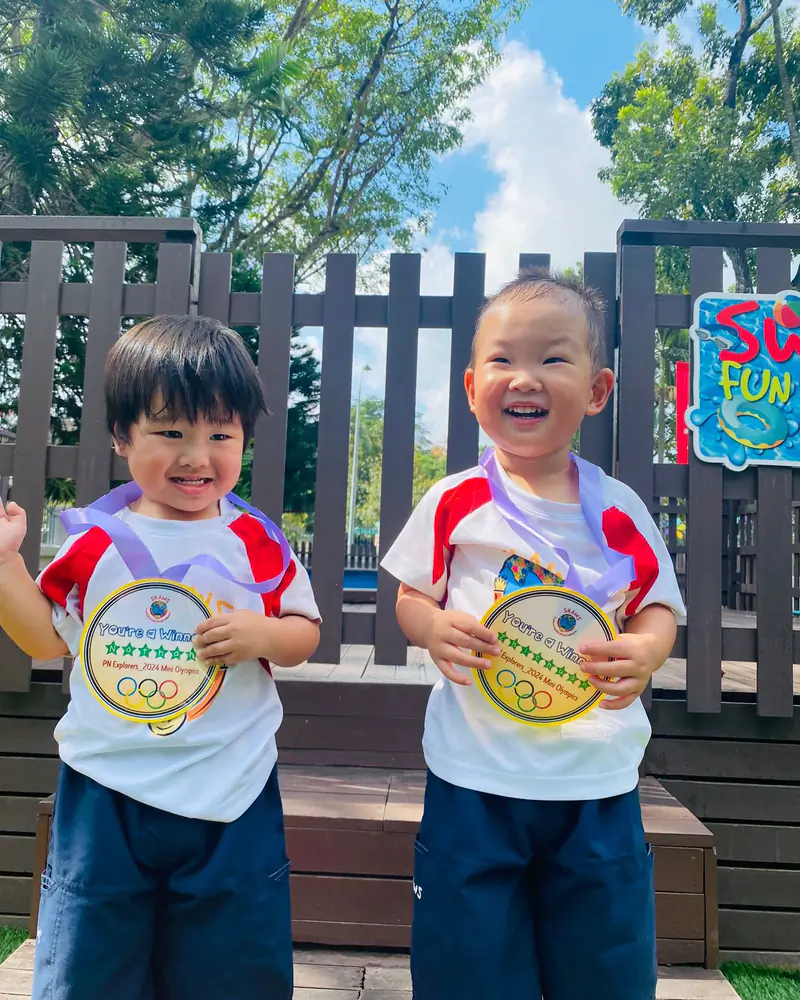
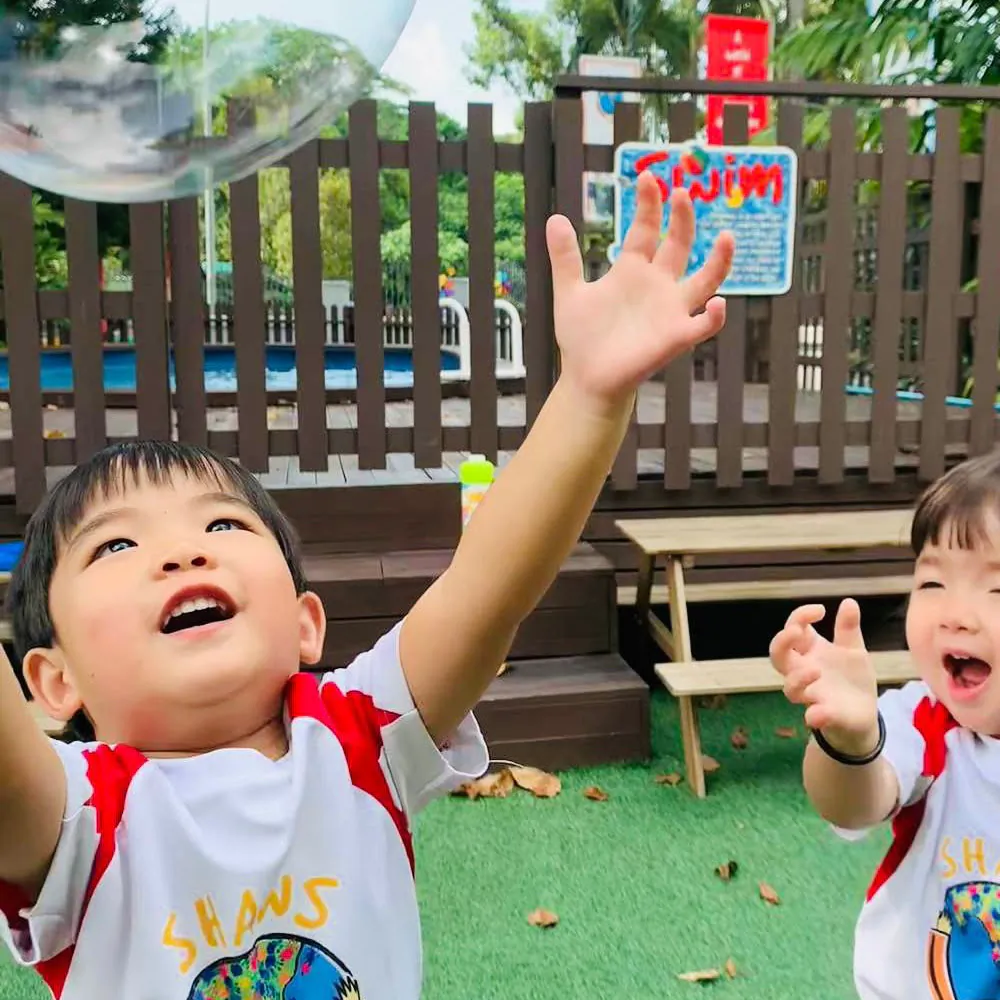
Outdoor play is built into the Shaws day rather than squeezed around it. Children go straight outside when the doors open, and the weekly timetable comes back outdoors several more times before home time, plus Shaws Little League sports coaching twice a week. Every campus has a garden and a playground, and outdoor learning in the gardens is one of the regular ShawsPlay Club activities.
Indoors, our Code Play sessions use tactile robots rather than screens, so a child's day with us is mostly spent with real things to look at, near and far.
When to seek advice
See a doctor or optometrist if your child shows any of the signs above, if one eye seems to wander or turn, if they were born prematurely, or if there is a strong family history of serious eye conditions. Your doctor can advise on the right timing for checks and on any treatment options suited to your child's age.
Shaws Preschool has made outdoor play part of every day across the East Coast and Serangoon since 1989. Come and see our gardens and playgrounds for yourself: book a tour.