Quick answer: ask about staff turnover, what happens when a child is upset, how much time is spent outdoors, what a full day actually looks like hour by hour, and how the school communicates with families. Then stop talking and watch the room for five minutes, because the room will tell you more than any answer.
Preschool tours are strange encounters. Everyone is friendly, the displays are up, and every school will tell you they are play-based, holistic and nurturing. You leave with a folder and no more clarity than when you arrived.
These are the questions that actually separate one school from another.
1. How long have the teachers been here?
This is the single most revealing question you can ask.
Early childhood work is demanding and turnover in the sector is high. A centre where several teachers have been there five or ten years is telling you something that no brochure can: the staff are supported, the leadership is decent, and children experience continuity.
Continuity matters enormously to a young child. Attachment to a familiar adult is what lets them relax enough to learn. A child who has had four teachers in eighteen months spends a lot of energy starting again.
Follow up with: who will my child's teachers be, and how long have they been in this room?
2. What happens when a child is upset?
Ask for a real example, not a policy.
You are listening for whether the answer describes a relationship or a procedure. A strong answer sounds like a teacher going to the child, getting down to their level, naming the feeling and staying with them. A weaker answer is about a calm-down corner, a chart or a consequence.
Listen also for what happens with the harder behaviours. Ask directly what they do when a child hits or bites. A good school will answer without embarrassment, because they see it weekly and they have a considered approach. A school that suggests it does not happen is either unusually lucky or not being straight with you.
3. How much time do children spend outdoors, and doing what?
In Singapore's climate it is very easy for outdoor time to quietly shrink to almost nothing.
Ask for specifics. How often, for how long, where, and what happens when it rains. Ask whether there is daily physical activity and who runs it. Ask what they do on a hazy day.
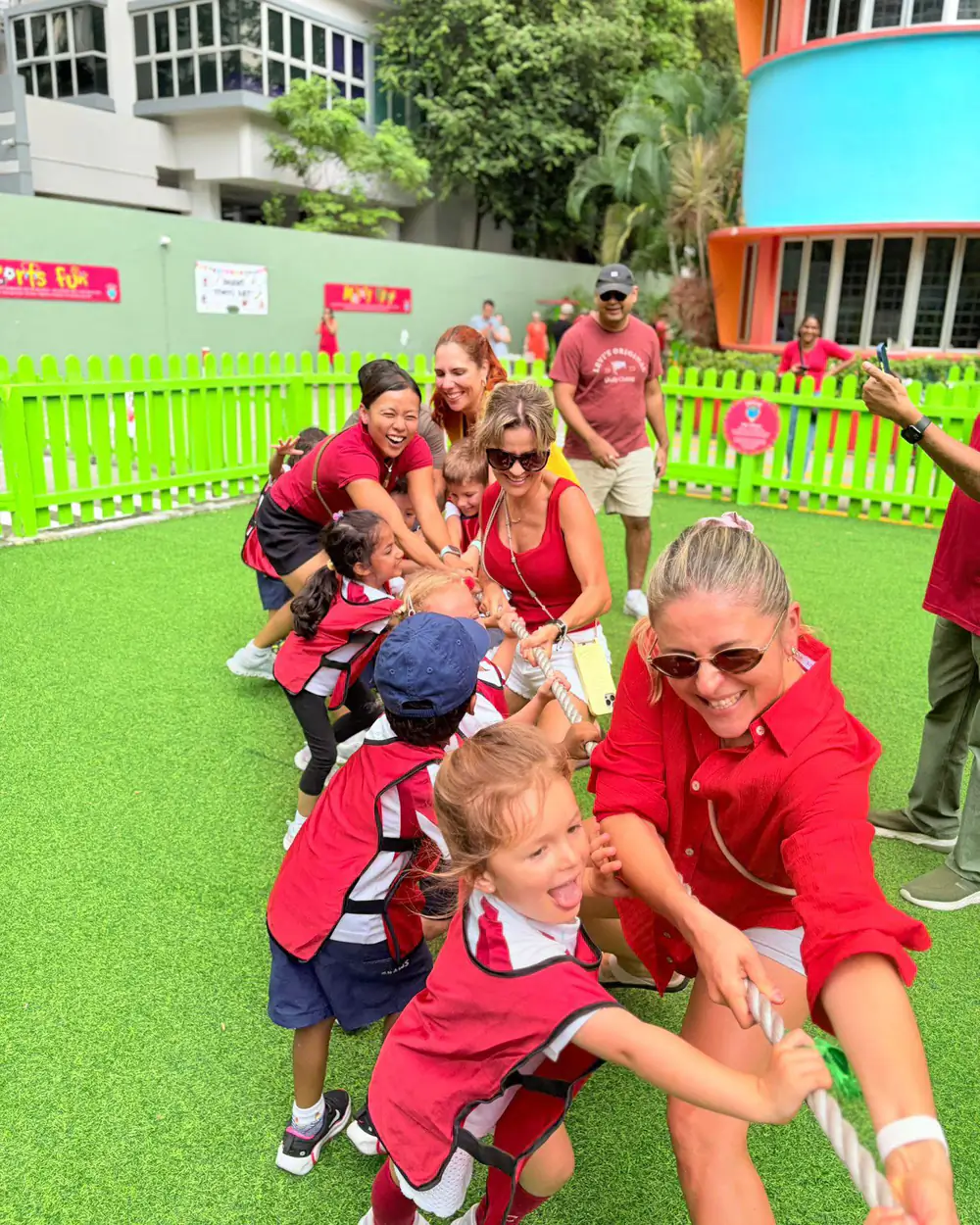
Children this age need to run, climb, throw and balance every day, and those skills underpin concentration, handwriting and sleep. A school that treats outdoor time as an optional extra when the weather is convenient is making a choice, and it is worth knowing it is being made.
4. Can you walk me through a full day, hour by hour?
This is where you find out what the curriculum actually is, rather than what it is called.
Nearly every centre in Singapore will say play-based. The hour-by-hour version tells you whether it is true. Listen for how long children get in uninterrupted play, because deep play needs long blocks, and a day chopped into twenty-minute segments cannot deliver it.
Ask how much of the day children are seated at tables, whether there are worksheets, whether both languages run through the day or sit in separate lesson slots, and what happens if a child wants to keep going with something when the timetable says to move on.
5. How will I know what my child did today?
You are choosing a partner for several years, not just a place.
Ask what you get daily, what you get termly, how you raise a concern, how quickly they respond, and what they do when they have something difficult to tell you. Ask whether you can call and speak to your child's actual teacher.
The last one matters. A school that puts every question through the office is a different kind of relationship from one where you can have a two-minute conversation at the door.
What to watch while you are there
Stop asking questions for five minutes and just look.
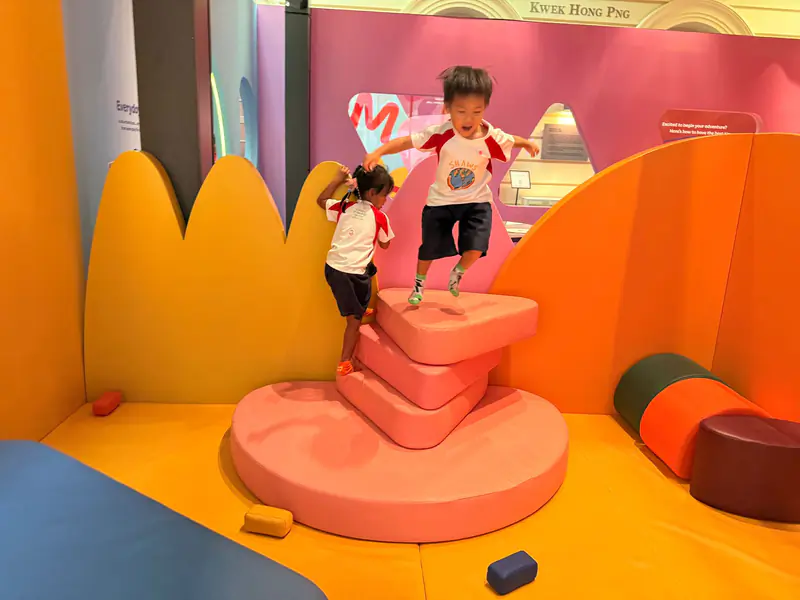
- Are the children absorbed? In a good room most children are busy with something at any given moment. Drifting is the thing to notice.
- What is the noise like? You want a busy hum. Silence and chaos are both worth a second look.
- How do adults speak to children? Crouching down, using names, waiting for an answer. Watch how they handle a child who is not cooperating, because that is the real test.
- Whose work is on the walls? Thirty near-identical crafts were adult-directed. Varied, imperfect, individual work came from the children.
- Is there evidence of mess? Paint, water, sand, dough. A spotless room at eleven in the morning is a room where not much is happening.
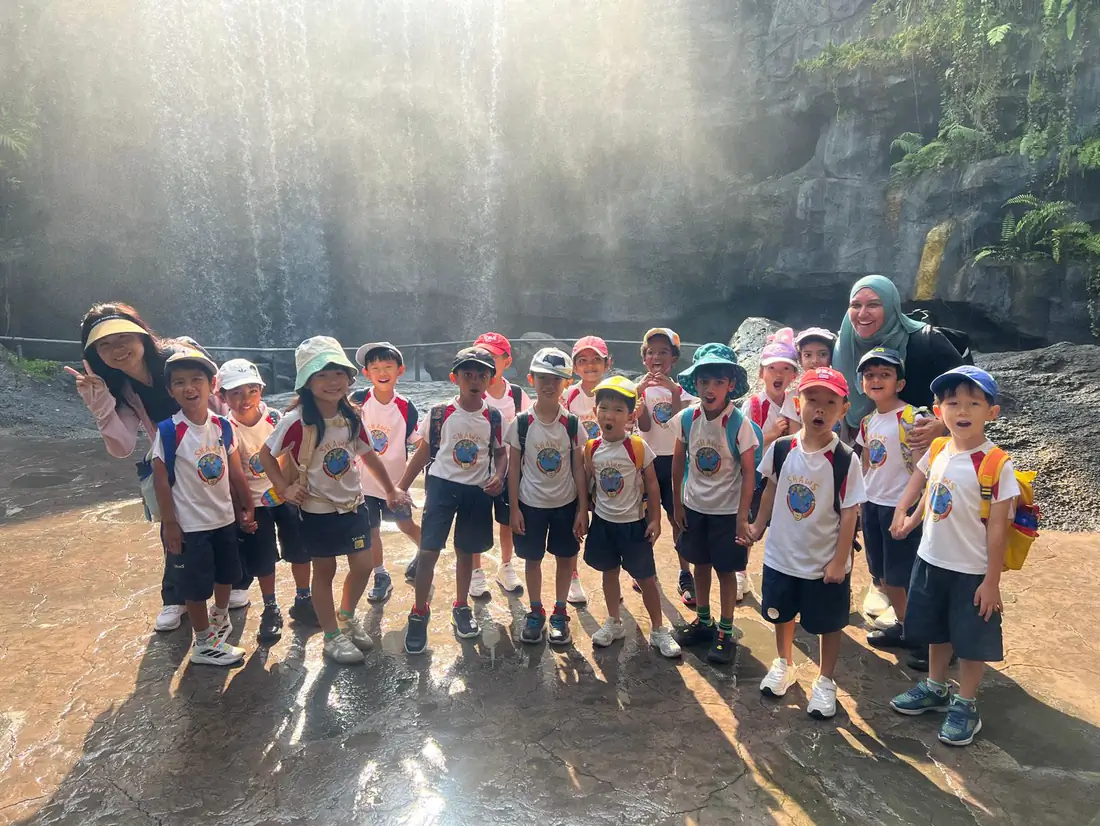
- Does a child come and talk to you? Children in a settled room are curious about visitors.
- How does your own child react? If you can, bring them. Watch whether they want to join in.
Answers that should slow you down
Any suggestion that four-year-olds should be reading and writing to a set standard. Reluctance to let you see the actual rooms during the actual day. Vagueness about staff experience. Discomfort at the question about difficult behaviour. And any answer that is mostly about results rather than about children.
And the one thing a tour cannot tell you
Whether your child will be happy there. Nobody can promise that. But if the teachers have stayed, the children are absorbed, the day has real space in it and someone can tell you honestly what happens on a hard morning, you are looking at a school that is likely to get it right.
Shaws Preschool has welcomed families onto its campuses across the East Coast and Serangoon since 1989, and we are happy to answer all five of these. Come and ask them in person: book a tour.